Quality Control Station
View system integration details
This page explains how Measurement Table is classified within Machinery and Equipment Manufacturing. Technical values and manufacturer relationships are research references; confirm the current specification and supplier evidence for each order.
A stable, flat surface used for precise measurement and inspection of components in quality control processes.
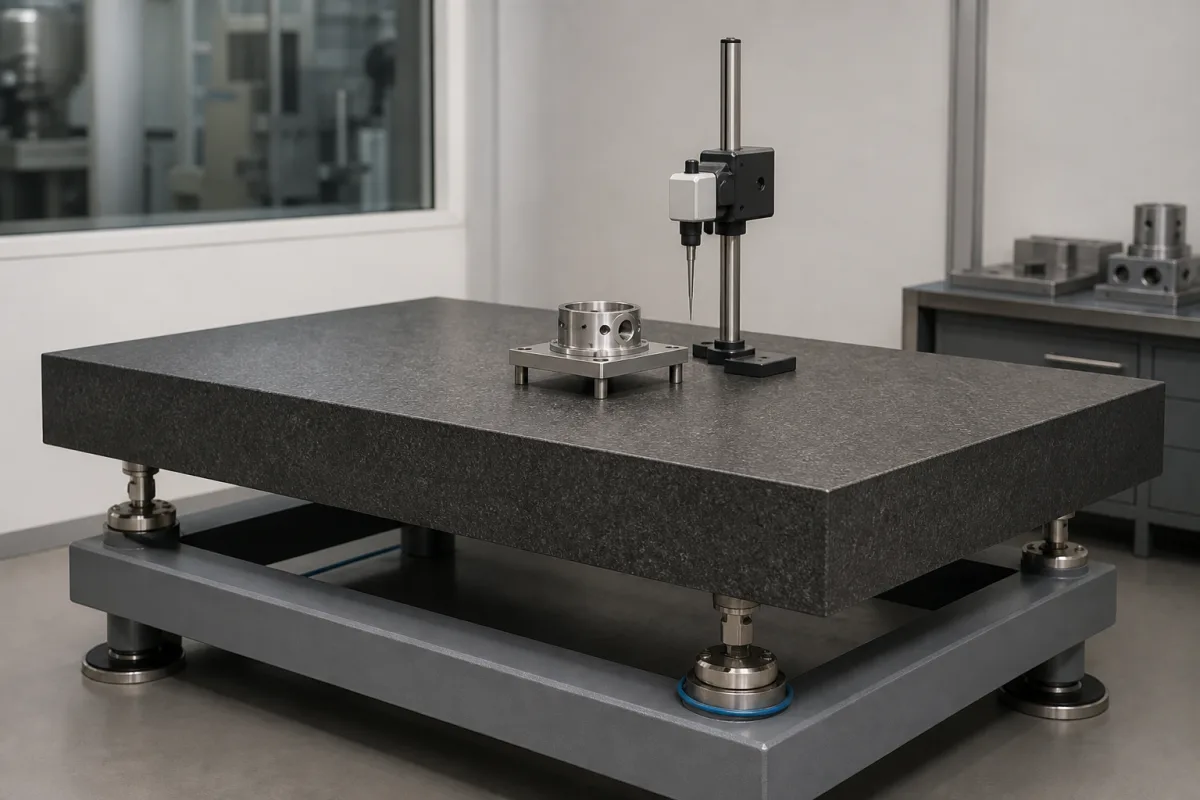
Technical details and manufacturing context for Measurement Table
| Parameter | Typical range | Notes & selection driver |
|---|---|---|
| Table Size (Length × Width) | 600×400–2000×1000 mm | Select based on workpiece dimensions |
| Load Capacity | 500–5000 kg | Uniform load; higher capacity for heavy parts |
| Flatness Tolerance | 0.01–0.05 mm | Critical for measurement accuracyISO 1101 |
| Surface Roughness | 0.4–0.8 μm Ra | Smooth surface reduces wear and measurement errorISO 4287 |
| Operating Temperature Range | 10–40 °C | Outside range may affect accuracy |
| Relative Humidity Range | 30–70 % RH | High humidity may cause corrosion |
| Material Grade | HT200–HT300 | Cast iron for stability and vibration dampingGB/T 9439 |
| Weight | 100–2000 kg | Heavier tables offer better stability |
| Overall Height | 750–900 mm | Ergonomic working height |
| Leveling Adjustment Range | ±5 mm | Compensates for floor unevenness |
| Surface Hardness | 170–240 HB | Resists scratches and dentsISO 6506-1 |
Ranges are indicative industry figures for RFQ preparation, not a supplier commitment. Confirm every value and standard with the legal manufacturer before ordering.
| pressure: | N/A (static surface) |
| other spec: | Vibration tolerance: <0.5 μm amplitude, Flatness tolerance: ±0.001 mm/m² |
| temperature: | 15°C to 25°C (controlled environment) |
Indicative industry ranges for design and RFQ preparation. Confirm the exact figures and applicable standard with the manufacturer before specifying.
Quoted from the published standard.
A practical evidence checklist for RFQ preparation and supplier evaluation.
Compare the published product scope and source details, then include your specifications and quantity in an enquiry.
Manufacturer profiles associated with Measurement Table.
Explore company information and manufacturing capabilities, then discuss the scope of your project with a relevant supplier.
Ask for use case, specification boundaries, supplier type, and RFQ preparation information for this product.
A measurement table provides a stable, flat reference surface for dimensional measurements, visual inspections, and assembly verification of manufactured parts in quality control processes.
Common materials include granite, cast iron, and stainless steel. Each offers different properties in terms of stability, damping, and corrosion resistance.
Select based on the maximum workpiece dimensions and weight. The table size ranges from 600×400 to 2000×1000 mm, and load capacity from 500 to 5000 kg. Confirm with the manufacturer for your specific application.
Regular cleaning, checking for flatness and leveling, and inspecting for wear or corrosion. If the table loses flatness or stability, it may need resurfacing or replacement.
This component is essential for the following industrial systems and equipment:
Editorial classification, named public sources where available, and source-reviewed manufacturer records.
Compare manufacturer profiles with relevant product and process capability.