Industry-Verified Manufacturing Data (2026)

Leveling Feet

Based on aggregated insights from multiple verified factory profiles within the CNFX directory, the standard Leveling Feet used in the Machinery and Equipment Manufacturing sector typically supports operational capacities ranging from standard industrial configurations to heavy-duty production requirements.

Technical Definition & Core Assembly

A canonical Leveling Feet is characterized by the integration of Threaded Stud and Base Plate. In industrial production environments, manufacturers listed on CNFX commonly emphasize Steel construction to support stable, high-cycle operation across diverse manufacturing scenarios.

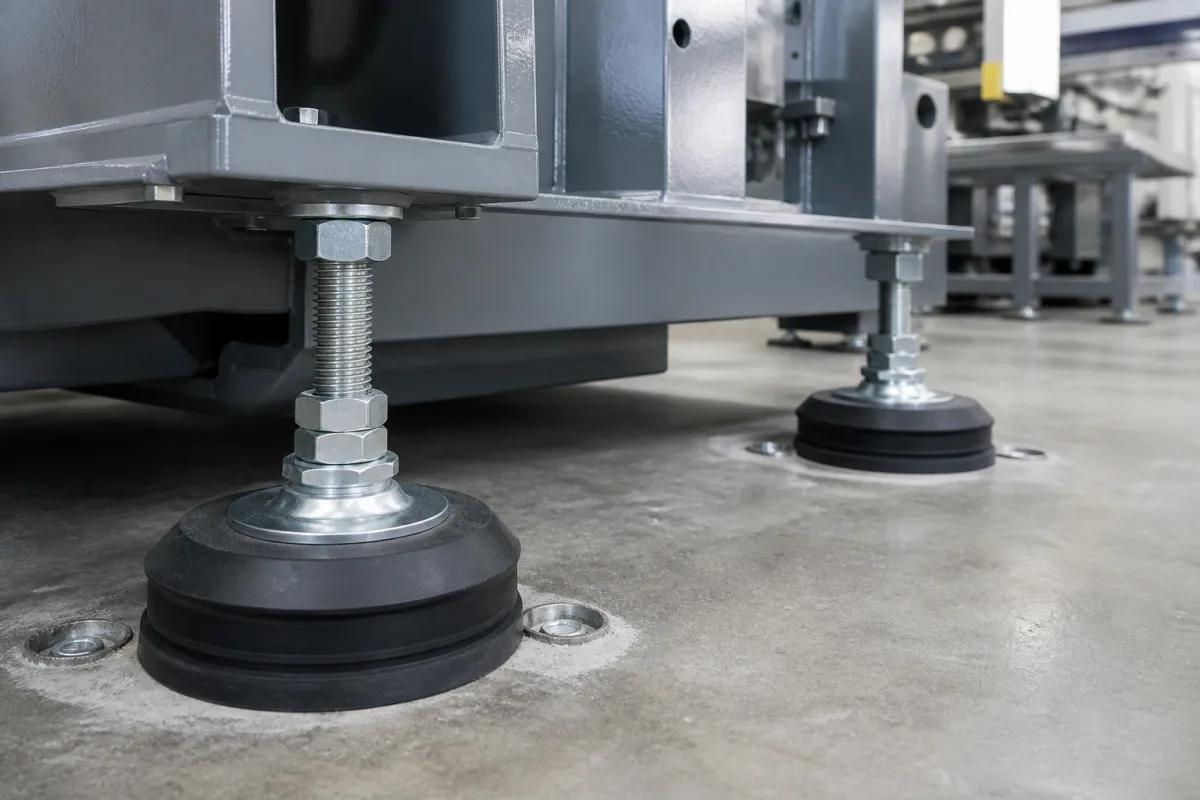
Adjustable support components used to level and stabilize machinery or equipment on uneven surfaces.
Product Specifications

Technical details and manufacturing context for Leveling Feet

Definition
Leveling feet are mechanical components that form part of a Ground Assembly Unit, designed to provide height adjustment and stable support for industrial machinery, equipment, or structures. They compensate for floor irregularities, prevent wobbling, reduce vibration transmission, and ensure proper alignment during operation.
Working Principle
Leveling feet typically consist of a threaded stud or bolt attached to a base plate or housing. By rotating the adjustment mechanism (manually or with tools), the effective height of the foot changes, raising or lowering the supported equipment until it is level. A locking mechanism (such as a jam nut) secures the position once adjustment is complete. Some designs incorporate vibration-damping materials or swivel bases to accommodate minor angular misalignment.
Common Materials
Steel, Stainless Steel, Nylon, Rubber
Technical Parameters
  • Thread diameter (e.g., M10, M12) and adjustment range (e.g., ±20mm) (mm) Per Request
Components / BOM
  • Threaded Stud
    Provides height adjustment via rotation; attaches to equipment base.
    Material: steel
  • Base Plate
    Distributes load over floor surface; may include anti-slip or vibration-damping features.
    Material: steel or rubber
  • Locking Nut
    Secures the threaded stud at the desired height after adjustment.
    Material: steel
Engineering Reasoning
Load capacity: 50-5000 N per foot, Height adjustment: 10-100 mm, Thread pitch: M8-M30
Material yield strength exceeded at 250-400 MPa (steel) or 150-250 MPa (cast iron), Thread stripping at 80-90% of ultimate tensile strength, Base plate deformation at 1.5-2.0 mm deflection
Design Rationale: Plastic deformation from compressive loading exceeding material yield point, Thread shear failure from torsional over-torque exceeding 40-60 Nm, Fatigue cracking at stress concentrators (thread roots, weld joints) under cyclic loading >10^6 cycles
Risk Mitigation (FMEA)
Trigger Corrosive environment exposure (pH <4 or >10, chloride concentration >500 ppm)
Mode: Thread seizure preventing height adjustment, Material thinning reducing load capacity by 30-50%
Strategy: Stainless steel (316L) or zinc-nickel plated construction, Protective boots/seals at thread interfaces
Trigger Dynamic loading at 5-15 Hz resonance frequency matching equipment natural frequency
Mode: Progressive loosening from vibration-induced thread back-off, Base plate fatigue fracture at stress risers
Strategy: Locking nuts with nylon inserts or prevailing torque features, Vibration-damping polymer pads with loss factor >0.3

Industry Taxonomies & Aliases

Commonly used trade names and technical identifiers for Leveling Feet.

Applied To / Applications

This component is essential for the following industrial systems and equipment:

Industrial Ecosystem & Supply Chain DNA

Complementary Systems
Downstream Applications
Specialized Tooling

Application Fit & Sizing Matrix

Operational Limits
pressure: Static load capacity: 50 kg to 5000 kg per foot (varies by model)
other spec: Adjustment range: 10-100 mm vertical travel, vibration damping: up to 85% reduction (with integrated dampers)
temperature: -40°C to +80°C (standard polymer components), -60°C to +150°C (specialized materials)
Media Compatibility
✓ Concrete floors ✓ Steel support structures ✓ Epoxy-coated surfaces
Unsuitable: Continuous immersion in corrosive chemicals or saltwater environments
Sizing Data Required
  • Total equipment weight (kg)
  • Number of support points required
  • Required leveling adjustment range (mm)

Reliability & Engineering Risk Analysis

Failure Mode & Root Cause
Thread stripping or deformation
Cause: Over-tightening during installation, excessive dynamic loads beyond design capacity, or corrosion weakening thread integrity
Base plate cracking or fatigue failure
Cause: Uneven load distribution, vibration-induced stress concentration, or material defects in casting/forging
Maintenance Indicators
  • Visible misalignment or uneven gaps between equipment base and mounting surface
  • Audible creaking or grinding noises during equipment operation or load changes
Engineering Tips
  • Use torque wrenches during installation and follow manufacturer's specifications to prevent over-tightening and ensure even load distribution
  • Implement regular alignment checks and vibration monitoring to detect early signs of uneven loading or resonance issues

Compliance & Manufacturing Standards

Reference Standards
ISO 9001:2015 Quality Management Systems DIN 3140:2017 Leveling Feet - Dimensions and Load Ratings CE Marking (EU Machinery Directive 2006/42/EC)
Manufacturing Precision
  • Thread Pitch: +/-0.05mm
  • Base Plate Flatness: 0.2mm per 100mm
Quality Inspection
  • Load Capacity Test (Proof Load to 150% of Rated Load)
  • Dimensional Verification with Coordinate Measuring Machine (CMM)

Factories Producing Leveling Feet

Verified manufacturers with capability to produce this product in China

✓ 93% Supplier Capability Match Found

P Project Engineer from Germany Jan 13, 2026
★★★★★
"Standard OEM quality for Machinery and Equipment Manufacturing applications. The Leveling Feet arrived with full certification."
Technical Specifications Verified
S Sourcing Manager from Brazil Jan 10, 2026
★★★★★
"Great transparency on the Leveling Feet components. Essential for our Machinery and Equipment Manufacturing supply chain."
Technical Specifications Verified
P Procurement Specialist from Canada Jan 07, 2026
★★★★★
"The Leveling Feet we sourced perfectly fits our Machinery and Equipment Manufacturing production line requirements."
Technical Specifications Verified
Verification Protocol

“Feedback is collected from verified sourcing managers during RFQ (Request for Quote) and factory evaluation processes on CNFX. These reports represent historical performance data and technical audit summaries from our B2B manufacturing network.”

10 sourcing managers are analyzing this specification now. Last inquiry for Leveling Feet from Turkey (49m ago).

Supply Chain Compatible Machinery & Devices

Automated Assembly Line System

Integrated production system for sequential component assembly operations

Explore Specs →
Automated Powder Coating System

Integrated industrial system for applying dry powder coatings to metal substrates.

Explore Specs →
Centrifugal Pump Impeller

Rotating component that transfers energy to fluid in centrifugal pumps.

Explore Specs →
High-Precision CNC Laser Cutting Machine

Computer-controlled industrial machine using focused laser beams to cut sheet metal with micron-level accuracy.

Explore Specs →

Frequently Asked Questions

What materials are best for leveling feet in corrosive environments?

Stainless steel leveling feet offer optimal corrosion resistance for humid or chemical-exposed environments, while nylon provides excellent chemical resistance at lower load capacities.

How do leveling feet improve machinery performance?

Leveling feet stabilize equipment by compensating for floor irregularities, reducing vibration transfer, preventing misalignment, and minimizing wear on moving parts for extended machinery lifespan.

Can leveling feet be adjusted after installation?

Yes, most industrial leveling feet feature threaded studs with locking nuts that allow precise height adjustments even after machinery is positioned, enabling fine-tuning as needed.

Can I contact factories directly on CNFX?

CNFX is an open directory, not a transaction platform. Each factory profile provides direct contact information and production details to help you initiate direct inquiries with Chinese suppliers.

Get Quote for Leveling Feet

Request technical pricing, lead times, or customized specifications for Leveling Feet directly from verified manufacturing units.

Your business information is encrypted and only shared with verified Leveling Feet suppliers.

Thank you! Your message has been sent. We'll respond within 1–3 business days.

Need to Manufacture Leveling Feet?

Connect with verified factories specializing in this product category

Add Your Factory Contact Us
Previous Product
Leveling Device
Next Product
Leveling Feet/Adjusters