Industry-Verified Manufacturing Data (2026)

Piston Assembly

Based on aggregated insights from multiple verified factory profiles within the CNFX directory, the standard Piston Assembly used in the Machinery and Equipment Manufacturing sector typically supports operational capacities ranging from standard industrial configurations to heavy-duty production requirements.

Technical Definition & Core Assembly

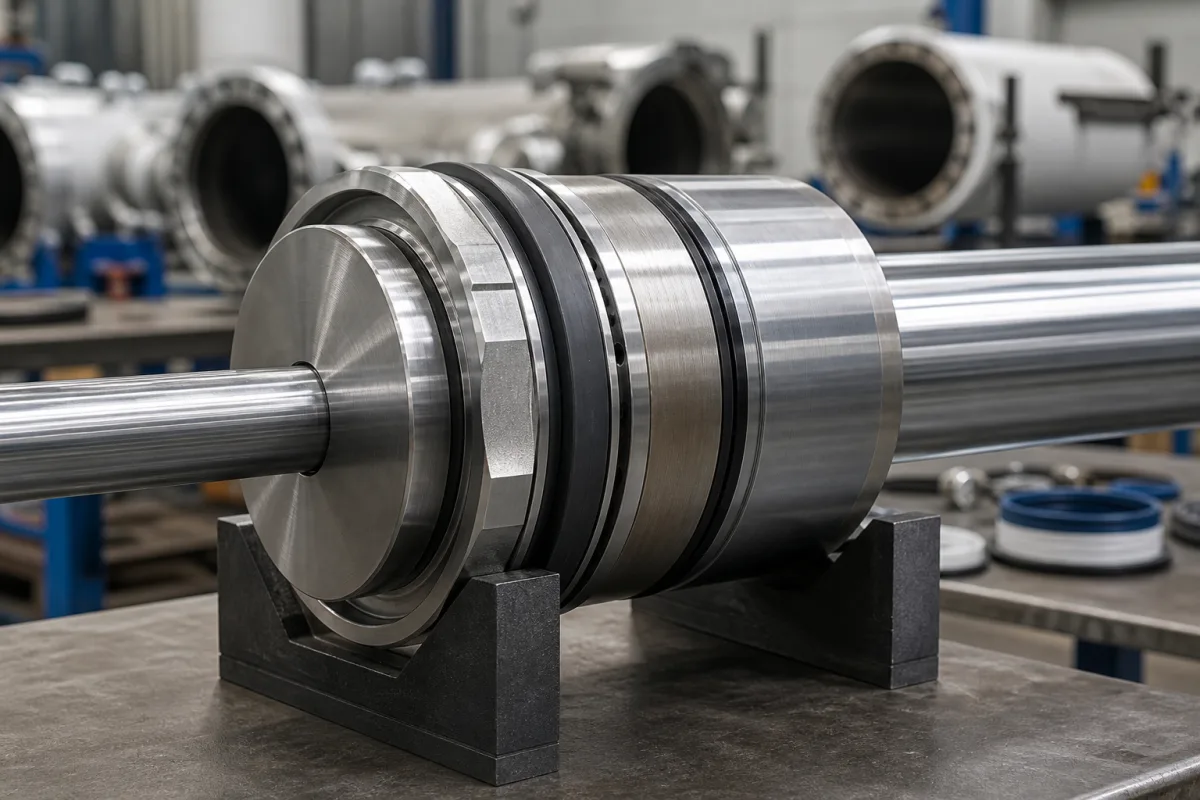
A canonical Piston Assembly is characterized by the integration of Piston and Piston Rod. In industrial production environments, manufacturers listed on CNFX commonly emphasize Stainless Steel (AISI 316L) construction to support stable, high-cycle operation across diverse manufacturing scenarios.

A precision mechanical assembly that converts pneumatic or hydraulic pressure into linear motion within a sanitary diaphragm valve actuator.
Product Specifications

Technical details and manufacturing context for Piston Assembly

Definition
The piston assembly is a critical component within a sanitary diaphragm valve actuator, responsible for translating fluid pressure into controlled linear displacement. It consists of a piston, piston rod, seals, and associated hardware that work together to move the actuator stem, which in turn flexes the diaphragm to open or close the valve. In sanitary applications, this assembly is designed for cleanability, corrosion resistance, and reliable operation in hygienic processing environments.
Working Principle
When pressurized air or hydraulic fluid enters the actuator cylinder, it exerts force on the piston surface. This force causes the piston to move linearly along the cylinder bore. The piston rod transmits this motion to the actuator stem, which applies force to the diaphragm. The assembly's seals prevent fluid leakage while allowing smooth movement, with the piston's travel distance determining the valve's opening degree.
Common Materials
Stainless Steel (AISI 316L), PTFE (Polytetrafluoroethylene), EPDM (Ethylene Propylene Diene Monomer)
Technical Parameters
  • Piston diameter, which determines the force output based on pressure and area (Force = Pressure × Area) (mm) Per Request
Components / BOM
  • Piston
    Primary pressure-receiving component that converts fluid pressure to mechanical force
    Material: Stainless Steel
  • Piston Rod
    Connects the piston to the actuator stem and transmits linear motion
    Material: Stainless Steel
  • Piston Seals
    Prevent fluid leakage between piston and cylinder while allowing movement
    Material: PTFE or EPDM
  • Wear Rings
    Guide the piston within the cylinder and prevent metal-to-metal contact
    Material: PTFE
Engineering Reasoning
0.5-16 bar (7.25-232 psi) pneumatic pressure, -20°C to 120°C temperature range
18 bar (261 psi) burst pressure for pneumatic seals, 150°C thermal degradation threshold for PTFE seals, 0.1 mm radial clearance for piston-cylinder interface
Design Rationale: Seal extrusion failure occurs when pressure exceeds 18 bar, causing PTFE seal material to extrude into 0.15 mm clearance gaps. Thermal degradation initiates at 150°C where PTFE begins depolymerization (Young's modulus reduction from 0.5 GPa to 0.1 GPa). Piston binding occurs at 0.1 mm radial clearance due to hydraulic lock from fluid film breakdown (Reynolds number < 1000).
Risk Mitigation (FMEA)
Trigger Particulate contamination exceeding ISO 4406 Class 14/12/9 in hydraulic fluid
Mode: Abrasive wear of piston-cylinder interface exceeding 0.05 mm clearance
Strategy: Install 3 μm absolute filtration with differential pressure monitoring at 0.5 bar threshold
Trigger Water ingress exceeding 1000 ppm in pneumatic systems
Mode: Corrosion pitting of carbon steel piston rod at rate of 0.1 mm/year
Strategy: Apply 25 μm electroless nickel plating with 0.5% phosphorus content for corrosion resistance

Industry Taxonomies & Aliases

Commonly used trade names and technical identifiers for Piston Assembly.

Applied To / Applications

This component is essential for the following industrial systems and equipment:

Industrial Ecosystem & Supply Chain DNA

Complementary Systems
Downstream Applications
Specialized Tooling

Application Fit & Sizing Matrix

Operational Limits
pressure: 0 to 10 bar (gauge)
flow rate: Dependent on valve size and actuator stroke
temperature: -20°C to 150°C
slurry concentration: Up to 40% solids by weight (particle size < 100 microns)
Media Compatibility
✓ Potable water ✓ Food-grade oils ✓ Pharmaceutical-grade gases
Unsuitable: Highly corrosive acids (e.g., concentrated sulfuric acid)
Sizing Data Required
  • Required linear force (N)
  • Available pneumatic/hydraulic pressure (bar)
  • Maximum allowable actuator stroke length (mm)

Reliability & Engineering Risk Analysis

Failure Mode & Root Cause
Piston ring wear and blow-by
Cause: Inadequate lubrication leading to metal-on-metal contact, improper ring gap causing thermal expansion issues, or contamination from combustion byproducts
Piston skirt scoring and seizure
Cause: Insufficient piston-to-cylinder clearance, overheating causing thermal expansion beyond design limits, or foreign particle ingress during assembly/operation
Maintenance Indicators
  • Excessive blue/white smoke from exhaust indicating oil burning past worn rings
  • Audible knocking or slapping sounds during operation suggesting piston slap or clearance issues
Engineering Tips
  • Implement strict oil analysis program to monitor lubricant condition and contamination levels, ensuring proper viscosity and additive packages for specific operating conditions
  • Establish precise thermal management protocols including coolant temperature control and proper warm-up procedures to maintain optimal piston-cylinder clearances throughout operating cycles

Compliance & Manufacturing Standards

Reference Standards
ISO 18669-1:2004 (Internal combustion engines - Pistons - Part 1: General specifications) ASTM B26/B26M-18 (Standard Specification for Aluminum-Alloy Sand Castings) DIN 9765-1 (Piston pins - Dimensions, requirements, testing)
Manufacturing Precision
  • Bore diameter: ±0.015 mm
  • Piston ring groove width: +0.02/-0.01 mm
Quality Inspection
  • Dimensional verification with coordinate measuring machine (CMM)
  • Hardness testing (Rockwell or Brinell scale)

Factories Producing Piston Assembly

Verified manufacturers with capability to produce this product in China

✓ 98% Supplier Capability Match Found

P Procurement Specialist from Singapore Feb 12, 2026
★★★★★
"Testing the Piston Assembly now; the technical reliability results are within 1% of the laboratory datasheet."
Technical Specifications Verified
T Technical Director from Germany Feb 09, 2026
★★★★★
"Impressive build quality. Especially the technical reliability is very stable during long-term operation."
Technical Specifications Verified
P Project Engineer from Brazil Feb 06, 2026
★★★★★
"As a professional in the Machinery and Equipment Manufacturing sector, I confirm this Piston Assembly meets all ISO standards."
Technical Specifications Verified
Verification Protocol

“Feedback is collected from verified sourcing managers during RFQ (Request for Quote) and factory evaluation processes on CNFX. These reports represent historical performance data and technical audit summaries from our B2B manufacturing network.”

13 sourcing managers are analyzing this specification now. Last inquiry for Piston Assembly from Turkey (1h ago).

Supply Chain Compatible Machinery & Devices

Automated Assembly Line System

Integrated production system for sequential component assembly operations

Explore Specs →
Automated Powder Coating System

Integrated industrial system for applying dry powder coatings to metal substrates.

Explore Specs →
Centrifugal Pump Impeller

Rotating component that transfers energy to fluid in centrifugal pumps.

Explore Specs →
High-Precision CNC Laser Cutting Machine

Computer-controlled industrial machine using focused laser beams to cut sheet metal with micron-level accuracy.

Explore Specs →

Frequently Asked Questions

What materials are used in this piston assembly for sanitary applications?

This piston assembly uses AISI 316L stainless steel for corrosion resistance, PTFE (Polytetrafluoroethylene) for low friction and chemical resistance, and EPDM (Ethylene Propylene Diene Monomer) seals for durability in sanitary environments.

How does this piston assembly convert pressure to motion in valve actuators?

The piston assembly converts pneumatic or hydraulic pressure into precise linear motion within diaphragm valve actuators. Pressure applied to the piston creates movement that opens or closes the valve, providing reliable flow control in sanitary processing systems.

What are the main components included in this piston assembly BOM?

The bill of materials includes the piston, piston rod, piston seals, and wear rings. These components work together to ensure smooth operation, minimal friction, and long service life in demanding machinery and equipment applications.

Can I contact factories directly on CNFX?

CNFX is an open directory, not a transaction platform. Each factory profile provides direct contact information and production details to help you initiate direct inquiries with Chinese suppliers.

Get Quote for Piston Assembly

Request technical pricing, lead times, or customized specifications for Piston Assembly directly from verified manufacturing units.

Your business information is encrypted and only shared with verified Piston Assembly suppliers.

Thank you! Your message has been sent. We'll respond within 1–3 business days.

Need to Manufacture Piston Assembly?

Connect with verified factories specializing in this product category

Add Your Factory Contact Us
Previous Product
Piston and Rod Assembly
Next Product
Piston Rod & Seal