Editorial Technical Reference

High-Pressure Pump

This page explains how High-Pressure Pump is classified within Machinery and Equipment Manufacturing. Technical values and manufacturer relationships are research references; confirm the current specification and supplier evidence for each order.

Technical Definition & Core Assembly

A pump designed to generate and maintain high fluid pressure for industrial cleaning applications

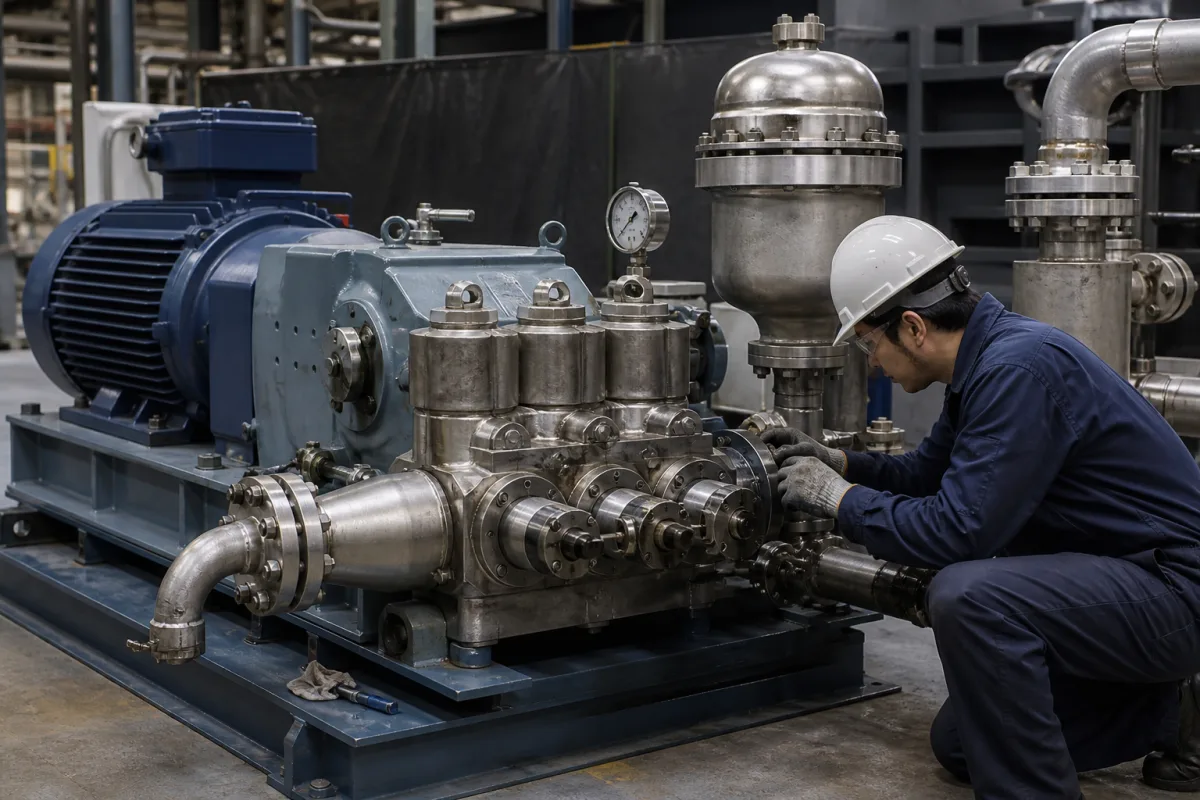
Representative product image. Confirm appearance and specifications with the manufacturer.

Product Specifications

Technical details and manufacturing context for High-Pressure Pump

Definition
The High-Pressure Pump is a component within the Automated Chemical Drum Cleaning and Decontamination System. It generates the high-pressure fluid stream required to effectively remove chemical residues, contaminants, and deposits from drum interiors. The pump provides the necessary force to propel cleaning solutions through nozzles at pressures sufficient for thorough decontamination. It operates by converting mechanical energy, typically from an electric motor, into fluid pressure through positive displacement or centrifugal action. The pump draws fluid from a reservoir, compresses it within a chamber, and discharges it at high pressure through outlet ports to the cleaning nozzles. Key parameters include a maximum pressure range of 1.0–1.6 bar, a flow rate of 15–60 L/min, motor power of 5.5–15 kW, inlet diameter of 1–1.5 mm, outlet diameter of 0.5–1 mm, operating temperature of 5–60°C, maximum fluid temperature of 60°C, voltage of 380–415 V AC (IEC 60038), frequency of 50–60 Hz, ingress protection of IP54–IP65 (IEC 60529), pump material of SS316 (ASTM A240), weight of 80–150 kg, and approximate dimensions of 800×500×600 mm. Materials on file include stainless steel, ceramic, and high-density polyethylene. These values are reference ranges and must be verified with the legal manufacturer for the specific model and application. The pump is designed for continuous operation within the specified temperature limits; above 60°C, seals degrade. It is intended for use in industrial cleaning systems and should be selected based on required pressure, flow, and compatibility with cleaning fluids. Verification of model-specific values and standards is essential before procurement.
Working Principle
The pump uses mechanical energy from an electric motor to increase the pressure of cleaning fluids. It operates via positive displacement or centrifugal action. In positive displacement, fluid is drawn into a chamber and compressed by a piston or diaphragm, then discharged at high pressure. In centrifugal action, a rotating impeller accelerates fluid outward, converting kinetic energy to pressure. The pump draws fluid from a reservoir, compresses it, and discharges it through outlet ports to nozzles. The high-pressure stream removes residues from drum interiors. The pump's performance depends on motor power, impeller design, and fluid properties. It is designed for continuous operation within specified temperature and pressure limits.
Common Materials
Stainless Steel, Ceramic, High-Density Polyethylene
Technical Parameters
ParameterTypical rangeNotes & selection driver
Maximum PressureRequired1.0–1.6 barHighest pressure the pump can generate
Flow RateRequired15–60 L/minVolume of fluid delivered per minute
Motor PowerRequired5.5–15 kWPower rating of the driving motor
Inlet DiameterRequired1–1.5 mmDiameter of the fluid intake connection
Outlet DiameterRequired0.5–1 mmDiameter of the high-pressure output connection
Operating Temperature5–60 °CAbove 60°C seals degrade
Maximum Fluid Temperature60 °CFor continuous operation
Voltage380–415 V ACThree-phaseIEC 60038
Frequency50–60 HzAuto-sensing
Ingress ProtectionIP54–IP65IP65 for outdoor useIEC 60529
Pump MaterialSS316Corrosion-resistantASTM A240
Weight80–150 kgWithout motor
Dimensions (L×W×H)800×500×600 mmApproximate

Ranges are indicative industry figures for RFQ preparation, not a supplier commitment. Confirm every value and standard with the legal manufacturer before ordering.

Components / BOM
  • Pump Housing Part
    Contains and protects internal pump components while providing structural support
    Material: Stainless Steel
  • Impeller/Piston Assembly
    Creates pressure by displacing fluid through rotational or reciprocating motion
    Material: Stainless Steel or Ceramic
  • Motor
    Provides mechanical energy to drive the pump mechanism
    Material: Copper windings with steel casing
  • Pressure Relief Valve
    Prevents over-pressurization by releasing excess pressure
    Material: Brass or Stainless Steel
  • Seals and Gaskets Part
    Prevent fluid leakage at connection points and moving parts
    Material: Viton, EPDM, or PTFE

Industry Taxonomies & Aliases

Commonly used trade names and technical identifiers for High-Pressure Pump.

Applied To / Applications

This component is essential for the following industrial systems and equipment:

Industrial Ecosystem & Supply Chain Structure

Complementary Systems
Downstream Applications
Specialized Tooling

Application Fit & Sizing Matrix

Operational Limits
pressure: Up to 200 bar
flow rate: 10-500 L/min
temperature: 0°C to 80°C
slurry concentration: Up to 15% solids by weight
Media Compatibility
✓ Water-based cleaning solutions ✓ Hot water (up to 80°C) ✓ Mild chemical cleaning agents
Unsuitable: Highly abrasive slurries with >15% solids or corrosive chemicals
Sizing Data Required
  • Required flow rate (L/min)
  • Operating pressure (bar)
  • Fluid temperature and viscosity

Reliability & Engineering Risk Analysis

Failure Mode & Root Cause
Cavitation
Cause: Insufficient Net Positive Suction Head (NPSH) leading to vapor bubble formation and implosion on impeller surfaces, causing pitting and material loss.
Bearing failure
Cause: Inadequate lubrication, contamination ingress, misalignment, or excessive axial/radial loads leading to overheating, spalling, and eventual seizure.
Maintenance Indicators
  • Unusual high-frequency vibration or knocking sounds from the pump casing
  • Visible fluid leakage around mechanical seals or casing joints with pressure drop
Engineering Tips
  • Maintain NPSH margin above manufacturer's requirement through proper suction piping design and regular strainer cleaning to prevent cavitation.
  • Implement precision alignment during installation and use condition monitoring (vibration analysis, oil analysis) to detect early bearing degradation.

Indicative industry ranges for design and RFQ preparation. Confirm the exact figures and applicable standard with the manufacturer before specifying.

Compliance & Manufacturing Standards

Applicable Standards
ISO 9906:2012 (Rotodynamic pumps - Hydraulic performance acceptance tests) ANSI/HI 14.6-2016 (Rotodynamic Pumps for Hydraulic Performance Acceptance Tests) DIN EN ISO 9906:2012 (Rotodynamic pumps - Hydraulic performance acceptance tests)

Quoted from the published standard.

Manufacturing Precision
  • Bore diameter tolerance: +/-0.02 mm
  • Surface flatness of mating flanges: 0.1 mm
Quality Inspection
  • Hydrostatic pressure test (typically 1.5x design pressure)
  • Dye penetrant inspection for surface defects

Manufacturers of High-Pressure Pump

1 company lists this product among what they make. Company figures are quoted from each company's own website; every card states where the relationship came from.

Shandong Huaquan Power Co., Ltd.
Weifang, Shandong, CN
42,000 m²
ISO CE
Listed on the company's own website · profile compiled by CNFX from public sources

Manufacturer listings support early research and capability understanding. They are not certification, ranking, or transaction guarantees.

Technical documentation
Request current drawings, revision history, and a signed specification sheet.
Manufacturing capability
Verify equipment lists, process limits, capacity, and representative production evidence.
Inspection readiness
Confirm test methods, calibrated equipment, sampling plans, and traceable reports.
Supplier transparency
Check the legal entity, factory address, ownership, certifications, and direct contacts.

CNFX does not score or rank suppliers. Buyers must verify all claims and documents with the legal manufacturer before ordering.

Supply Chain Compatible Machinery & Devices

Heavy-Duty CNC Plasma Cutting Machine

The Heavy-Duty CNC Plasma Cutting Machine is a standalone industrial device designed for cutting conductive metals such as steel, stainless steel, aluminum, and copper alloys.

Explore Specs →
Automated Powder Coating System

Integrated industrial system for applying dry powder coatings to metal substrates.

Explore Specs →
Centrifugal Pump Impeller

The centrifugal pump impeller is a critical rotating component that converts mechanical energy from the motor into kinetic energy in fluid systems.

Explore Specs →
High-Precision CNC Laser Cutting Machine

Computer-controlled industrial machine using focused laser beams to cut sheet metal with micron-level accuracy.

Explore Specs →

Frequently Asked Questions

What is the maximum pressure this pump can generate?

The reference range for maximum pressure is 1.0–1.6 bar. This is a directory reference; the actual maximum pressure for a specific model must be confirmed with the legal manufacturer.

What materials are used in the pump construction?

Materials on file include stainless steel, ceramic, and high-density polyethylene. The pump material is listed as SS316 per ASTM A240, which is corrosion-resistant. Confirm material compatibility with your cleaning fluids.

What are the electrical requirements?

The pump requires a three-phase power supply of 380–415 V AC (IEC 60038) and operates at 50–60 Hz. The motor power range is 5.5–15 kW. Verify exact requirements with the manufacturer.

What is the operating temperature range?

The operating temperature range is 5–60°C. Above 60°C, seals degrade. The maximum fluid temperature is 60°C for continuous operation. Ensure the system stays within these limits.

Data Basis

Editorial classification, named public sources where available, and source-reviewed manufacturer records.

Preliminary Technical Classification
This page supports structured research, RFQ preparation, and supplier evaluation. It does not replace buyer-led supplier qualification, standards review, or technical approval.
Buyer enquiry

Request manufacturing insight for High-Pressure Pump

Ask for use case, specification boundaries, supplier type, and RFQ preparation information for this product.

Where it goes
Straight to the CNFX editorial desk, and to the manufacturer if this product is linked to a claimed profile. Nothing is broadcast to a supplier list.
Your details stay here
We do not sell or rent enquiry data, and we do not add you to a mailing list. Used only to answer this request.
No commission, no middleman
CNFX is a directory. We take no cut of any order and never negotiate on a supplier's behalf.
What we don't claim
A listing is not an endorsement. Qualify every supplier and verify every figure yourself before ordering.

Your business information is used only to process this request.

Thank you! Your message has been sent. We'll respond within 1–3 business days.
Sorry, we couldn't send your message. Please try again, or email us at contact@cnfx.com.

Need to Manufacture High-Pressure Pump?

Compare manufacturer profiles with relevant product and process capability.

Previous Product
High-Precision CNC Laser Cutting Machine
Next Product
High-Resolution Gap Sensor
Get QuotesChat