Hydraulic Tilting Mechanism
View system integration details
This page explains how Pivot Assembly (Trunnion) is classified within Machinery and Equipment Manufacturing. Technical values and manufacturer relationships are research references; confirm the current specification and supplier evidence for each order.
A mechanical assembly that provides a rotational pivot point for the hydraulic tilting mechanism, typically consisting of a trunnion shaft mounted within bearings or bushings.
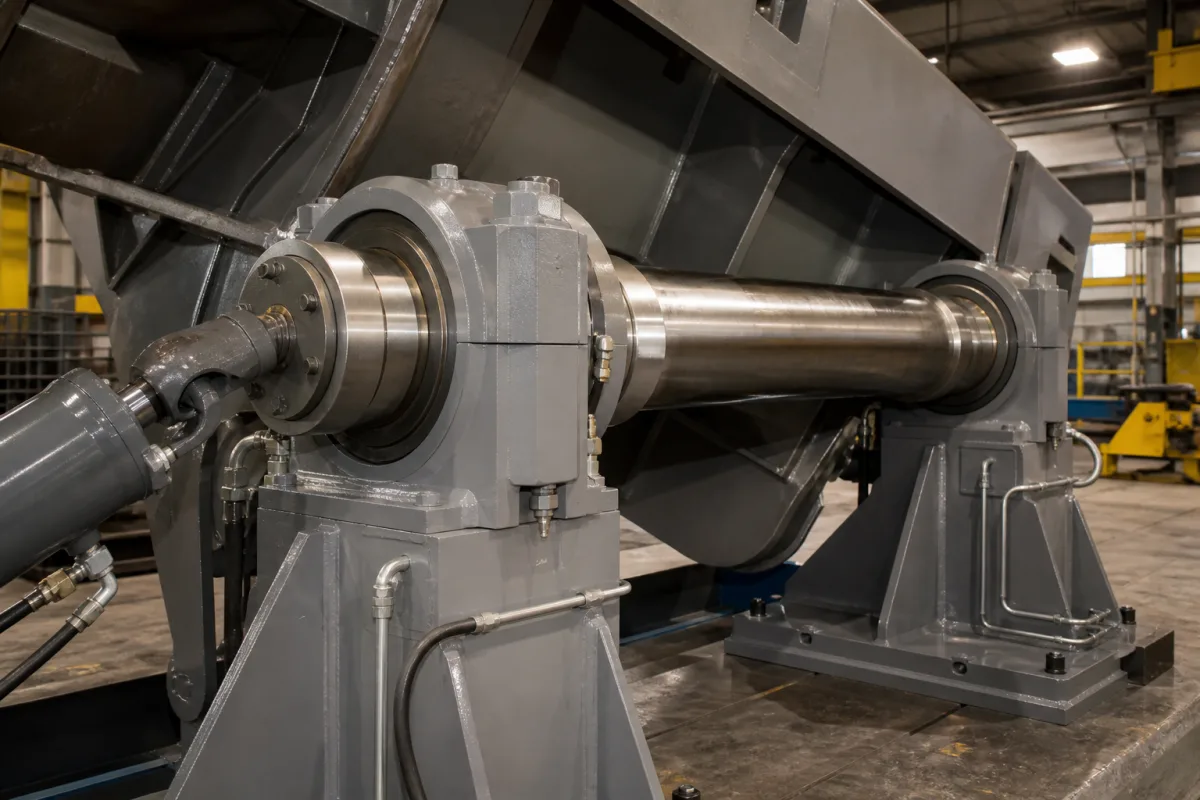
Technical details and manufacturing context for Pivot Assembly (Trunnion)
| Parameter | Typical range | Notes & selection driver |
|---|---|---|
| Rated Load Capacity | 50–200 kN | Maximum static load at pivot point |
| Tilt Angle Range | 0–60 ° | Full rotation for tilting mechanism |
| Shaft Diameter | 50–150 mm | Critical for bearing selection |
| Bearing Type | P20–P5 | Precision class for rotational accuracyISO 492 |
| Radial Runout | 0.02–0.05 mm | Tighter for high-speed applicationsISO 1101 |
| Operating Temperature | -20–80 °C | Seals and lubricants limit range |
| Lubrication Type | grease | KP2K grease recommendedDIN 51825 |
| Material Grade | 42CrMo4 | High-strength alloy steelDIN EN 10083 |
| Surface Hardness | 50–55 HRC | Induction hardened for wear resistanceISO 18265 |
| Weight | 15–60 kg | Depends on size and material |
Ranges are indicative industry figures for RFQ preparation, not a supplier commitment. Confirm every value and standard with the legal manufacturer before ordering.
| pressure: | Up to 10 MPa (static), 5 MPa (dynamic) |
| other spec: | Max angular velocity: 30 RPM, Max axial load: 50 kN, Max radial load: 100 kN |
| temperature: | -20°C to +80°C |
Indicative industry ranges for design and RFQ preparation. Confirm the exact figures and applicable standard with the manufacturer before specifying.
Quoted from the published standard.
A practical evidence checklist for RFQ preparation and supplier evaluation.
Compare the published product scope and source details, then include your specifications and quantity in an enquiry.
Manufacturer profiles associated with Pivot Assembly (Trunnion).
Explore company information and manufacturing capabilities, then discuss the scope of your project with a relevant supplier.
Ask for use case, specification boundaries, supplier type, and RFQ preparation information for this product.
According to directory data, the rated load capacity at the pivot point ranges from 50 to 200 kN. However, the exact capacity depends on the specific model and application. Always verify with the manufacturer or supplier.
Common materials include alloy steel and hardened steel, with a typical material grade of 42CrMo4 per DIN EN 10083. Surface hardness is often 50-55 HRC per ISO 18265. Confirm material specifications with the supplier.
The tilt angle range is typically 0 to 60 degrees, as listed in the directory. This range is determined by the design of the mechanism and the hydraulic cylinder stroke. Verify the exact range for your application.
Regular lubrication with grease conforming to DIN 51825 (KP2K) is recommended. Inspect seals and bearings for wear, and check for excessive radial runout (0.02-0.05 mm per ISO 1101). Follow manufacturer guidelines for service intervals.
This component is essential for the following industrial systems and equipment:
Editorial classification, named public sources where available, and source-reviewed manufacturer records.
Compare manufacturer profiles with relevant product and process capability.