Industry-Verified Manufacturing Data (2026)

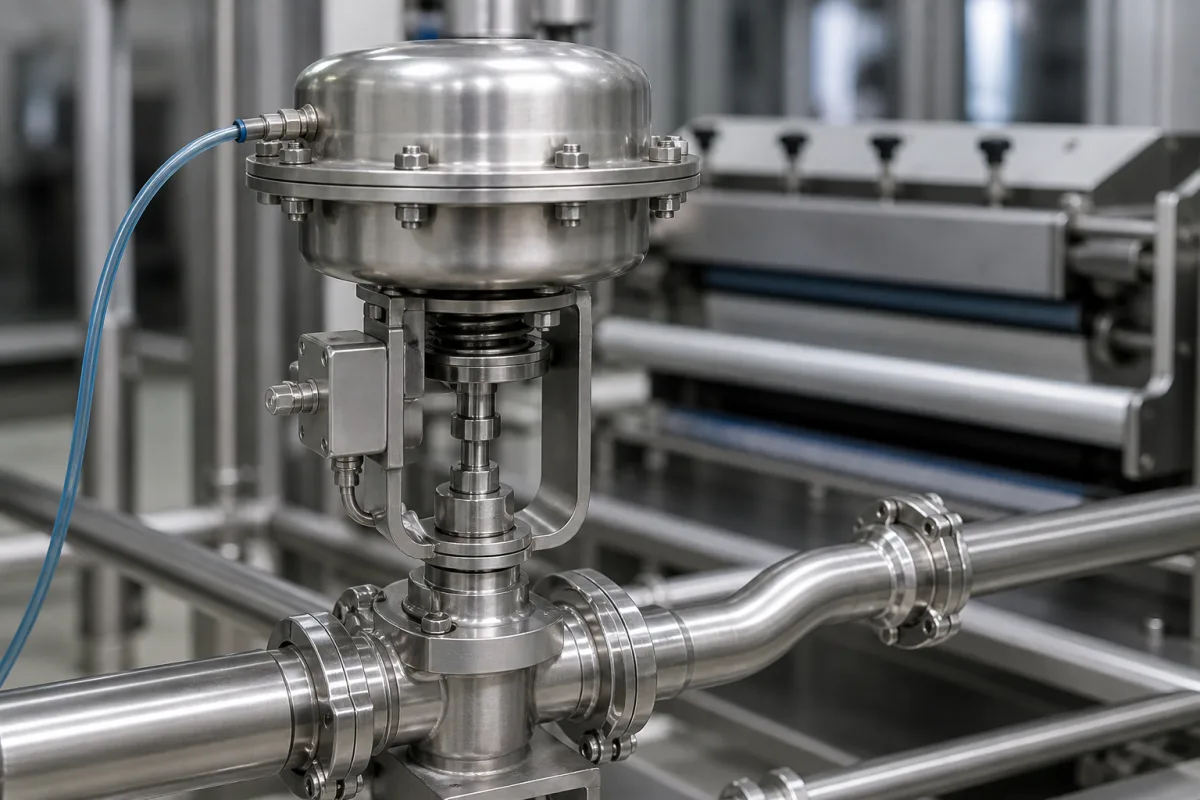
Pressure Actuator

Based on aggregated insights from multiple verified factory profiles within the CNFX directory, the standard Pressure Actuator used in the Machinery and Equipment Manufacturing sector typically supports operational capacities ranging from standard industrial configurations to heavy-duty production requirements.

Technical Definition & Core Assembly

A canonical Pressure Actuator is characterized by the integration of Actuator Housing and Drive Mechanism (Motor/Piston/Solenoid). In industrial production environments, manufacturers listed on CNFX commonly emphasize Stainless Steel construction to support stable, high-cycle operation across diverse manufacturing scenarios.

A device that converts control signals into mechanical motion to regulate pressure in a system.
Product Specifications

Technical details and manufacturing context for Pressure Actuator

Definition
A pressure actuator is a critical component within a Pressure Control System that receives electrical, pneumatic, or hydraulic control signals and translates them into precise linear or rotary mechanical movement. This movement is used to adjust valves, dampers, or other regulating elements to maintain, increase, or decrease system pressure according to set parameters.
Working Principle
The actuator receives a command signal (e.g., 4-20mA, 0-10V, or pneumatic pressure) from a controller. An internal mechanism (such as a solenoid, motor, or piston) converts this signal energy into mechanical force. This force is applied to a connected stem, shaft, or lever, which physically positions a final control element (like a valve plug or butterfly disc) to modulate the flow area, thereby controlling the system pressure.
Common Materials
Stainless Steel, Aluminum Alloy, Engineering Plastics
Technical Parameters
  • Output thrust or torque required to operate the connected valve or damper against system pressure. (N) Per Request
Components / BOM
  • Actuator Housing
    Protects internal components from environmental factors and contains operating pressure.
    Material: Aluminum Alloy or Stainless Steel
  • Drive Mechanism (Motor/Piston/Solenoid)
    Converts the input signal energy (electrical, pneumatic, hydraulic) into mechanical force.
    Material: Steel, Copper, Magnets
  • Output Shaft/Stem
    Transmits the generated mechanical force to the connected valve or damper.
    Material: Stainless Steel
  • Position Feedback Sensor
    Measures and reports the current position of the actuator to the control system.
    Material: Electronic Components (Potentiometer, Hall Effect Sensor)
Engineering Reasoning
0.5-100 bar
125 bar (burst pressure) at 20°C, 110 bar at 150°C
Design Rationale: Diaphragm yield stress exceeds 250 MPa (AISI 316L stainless steel) causing plastic deformation and seal failure
Risk Mitigation (FMEA)
Trigger Hydraulic fluid contamination with 15 μm particles exceeding ISO 4406 18/16/13
Mode: Spool valve stiction causing 0.5 second response delay
Strategy: Install 10 μm absolute filtration with differential pressure monitoring at 0.3 bar
Trigger Solenoid coil temperature exceeding 155°C (Class F insulation limit)
Mode: Insulation breakdown causing 100 MΩ to 10 kΩ resistance drop
Strategy: Embed PT100 temperature sensor with cutoff at 140°C and forced air cooling at 2 m/s

Industry Taxonomies & Aliases

Commonly used trade names and technical identifiers for Pressure Actuator.

Applied To / Applications

This component is essential for the following industrial systems and equipment:

Industrial Ecosystem & Supply Chain DNA

Complementary Systems
Downstream Applications
Specialized Tooling

Application Fit & Sizing Matrix

Operational Limits
pressure: 0 to 1000 psi
flow rate: Up to 100 GPM
temperature: -40°C to 150°C
slurry concentration: Max 10% solids by weight
Media Compatibility
✓ Hydraulic oil ✓ Compressed air ✓ Water/glycol mixtures
Unsuitable: Corrosive chemicals (e.g., strong acids, chlorinated solvents)
Sizing Data Required
  • Required actuation force (N or lbf)
  • System operating pressure (psi or bar)
  • Response time requirement (seconds)

Reliability & Engineering Risk Analysis

Failure Mode & Root Cause
Seal degradation
Cause: Chemical incompatibility with process media leading to swelling, hardening, or cracking of elastomeric seals, or thermal cycling causing fatigue failure.
Stiction or binding
Cause: Contamination ingress (particles, moisture) or corrosion buildup on the actuator stem or piston, impeding smooth movement and causing erratic response.
Maintenance Indicators
  • Audible hissing or continuous air leakage indicating seal failure or fitting issues
  • Erratic or sluggish movement during operation, often visible as jerky motion or failure to reach set positions
Engineering Tips
  • Implement regular preventive maintenance including seal inspection/replacement schedules based on actuator cycles and media compatibility analysis
  • Install proper filtration (e.g., 5-micron filters for pneumatic actuators) and moisture removal systems to prevent contamination ingress

Compliance & Manufacturing Standards

Reference Standards
ISO 5211:2017 (Industrial valves - Part-turn actuator attachments) ANSI/ISA-75.05.01-2000 (Control Valve Terminology) DIN EN 15714-3:2009 (Industrial valves - Actuators - Part 3: Pneumatic part-turn actuators for industrial valves - Basic requirements)
Manufacturing Precision
  • Bore diameter: +/-0.025mm
  • Surface flatness: 0.05mm per 100mm
Quality Inspection
  • Pressure decay leak test (per ISO 15848-1)
  • Material composition verification via X-ray fluorescence (XRF) analysis

Factories Producing Pressure Actuator

Verified manufacturers with capability to produce this product in China

✓ 96% Supplier Capability Match Found

S Sourcing Manager from Australia Feb 09, 2026
★★★★★
"Testing the Pressure Actuator now; the technical reliability results are within 1% of the laboratory datasheet."
Technical Specifications Verified
P Procurement Specialist from Singapore Feb 06, 2026
★★★★☆
"Impressive build quality. Especially the technical reliability is very stable during long-term operation. (Delivery took slightly longer than expected, but technical support was excellent.)"
Technical Specifications Verified
T Technical Director from Germany Feb 03, 2026
★★★★★
"As a professional in the Machinery and Equipment Manufacturing sector, I confirm this Pressure Actuator meets all ISO standards."
Technical Specifications Verified
Verification Protocol

“Feedback is collected from verified sourcing managers during RFQ (Request for Quote) and factory evaluation processes on CNFX. These reports represent historical performance data and technical audit summaries from our B2B manufacturing network.”

15 sourcing managers are analyzing this specification now. Last inquiry for Pressure Actuator from Poland (11m ago).

Supply Chain Compatible Machinery & Devices

Automated Assembly Line System

Integrated production system for sequential component assembly operations

Explore Specs →
Automated Powder Coating System

Integrated industrial system for applying dry powder coatings to metal substrates.

Explore Specs →
Centrifugal Pump Impeller

Rotating component that transfers energy to fluid in centrifugal pumps.

Explore Specs →
High-Precision CNC Laser Cutting Machine

Computer-controlled industrial machine using focused laser beams to cut sheet metal with micron-level accuracy.

Explore Specs →

Frequently Asked Questions

What materials are used in your pressure actuators?

Our pressure actuators are constructed from durable materials including stainless steel for corrosion resistance, aluminum alloy for lightweight strength, and engineering plastics for specific component applications.

How does the position feedback sensor work in your pressure actuators?

The position feedback sensor provides real-time monitoring of the actuator's output shaft/stem position, ensuring precise pressure regulation and enabling closed-loop control systems for accurate performance.

What types of drive mechanisms are available for your pressure actuators?

We offer multiple drive mechanism options including electric motors for precise control, pistons for hydraulic/pneumatic applications, and solenoids for rapid response requirements in machinery systems.

Can I contact factories directly on CNFX?

CNFX is an open directory, not a transaction platform. Each factory profile provides direct contact information and production details to help you initiate direct inquiries with Chinese suppliers.

Get Quote for Pressure Actuator

Request technical pricing, lead times, or customized specifications for Pressure Actuator directly from verified manufacturing units.

Your business information is encrypted and only shared with verified Pressure Actuator suppliers.

Thank you! Your message has been sent. We'll respond within 1–3 business days.

Need to Manufacture Pressure Actuator?

Connect with verified factories specializing in this product category

Add Your Factory Contact Us
Previous Product
Pressing Cage (Barrel)
Next Product
Pressure Adjustment Mechanism