Industry-Verified Manufacturing Data (2026)

Processing Chamber

Based on aggregated insights from multiple verified factory profiles within the CNFX directory, the standard Processing Chamber used in the Machinery and Equipment Manufacturing sector typically supports operational capacities ranging from standard industrial configurations to heavy-duty production requirements.

Technical Definition & Core Assembly

A canonical Processing Chamber is characterized by the integration of Chamber Shell/Body and Insulation Layer. In industrial production environments, manufacturers listed on CNFX commonly emphasize Stainless Steel (e.g., 304, 316L) construction to support stable, high-cycle operation across diverse manufacturing scenarios.

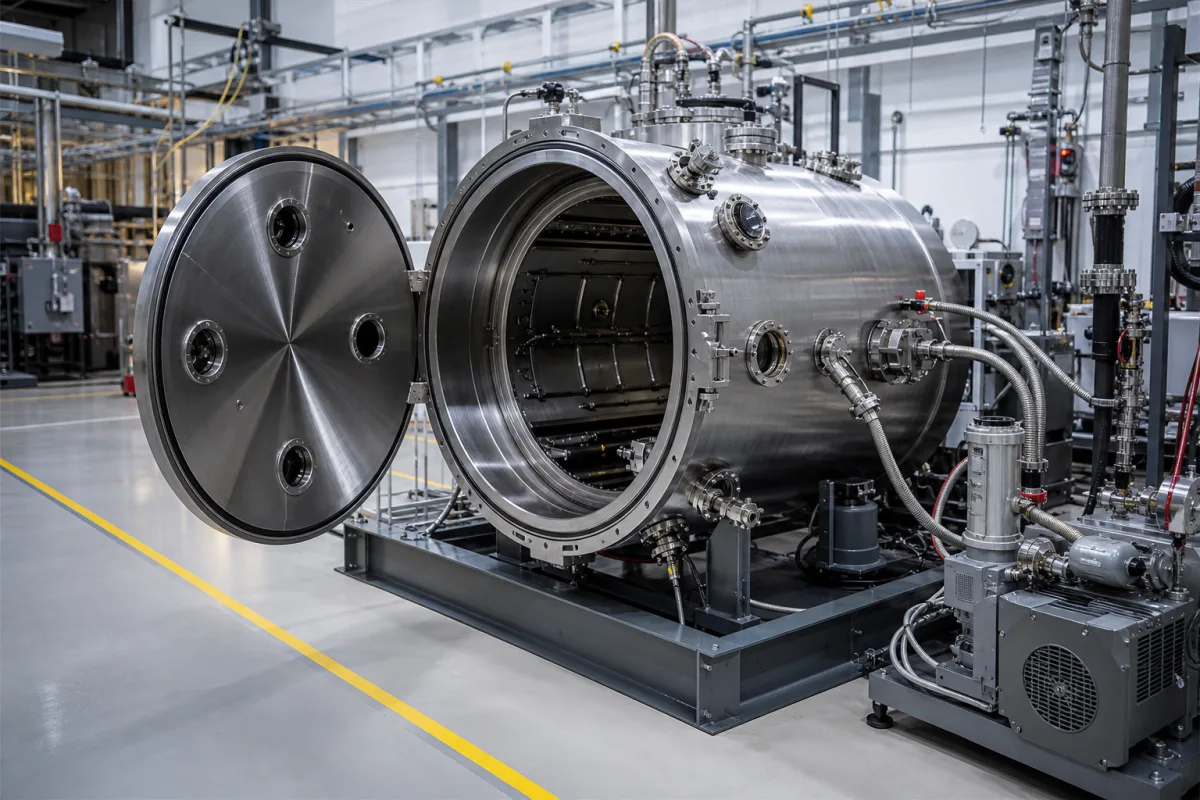
The enclosed space within a processing unit where material transformation occurs under controlled conditions.
Product Specifications

Technical details and manufacturing context for Processing Chamber

Definition
A processing chamber is the core containment component of a processing unit, designed to provide a controlled environment for specific industrial operations such as heating, cooling, mixing, reacting, or curing materials. It isolates the process from external contaminants and maintains precise parameters like temperature, pressure, and atmosphere to ensure consistent product quality and safety.
Working Principle
The chamber functions by creating a sealed or semi-sealed environment. Process materials are introduced, and the chamber's systems (e.g., heating elements, agitators, gas inlets) apply the necessary conditions to achieve the desired physical or chemical change. Sensors monitor internal parameters, and control systems adjust inputs to maintain setpoints before the processed material is discharged.
Common Materials
Stainless Steel (e.g., 304, 316L), Carbon Steel, Specialized Alloys (e.g., Inconel, Hastelloy), Reinforced Glass/Quartz
Technical Parameters
  • Internal dimensions (Length x Width x Height or Diameter x Depth) defining the usable workspace volume. (mm) Standard Spec
Components / BOM
  • Chamber Shell/Body
    Forms the primary pressure boundary and structural enclosure of the chamber.
    Material: Stainless Steel
  • Insulation Layer
    Minimizes heat loss to the environment and improves thermal efficiency and safety.
    Material: Ceramic Fiber, Mineral Wool
  • Heating/Cooling Elements
    Provides the thermal energy transfer required to achieve and maintain the target process temperature.
    Material: Resistance Wire (Heating), Copper Coils (Cooling)
  • Seal/Gasket
    Ensures an airtight or liquid-tight closure at access points (doors, ports) to maintain internal conditions.
    Material: Silicone, Viton, Graphite
  • Sensor Ports
    Provide access points for installing probes (temperature, pressure, pH) to monitor the internal process environment.
    Material: Stainless Steel Fitting
Engineering Reasoning
0.1-100 bar absolute pressure, -196°C to 1200°C temperature, 10^-6 to 10^3 Pa vacuum range
Pressure: 150 bar burst pressure (yield strength of 316L stainless steel at 250°C), Temperature: 1350°C (creep deformation threshold for Inconel 718), Vacuum: 10 Pa (mean free path < chamber dimensions causing viscous flow)
Design Rationale: Thermal fatigue from cyclic heating/cooling exceeding 800°C differentials, stress corrosion cracking from chloride ions > 25 ppm at >60°C, hydrogen embrittlement at >15 ppm H2 concentration in stainless steels
Risk Mitigation (FMEA)
Trigger Thermal gradient exceeding 100°C/cm during rapid cooling cycles
Mode: Crack propagation from thermal stress concentrations at weld joints
Strategy: Controlled cooling rate <5°C/min with gradient-limited heating elements and post-weld heat treatment at 1050°C for 1 hour
Trigger Pressure differential >0.5 bar across viewport seals during vacuum cycling
Mode: Seal extrusion and vacuum leak rate exceeding 1×10^-6 mbar·L/s
Strategy: Dual O-ring seals with differential pumping, pressure equalization channels, and 0.1 mm radial compression limit on Viton seals

Industry Taxonomies & Aliases

Commonly used trade names and technical identifiers for Processing Chamber.

Applied To / Applications

This component is essential for the following industrial systems and equipment:

Industrial Ecosystem & Supply Chain DNA

Complementary Systems
Downstream Applications
Specialized Tooling

Application Fit & Sizing Matrix

Operational Limits
pressure: Vacuum to 10 bar
flow rate: 0.1 to 100 L/min
temperature: -50°C to 500°C
slurry concentration: Up to 40% solids by weight
Media Compatibility
✓ Aqueous solutions ✓ Organic solvents ✓ Polymer melts
Unsuitable: Hydrofluoric acid environments
Sizing Data Required
  • Process volume requirement
  • Material residence time
  • Heat transfer rate

Reliability & Engineering Risk Analysis

Failure Mode & Root Cause
Thermal stress cracking
Cause: Rapid temperature cycling during processing causes differential expansion/contraction in chamber materials, leading to micro-cracks that propagate over time.
Seal degradation and leakage
Cause: Exposure to aggressive process chemicals, combined with mechanical wear from repeated door cycling, compromises gasket integrity and sealing surfaces.
Maintenance Indicators
  • Unusual pressure fluctuations or inability to maintain vacuum/positive pressure setpoints
  • Abnormal temperature readings or hot spots detected on chamber exterior during operation
Engineering Tips
  • Implement controlled ramp-up/ramp-down procedures for temperature and pressure changes to minimize thermal and mechanical shock
  • Establish regular preventive maintenance for door seals and hinges, including surface inspection and proper lubrication with compatible materials

Compliance & Manufacturing Standards

Reference Standards
ISO 14644-1:2015 Cleanrooms and associated controlled environments ASME BPE-2019 Bioprocessing Equipment DIN 28010-1:2018-12 Process plants - General requirements
Manufacturing Precision
  • Surface finish: Ra ≤ 0.8 μm
  • Dimensional accuracy: ±0.05 mm
Quality Inspection
  • Helium leak test
  • Surface roughness verification

Factories Producing Processing Chamber

Verified manufacturers with capability to produce this product in China

✓ 97% Supplier Capability Match Found

T Technical Director from Canada Feb 07, 2026
★★★★★
"The technical documentation for this Processing Chamber is very thorough, especially regarding technical reliability."
Technical Specifications Verified
P Project Engineer from United States Feb 04, 2026
★★★★☆
"Reliable performance in harsh Machinery and Equipment Manufacturing environments. No issues with the Processing Chamber so far. (Delivery took slightly longer than expected, but technical support was excellent.)"
Technical Specifications Verified
S Sourcing Manager from United Arab Emirates Feb 01, 2026
★★★★★
"Testing the Processing Chamber now; the technical reliability results are within 1% of the laboratory datasheet."
Technical Specifications Verified
Verification Protocol

“Feedback is collected from verified sourcing managers during RFQ (Request for Quote) and factory evaluation processes on CNFX. These reports represent historical performance data and technical audit summaries from our B2B manufacturing network.”

15 sourcing managers are analyzing this specification now. Last inquiry for Processing Chamber from Germany (49m ago).

Supply Chain Compatible Machinery & Devices

Heavy-Duty CNC Plasma Cutting Machine

Industrial machine for precision metal cutting using plasma arc technology

Explore Specs →
Automated Assembly Line System

Integrated production system for sequential component assembly operations

Explore Specs →
Automated Powder Coating System

Integrated industrial system for applying dry powder coatings to metal substrates.

Explore Specs →
Centrifugal Pump Impeller

Rotating component that transfers energy to fluid in centrifugal pumps.

Explore Specs →

Frequently Asked Questions

What materials are best for corrosive processing environments?

For corrosive environments, specialized alloys like Inconel or Hastelloy offer superior resistance, while 316L stainless steel provides excellent protection for most industrial applications.

How do heating and cooling elements affect processing efficiency?

Integrated heating/cooling elements enable precise temperature control within ±1°C, ensuring consistent material transformation while reducing energy consumption through optimized thermal management.

What maintenance is required for processing chamber seals?

Regular inspection of seals and gaskets every 500 operating hours is recommended, with replacement every 2,000 hours to maintain vacuum integrity and prevent contamination.

Can I contact factories directly on CNFX?

CNFX is an open directory, not a transaction platform. Each factory profile provides direct contact information and production details to help you initiate direct inquiries with Chinese suppliers.

Get Quote for Processing Chamber

Request technical pricing, lead times, or customized specifications for Processing Chamber directly from verified manufacturing units.

Your business information is encrypted and only shared with verified Processing Chamber suppliers.

Thank you! Your message has been sent. We'll respond within 1–3 business days.

Need to Manufacture Processing Chamber?

Connect with verified factories specializing in this product category

Add Your Factory Contact Us
Previous Product
Probe Tube
Next Product
Processing Controller