Industry-Verified Manufacturing Data (2026)

Rejection Mechanism Interface

Based on aggregated insights from multiple verified factory profiles within the CNFX directory, the standard Rejection Mechanism Interface used in the Machinery and Equipment Manufacturing sector typically supports operational capacities ranging from standard industrial configurations to heavy-duty production requirements.

Technical Definition & Core Assembly

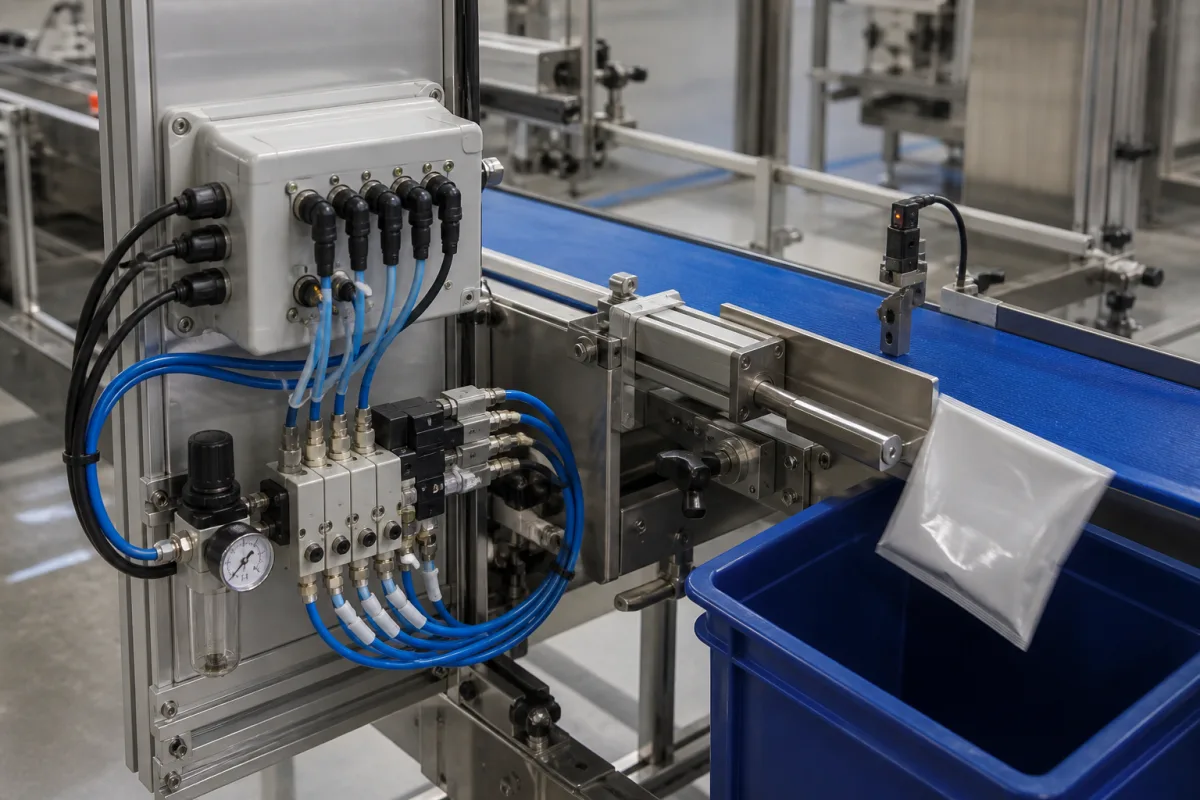
A canonical Rejection Mechanism Interface is characterized by the integration of Mounting Bracket and Signal Connector. In industrial production environments, manufacturers listed on CNFX commonly emphasize Stainless Steel construction to support stable, high-cycle operation across diverse manufacturing scenarios.

Interface component that connects and coordinates the rejection mechanism with the main industrial system
Product Specifications

Technical details and manufacturing context for Rejection Mechanism Interface

Definition
The Rejection Mechanism Interface serves as the critical connection point between the rejection subsystem and the primary industrial system, facilitating communication, control signal transmission, and mechanical coordination to ensure synchronized operation when defective items or materials need to be removed from the production flow.
Working Principle
The interface physically connects the rejection mechanism to the industrial system through mounting points and connection hardware, while providing pathways for control signals, power transmission, and mechanical actuation. It enables the main system controller to trigger rejection actions and receive feedback from the rejection mechanism sensors.
Common Materials
Stainless Steel, Aluminum Alloy
Technical Parameters
  • Interface mounting dimensions for compatibility with industrial system (mm) Customizable
Components / BOM
  • Mounting Bracket
    Provides structural support and attachment points to the industrial system
    Material: Stainless Steel
  • Signal Connector
    Transmits control signals between the industrial system and rejection mechanism
    Material: Plastic Composite
  • Alignment Guide Optional
    Ensures proper mechanical alignment during installation
    Material: Aluminum Alloy
Engineering Reasoning
0.5-6.0 MPa (5-60 bar)
7.2 MPa (72 bar) hydraulic pressure or 85°C actuator temperature
Design Rationale: Hydraulic fluid viscosity breakdown at 85°C causing seal degradation and pressure-induced yield stress exceeding 250 MPa in actuator linkage pins
Risk Mitigation (FMEA)
Trigger Electromagnetic interference from adjacent 480V AC motor drives exceeding 150 V/m field strength
Mode: Solenoid valve control signal corruption leading to uncommanded rejection actuation
Strategy: Shielded twisted-pair cabling with ferrite chokes and 0.1 μF bypass capacitors at interface terminals
Trigger Mechanical wear of hardened steel cam follower exceeding 0.5 mm radial clearance
Mode: Timing misalignment causing 12 ms actuation delay beyond 10 ms tolerance window
Strategy: Laser-hardened 62 HRC cam surfaces with inductive proximity sensors providing 0.1 mm position feedback

Industry Taxonomies & Aliases

Commonly used trade names and technical identifiers for Rejection Mechanism Interface.

Applied To / Applications

This component is essential for the following industrial systems and equipment:

Industrial Ecosystem & Supply Chain DNA

Complementary Systems
Downstream Applications
Specialized Tooling

Application Fit & Sizing Matrix

Operational Limits
pressure: 0 to 10 bar
flow rate: Up to 100 L/min
temperature: -20°C to 120°C
slurry concentration: Up to 40% solids by weight
Media Compatibility
✓ Water-based slurries ✓ Food-grade liquids ✓ Non-corrosive chemicals
Unsuitable: Highly abrasive slurries with >40% solids or corrosive acids
Sizing Data Required
  • Rejection mechanism actuation force (N)
  • System flow rate (L/min)
  • Required response time (ms)

Reliability & Engineering Risk Analysis

Failure Mode & Root Cause
Mechanical binding or jamming
Cause: Accumulation of debris, wear particles, or corrosion products in the interface mechanism, leading to increased friction and eventual seizure.
Electrical contact degradation
Cause: Oxidation, pitting, or fretting wear at electrical contact points due to environmental exposure, vibration, or insufficient protective coatings.
Maintenance Indicators
  • Inconsistent or erratic operation of the rejection mechanism, such as delayed response or partial actuation
  • Unusual grinding, clicking, or buzzing sounds during activation, indicating mechanical interference or electrical arcing
Engineering Tips
  • Implement regular preventive maintenance cleaning and lubrication schedules using manufacturer-recommended materials to prevent debris buildup and corrosion
  • Install environmental protection measures such as seals, covers, or controlled atmosphere enclosures to shield the interface from contaminants and moisture

Compliance & Manufacturing Standards

Reference Standards
ISO 9001:2015 - Quality management systems ANSI B11.0 - Safety of machinery DIN 8580 - Manufacturing processes
Manufacturing Precision
  • Bore diameter: +/-0.01mm
  • Surface flatness: 0.05mm per 100mm
Quality Inspection
  • Dimensional verification using CMM
  • Material hardness testing (Rockwell C scale)

Factories Producing Rejection Mechanism Interface

Verified manufacturers with capability to produce this product in China

✓ 95% Supplier Capability Match Found

P Project Engineer from Brazil Jan 09, 2026
★★★★★
"Reliable performance in harsh Machinery and Equipment Manufacturing environments. No issues with the Rejection Mechanism Interface so far."
Technical Specifications Verified
S Sourcing Manager from Canada Jan 06, 2026
★★★★★
"Testing the Rejection Mechanism Interface now; the technical reliability results are within 1% of the laboratory datasheet."
Technical Specifications Verified
P Procurement Specialist from United States Jan 03, 2026
★★★★★
"Impressive build quality. Especially the technical reliability is very stable during long-term operation."
Technical Specifications Verified
Verification Protocol

“Feedback is collected from verified sourcing managers during RFQ (Request for Quote) and factory evaluation processes on CNFX. These reports represent historical performance data and technical audit summaries from our B2B manufacturing network.”

15 sourcing managers are analyzing this specification now. Last inquiry for Rejection Mechanism Interface from USA (1h ago).

Supply Chain Commonly Integrated Components

Pumping System

A mechanical system designed to transport fluids through a continuous flow pharmaceutical reactor with precise control of flow rates and pressures.

Explore Specs →
Drive Motor

Electric motor that provides rotational power to drive the blending mechanism in pharmaceutical powder blending equipment

Explore Specs →
Vision System

An optical inspection subsystem that uses cameras, lighting, and image processing to detect defects in pharmaceutical vials.

Explore Specs →
Coating Pan

A rotating vessel used to apply uniform coating layers to pharmaceutical tablets through controlled spraying and drying processes.

Explore Specs →

Frequently Asked Questions

What materials are used in the Rejection Mechanism Interface?

The interface is constructed from durable stainless steel and lightweight aluminum alloy, providing corrosion resistance and structural integrity for industrial environments.

How does this interface connect with existing industrial systems?

The interface coordinates with main systems through its signal connector and alignment guide, ensuring seamless integration and proper communication between the rejection mechanism and control systems.

What components are included in the BOM for installation?

The bill of materials includes an alignment guide for precise positioning, a mounting bracket for secure attachment, and a signal connector for system communication and coordination.

Can I contact factories directly on CNFX?

CNFX is an open directory, not a transaction platform. Each factory profile provides direct contact information and production details to help you initiate direct inquiries with Chinese suppliers.

Get Quote for Rejection Mechanism Interface

Request technical pricing, lead times, or customized specifications for Rejection Mechanism Interface directly from verified manufacturing units.

Your business information is encrypted and only shared with verified Rejection Mechanism Interface suppliers.

Thank you! Your message has been sent. We'll respond within 1–3 business days.

Need to Manufacture Rejection Mechanism Interface?

Connect with verified factories specializing in this product category

Add Your Factory Contact Us
Previous Product
Rejection Mechanism
Next Product
Release Mechanism