Industry-Verified Manufacturing Data (2026)

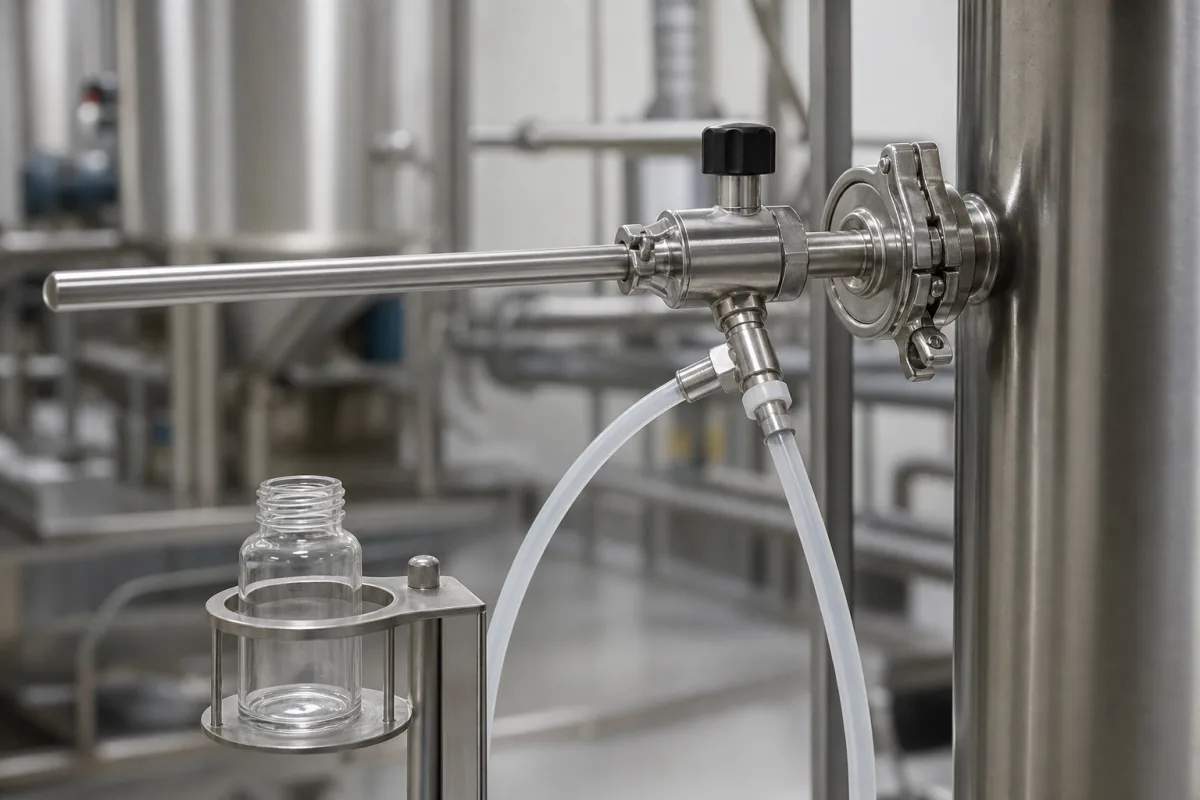
Sampling Probe

Based on aggregated insights from multiple verified factory profiles within the CNFX directory, the standard Sampling Probe used in the Machinery and Equipment Manufacturing sector typically supports operational capacities ranging from standard industrial configurations to heavy-duty production requirements.

Technical Definition & Core Assembly

A canonical Sampling Probe is characterized by the integration of Probe Tube and Sample Inlet/Nozzle. In industrial production environments, manufacturers listed on CNFX commonly emphasize Stainless Steel 316L construction to support stable, high-cycle operation across diverse manufacturing scenarios.

A component of an Automated Sampler designed to physically extract material samples from a process stream or container.
Product Specifications

Technical details and manufacturing context for Sampling Probe

Definition
The Sampling Probe is the critical interface component of an Automated Sampler system responsible for the direct, controlled extraction of representative material samples from liquids, powders, or granular substances within a process line, vessel, or silo. It ensures sample integrity by preventing contamination and maintaining the physical/chemical state of the sample during the collection phase.
Working Principle
The probe is typically inserted into the material source (manually or via an automated actuator). It utilizes mechanisms such as vacuum suction, pressure differential, or a mechanical scoop/cutter to draw or capture a defined volume of the sample. The collected sample is then transferred through an internal conduit to the sampler's main body for subsequent processing or analysis.
Common Materials
Stainless Steel 316L
Technical Parameters
  • Outer diameter and length of the probe insertion tube. (mm) Customizable
Components / BOM
  • Probe Tube
    Primary structural body that houses the sample path and provides insertion rigidity.
    Material: Stainless Steel 316L
  • Sample Inlet/Nozzle
    The opening or tip designed to efficiently capture the sample material, often with specific geometry (e.g., tapered, slotted).
    Material: Stainless Steel 316L
  • Internal Conduit/Liner
    Inner tube or lining that forms the sample flow path, sometimes made of inert material (e.g., PTFE) for chemical resistance.
    Material: PTFE (Polytetrafluoroethylene)
  • Connection Fitting
    Mechanical interface (flange, thread) for secure attachment to the sampler's transfer system.
    Material: Stainless Steel 316L
Engineering Reasoning
0.1-6.0 MPa (1-60 bar) at 20-150°C
7.2 MPa (72 bar) burst pressure at 180°C
Design Rationale: Yield strength degradation of 316L stainless steel (205 MPa to 145 MPa) due to thermal expansion mismatch between probe body and sealing elements at ΔT>160°C
Risk Mitigation (FMEA)
Trigger Particulate accumulation exceeding 50 μm diameter at 2.5 m/s flow velocity
Mode: Orifice blockage causing 0% sample flow
Strategy: Integrate 40 μm sintered filter with 0.5 MPa backflush system
Trigger Cyclic stress from 10⁶ actuations at 0.8 MPa differential pressure
Mode: Pneumatic actuator diaphragm fatigue crack propagation
Strategy: Replace EPDM diaphragm with FKM compound rated for 5×10⁶ cycles at 1.2 MPa

Industry Taxonomies & Aliases

Commonly used trade names and technical identifiers for Sampling Probe.

Applied To / Applications

This component is essential for the following industrial systems and equipment:

Industrial Ecosystem & Supply Chain DNA

Complementary Systems
Downstream Applications
Specialized Tooling

Application Fit & Sizing Matrix

Operational Limits
pressure: 0 to 10 bar (g)
flow rate: 0.1 to 5 m/s process stream velocity
temperature: -20°C to 150°C
slurry concentration: Up to 40% solids by weight
Media Compatibility
✓ Aqueous solutions ✓ Food-grade slurries ✓ Pharmaceutical powders
Unsuitable: Highly corrosive acids (e.g., concentrated sulfuric acid)
Sizing Data Required
  • Process pipe diameter
  • Required sample volume per cycle
  • Material particle size distribution

Reliability & Engineering Risk Analysis

Failure Mode & Root Cause
Clogging/Blockage
Cause: Accumulation of particulate matter, scaling, or biological growth within the probe orifice or internal passages, often due to inadequate filtration, improper sampling conditions, or infrequent cleaning.
Corrosion/Erosion
Cause: Chemical attack from aggressive process fluids or abrasive wear from high-velocity particulate-laden streams, exacerbated by material incompatibility, extreme pH/temperature, or lack of protective coatings.
Maintenance Indicators
  • Erratic or zero flow readings despite confirmed process flow, indicating partial or complete blockage
  • Visible leaks, cracks, or material degradation at probe connections or body, often accompanied by process fluid seepage
Engineering Tips
  • Implement routine purging/backflushing with compatible cleaning agents and install upstream strainers/filters sized for the specific particulate load
  • Select probe materials (e.g., Hastelloy, PTFE-lined) matched to process chemistry and install in low-turbulence zones with proper orientation to minimize direct impingement

Compliance & Manufacturing Standards

Reference Standards
ISO 10715:1997 (Natural gas - Sampling guidelines) ASTM D5287-97 (Standard Practice for Automatic Sampling of Petroleum and Petroleum Products) EN 15267-3:2007 (Air quality - Certification of automated measuring systems - Part 3: Performance criteria and test procedures for automated measuring systems for monitoring emissions from stationary sources)
Manufacturing Precision
  • Probe tip diameter tolerance: +/-0.05 mm
  • Straightness tolerance over length: 0.1 mm per 300 mm
Quality Inspection
  • Leak test (pressure decay or bubble immersion method)
  • Material verification test (X-ray fluorescence or spark emission spectroscopy)

Factories Producing Sampling Probe

Verified manufacturers with capability to produce this product in China

✓ 92% Supplier Capability Match Found

S Sourcing Manager from United States Mar 01, 2026
★★★★★
"As a professional in the Machinery and Equipment Manufacturing sector, I confirm this Sampling Probe meets all ISO standards."
Technical Specifications Verified
P Procurement Specialist from United Arab Emirates Feb 26, 2026
★★★★☆
"Standard OEM quality for Machinery and Equipment Manufacturing applications. The Sampling Probe arrived with full certification. (Delivery took slightly longer than expected, but technical support was excellent.)"
Technical Specifications Verified
T Technical Director from Australia Feb 23, 2026
★★★★★
"Great transparency on the Sampling Probe components. Essential for our Machinery and Equipment Manufacturing supply chain."
Technical Specifications Verified
Verification Protocol

“Feedback is collected from verified sourcing managers during RFQ (Request for Quote) and factory evaluation processes on CNFX. These reports represent historical performance data and technical audit summaries from our B2B manufacturing network.”

9 sourcing managers are analyzing this specification now. Last inquiry for Sampling Probe from Poland (17m ago).

Supply Chain Compatible Machinery & Devices

Hydraulic Press

Industrial machine using hydraulic pressure to compress, form, or assemble materials

Explore Specs →
Heavy-Duty CNC Plasma Cutting Machine

Industrial machine for precision metal cutting using plasma arc technology

Explore Specs →
Automated Assembly Line System

Integrated production system for sequential component assembly operations

Explore Specs →
Automated Powder Coating System

Integrated industrial system for applying dry powder coatings to metal substrates.

Explore Specs →

Frequently Asked Questions

What is the primary function of this sampling probe?

This sampling probe is designed to physically extract material samples from process streams or containers as part of an automated sampler system in machinery and equipment manufacturing applications.

Why is stainless steel 316L used for this sampling probe?

Stainless steel 316L offers excellent corrosion resistance, durability, and hygienic properties, making it ideal for sampling applications where material purity and equipment longevity are critical.

What are the main components of this sampling probe?

The sampling probe consists of four key components: connection fitting, internal conduit/liner, probe tube, and sample inlet/nozzle, all engineered for reliable material extraction in industrial environments.

Can I contact factories directly on CNFX?

CNFX is an open directory, not a transaction platform. Each factory profile provides direct contact information and production details to help you initiate direct inquiries with Chinese suppliers.

Get Quote for Sampling Probe

Request technical pricing, lead times, or customized specifications for Sampling Probe directly from verified manufacturing units.

Your business information is encrypted and only shared with verified Sampling Probe suppliers.

Thank you! Your message has been sent. We'll respond within 1–3 business days.

Need to Manufacture Sampling Probe?

Connect with verified factories specializing in this product category

Add Your Factory Contact Us
Previous Product
Sampling Controller
Next Product
SCADA/MES Software Server