Industry-Verified Manufacturing Data (2026)

Sealing Actuator

Based on aggregated insights from multiple verified factory profiles within the CNFX directory, the standard Sealing Actuator used in the Machinery and Equipment Manufacturing sector typically supports operational capacities ranging from standard industrial configurations to heavy-duty production requirements.

Technical Definition & Core Assembly

A canonical Sealing Actuator is characterized by the integration of Cylinder Body and Piston/Rod Assembly. In industrial production environments, manufacturers listed on CNFX commonly emphasize Stainless Steel (body/piston rod) construction to support stable, high-cycle operation across diverse manufacturing scenarios.

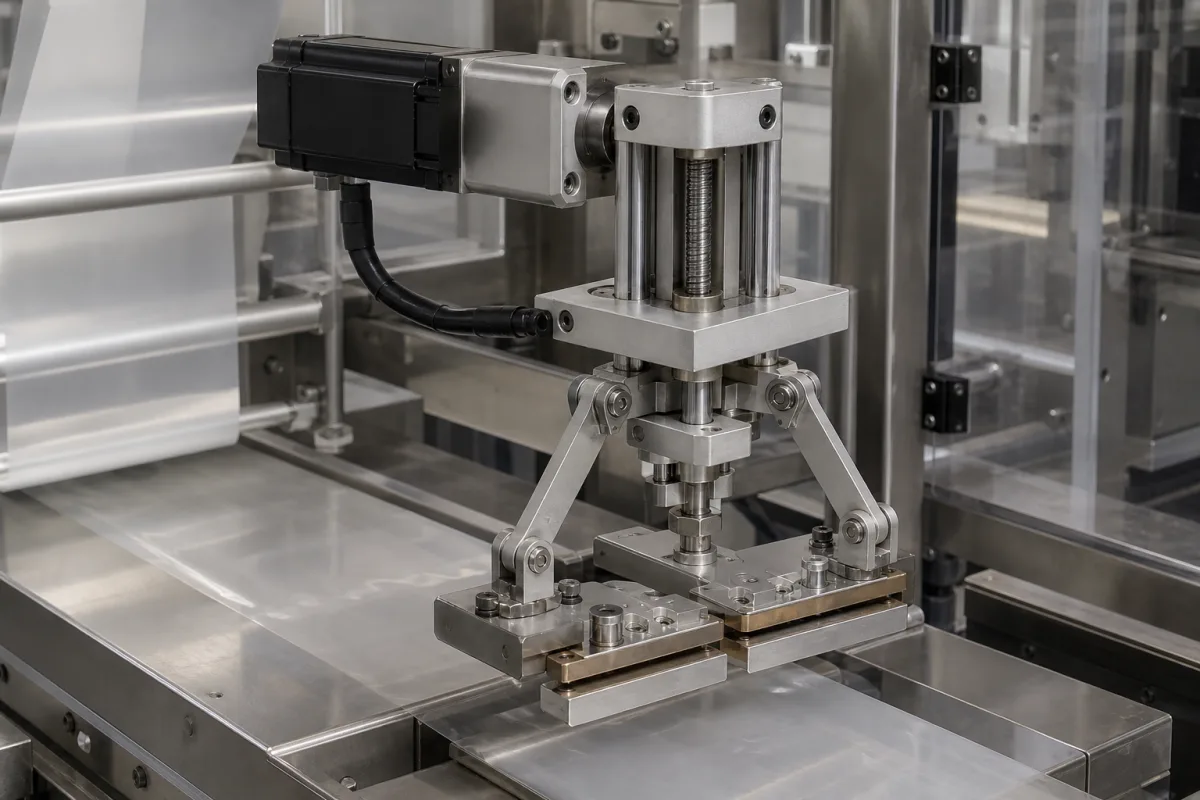
A mechanical or electromechanical device that provides the controlled force and motion required to engage and disengage sealing surfaces in an automatic sealing system.
Product Specifications

Technical details and manufacturing context for Sealing Actuator

Definition
The sealing actuator is a critical component within an Automatic Sealing Mechanism, responsible for converting control signals (pneumatic, hydraulic, or electrical) into precise linear or rotary motion. This motion directly applies or releases pressure on the sealing element (such as a gasket, O-ring, or sealing jaw), enabling the opening and closing cycles of the sealing process. Its performance directly impacts the reliability, speed, and consistency of the seal.
Working Principle
The actuator receives a command signal (e.g., from a PLC or sensor). Based on its type, it converts this signal into mechanical force: pneumatic actuators use compressed air to move a piston; hydraulic actuators use pressurized fluid; electric actuators use a motor and lead screw. This force is transmitted to a rod or arm, which moves the sealing tooling into position to compress the sealing material against the target surface, creating a hermetic or pressure-tight closure.
Common Materials
Stainless Steel (body/piston rod), Aluminum Alloy (housing), Nitrile Rubber/Viton (seals)
Technical Parameters
  • Stroke Length - The total linear distance the actuator rod travels from fully retracted to fully extended position. (mm) Per Request
Components / BOM
  • Cylinder Body
    Houses the piston and internal mechanism, contains the working fluid (air/oil) or guides the electric drive.
    Material: Aluminum Alloy or Stainless Steel
  • Piston/Rod Assembly
    Converts fluid pressure or rotary motor torque into linear force and motion. The rod connects to the external sealing tooling.
    Material: Hardened Steel or Stainless Steel
  • Seals (Rod Seal, Piston Seal)
    Prevent leakage of the working medium (air, oil) from the cylinder, maintaining pressure and efficiency.
    Material: Nitrile Rubber (NBR), Polyurethane, or Viton (FKM)
Engineering Reasoning
0.5-25.0 bar
28.5 bar (150% of maximum rated pressure)
Design Rationale: Plastic deformation of actuator housing due to hoop stress exceeding yield strength of 6061-T6 aluminum (276 MPa)
Risk Mitigation (FMEA)
Trigger Electromagnetic interference from adjacent 480V AC motor drives
Mode: Hall effect sensor signal corruption causing position feedback loss
Strategy: Shielded twisted-pair cabling with ferrite chokes and 0.1 μF bypass capacitors at sensor inputs
Trigger Cyclic loading at 15 Hz exceeding 10^7 cycles
Mode: Fatigue crack propagation in M8 mounting bolts
Strategy: Grade 10.9 alloy steel bolts with rolled threads and preload torque of 40 N·m ±10%

Industry Taxonomies & Aliases

Commonly used trade names and technical identifiers for Sealing Actuator.

Applied To / Applications

This component is essential for the following industrial systems and equipment:

Industrial Ecosystem & Supply Chain DNA

Complementary Systems
Downstream Applications
Specialized Tooling

Application Fit & Sizing Matrix

Operational Limits
pressure: Up to 100 bar
other spec: Flow Rate: 0-500 L/min, Slurry Concentration: ≤30% solids by weight
temperature: -40°C to 200°C
Media Compatibility
✓ Water-based fluids ✓ Hydraulic oils ✓ Food-grade media
Unsuitable: Highly abrasive slurries with >30% solids
Sizing Data Required
  • Required sealing force (N)
  • Actuation stroke length (mm)
  • System operating pressure (bar)

Reliability & Engineering Risk Analysis

Failure Mode & Root Cause
Seal degradation
Cause: Chemical incompatibility with process media leading to swelling, hardening, or cracking of elastomeric seals
Actuator binding
Cause: Contamination ingress (dust, particulates, moisture) into moving components causing friction and mechanical interference
Maintenance Indicators
  • Audible hissing or squealing during operation indicating seal leakage or insufficient lubrication
  • Visible fluid leakage around actuator housing or stem suggesting seal failure
Engineering Tips
  • Implement regular lubrication schedule using manufacturer-specified lubricants compatible with both seals and actuator materials
  • Install protective bellows or boots on exposed stems to prevent contamination ingress and maintain clean operating environment

Compliance & Manufacturing Standards

Reference Standards
ISO 9001:2015 - Quality Management Systems ANSI/B93.5M - Hydraulic Fluid Power - Cylinders DIN EN 15714-3 - Industrial Valves - Actuators
Manufacturing Precision
  • Shaft Diameter: +/-0.01mm
  • Surface Finish: Ra 0.8μm
Quality Inspection
  • Pressure Leak Test
  • Material Hardness Test

Factories Producing Sealing Actuator

Verified manufacturers with capability to produce this product in China

✓ 92% Supplier Capability Match Found

P Procurement Specialist from United States Feb 24, 2026
★★★★★
"Standard OEM quality for Machinery and Equipment Manufacturing applications. The Sealing Actuator arrived with full certification."
Technical Specifications Verified
T Technical Director from United Arab Emirates Feb 21, 2026
★★★★★
"Great transparency on the Sealing Actuator components. Essential for our Machinery and Equipment Manufacturing supply chain."
Technical Specifications Verified
P Project Engineer from Australia Feb 18, 2026
★★★★★
"The Sealing Actuator we sourced perfectly fits our Machinery and Equipment Manufacturing production line requirements."
Technical Specifications Verified
Verification Protocol

“Feedback is collected from verified sourcing managers during RFQ (Request for Quote) and factory evaluation processes on CNFX. These reports represent historical performance data and technical audit summaries from our B2B manufacturing network.”

13 sourcing managers are analyzing this specification now. Last inquiry for Sealing Actuator from Brazil (47m ago).

Supply Chain Compatible Machinery & Devices

Automated Assembly Line System

Integrated production system for sequential component assembly operations

Explore Specs →
Automated Powder Coating System

Integrated industrial system for applying dry powder coatings to metal substrates.

Explore Specs →
Centrifugal Pump Impeller

Rotating component that transfers energy to fluid in centrifugal pumps.

Explore Specs →
High-Precision CNC Laser Cutting Machine

Computer-controlled industrial machine using focused laser beams to cut sheet metal with micron-level accuracy.

Explore Specs →

Frequently Asked Questions

What materials are used in this sealing actuator?

The actuator features a stainless steel body and piston rod, aluminum alloy housing, and nitrile rubber or Viton seals for optimal durability and chemical resistance.

How does this actuator engage sealing surfaces?

It provides controlled mechanical or electromechanical force and motion to precisely engage and disengage sealing surfaces in automated sealing systems.

What are the main components in the bill of materials?

Key components include the cylinder body, piston/rod assembly, and seals (rod seal and piston seal) for reliable sealing performance.

Can I contact factories directly on CNFX?

CNFX is an open directory, not a transaction platform. Each factory profile provides direct contact information and production details to help you initiate direct inquiries with Chinese suppliers.

Get Quote for Sealing Actuator

Request technical pricing, lead times, or customized specifications for Sealing Actuator directly from verified manufacturing units.

Your business information is encrypted and only shared with verified Sealing Actuator suppliers.

Thank you! Your message has been sent. We'll respond within 1–3 business days.

Need to Manufacture Sealing Actuator?

Connect with verified factories specializing in this product category

Add Your Factory Contact Us
Previous Product
Seal Integrity Sensor
Next Product
Sealing Door