Editorial Technical Reference

Cylinder Body

This page explains how Cylinder Body is classified within Machinery and Equipment Manufacturing. Technical values and manufacturer relationships are research references; confirm the current specification and supplier evidence for each order.

Technical Definition & Core Assembly

The main structural housing of a soft-close damper that contains the piston and hydraulic fluid.
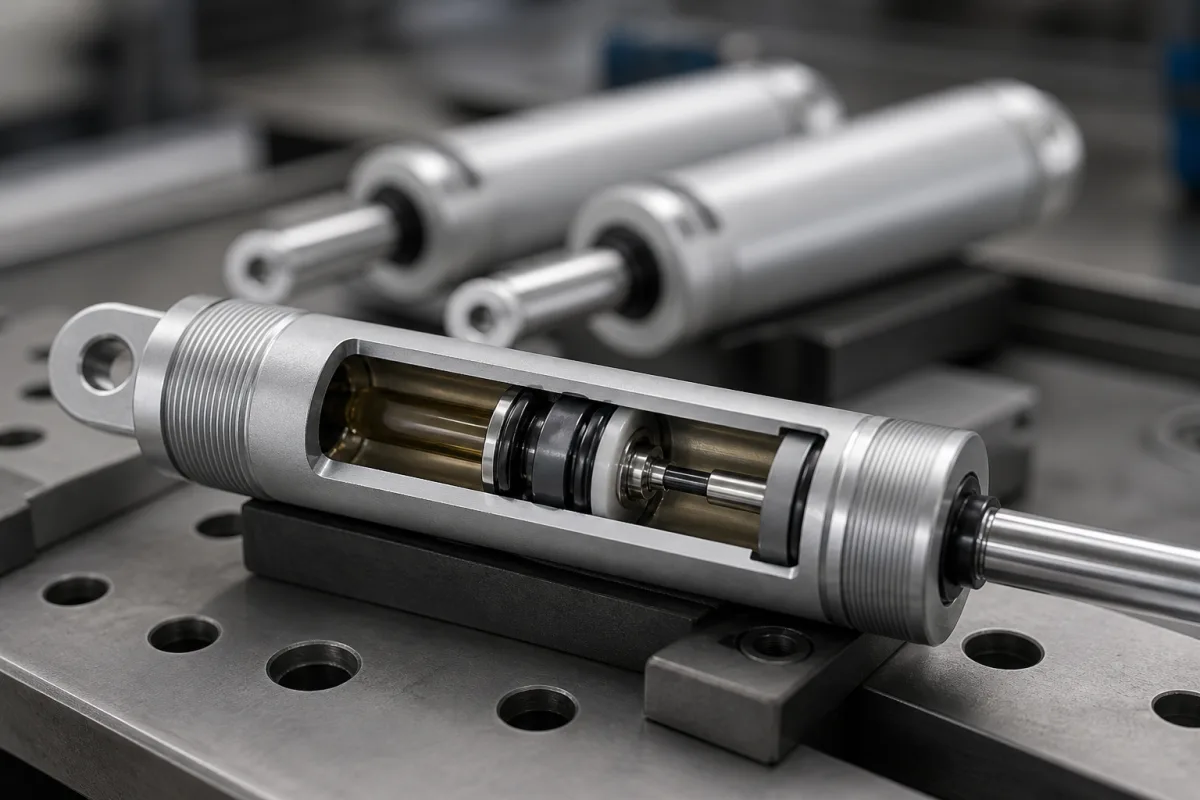
Representative product image. Confirm appearance and specifications with the manufacturer.

Product Specifications

Technical details and manufacturing context for Cylinder Body

Definition
The cylinder body is the primary structural component of a soft-close damper, serving as the sealed chamber that houses the piston, hydraulic fluid, and internal valving. It provides the necessary containment for the controlled fluid displacement that enables the damper's smooth, decelerating closing action. Typically manufactured from aluminum alloy or stainless steel, the cylinder body must maintain precise dimensional tolerances to ensure proper piston fit and consistent damping performance. The inner diameter of the cylinder bore is a critical parameter, as it directly influences the piston's sealing and the volume of fluid displaced during operation. In a soft-close damper, the cylinder body acts as a pressure vessel, withstanding the internal pressures generated during compression and extension cycles. Its structural integrity is essential for safe and reliable operation over the product's lifespan. When selecting or specifying a cylinder body, engineers must verify the exact inner diameter and material grade against the intended application, as these factors affect compatibility with the piston and seals, as well as resistance to corrosion and wear. The cylinder body's design must also accommodate the internal valving and fluid flow paths, ensuring that the damping force is consistent and adjustable if required. For maintenance, regular inspection for leaks, scoring, or deformation is recommended, as these can compromise the damper's performance. If any damage is detected, the cylinder body should be replaced, as repairs are typically not feasible. Always confirm model-specific specifications and applicable standards with the legal manufacturer or supplier before procurement or use.
Working Principle
The cylinder body acts as a pressure vessel. As the damper's piston rod is compressed or extended, it forces hydraulic fluid through internal orifices and valves within the cylinder body. The resistance created by this fluid flow through the restricted passages generates the damping force, converting kinetic energy into heat and providing the soft-close functionality.
Common Materials
Aluminum Alloy, Stainless Steel
Technical Parameters

What to specify in your RFQ

  • Inner diameter of the cylinder bore, critical for piston fit and fluid displacement volume. in mm

These are the quantities to specify to the manufacturer when sizing or requesting a quote. The manufacturer's own documentation governs the exact figures and applicable standard.

Components / BOM
  • Cylinder Tube Part
    Forms the main bore for piston travel and fluid containment.
    Material: Aluminum Alloy
  • End Cap / Gland Part
    Seals the end of the cylinder and guides the piston rod.
    Material: Stainless Steel
  • Mounting Bracket Part
    Provides attachment points for installing the damper assembly.
    Material: Steel

Applied To / Applications

This component is essential for the following industrial systems and equipment:

Industrial Ecosystem & Supply Chain Structure

Complementary Systems
Downstream Applications
Specialized Tooling

Application Fit & Sizing Matrix

Operational Limits
pressure: Up to 300 bar (4350 psi)
other spec: Flow rate: 0.1-5 L/min, Viscosity range: 10-500 cSt
temperature: -40°C to +120°C
Media Compatibility
✓ Hydraulic oil (ISO VG 32-68) ✓ Water-glycol fluids ✓ Phosphate ester fluids
Unsuitable: Highly abrasive slurries or corrosive chemical media
Sizing Data Required
  • Required damping force (N)
  • Stroke length (mm)
  • Mounting configuration and space constraints

Reliability & Engineering Risk Analysis

Failure Mode & Root Cause
Cylinder bore scoring
Cause: Contamination ingress (dust, metal particles) or inadequate lubrication leading to metal-to-metal contact and abrasive wear on the bore surface.
Rod seal leakage
Cause: Seal degradation from chemical incompatibility, excessive heat, or misalignment causing extrusion damage and hydraulic fluid loss.
Maintenance Indicators
  • Audible hissing or squealing during operation indicating seal failure or air ingress
  • Visible hydraulic fluid weeping around rod gland or cylinder mounting points
Engineering Tips
  • Implement proactive contamination control with proper filtration (ISO 4406 compliance) and regular fluid analysis
  • Ensure correct cylinder alignment during installation and use rod wipers to prevent external contaminant ingress

Indicative industry ranges for design and RFQ preparation. Confirm the exact figures and applicable standard with the manufacturer before specifying.

Compliance & Manufacturing Standards

Applicable Standards
ISO 6020-1: Hydraulic fluid power - Mounting dimensions for single rod cylinders, 16 MPa series ANSI/NFPA T3.6.7 R1-2015: Fluid power cylinders - Bore and rod diameter and mounting dimensions DIN ISO 3320: Fluid power systems and components - Cylinder bores and piston rod diameters - Metric series

Quoted from the published standard.

Manufacturing Precision
  • Bore diameter: +/-0.02 mm
  • Parallelism of mounting surfaces: 0.1 mm per 100 mm length
Quality Inspection
  • Pressure test: 1.5 times maximum working pressure for 2 minutes
  • Dimensional verification using CMM (Coordinate Measuring Machine)

Manufacturers of Cylinder Body

Manufacturer profiles associated with Cylinder Body.

Sourcing Cylinder Body from China?
Tell us your specification and target quantity — we will match it against manufacturer records and come back with the factories that fit.
Request manufacturers We manufacture this

Manufacturer listings support early research and capability understanding. They are not certification, ranking, or transaction guarantees.

Technical documentation
Request current drawings, revision history, and a signed specification sheet.
Manufacturing capability
Verify equipment lists, process limits, capacity, and representative production evidence.
Inspection readiness
Confirm test methods, calibrated equipment, sampling plans, and traceable reports.
Supplier transparency
Check the legal entity, factory address, ownership, certifications, and direct contacts.

CNFX does not score or rank suppliers. Buyers must verify all claims and documents with the legal manufacturer before ordering.

Supply Chain Compatible Machinery & Devices

Hydraulic Press

Industrial machine using hydraulic pressure to compress, form, or assemble materials

Explore Specs →
Heavy-Duty CNC Plasma Cutting Machine

The Heavy-Duty CNC Plasma Cutting Machine is a standalone industrial device designed for cutting conductive metals such as steel, stainless steel, aluminum, and copper alloys.

Explore Specs →
Automated Powder Coating System

Integrated industrial system for applying dry powder coatings to metal substrates.

Explore Specs →
Centrifugal Pump Impeller

The centrifugal pump impeller is a critical rotating component that converts mechanical energy from the motor into kinetic energy in fluid systems.

Explore Specs →

Frequently Asked Questions

What materials are available for the cylinder body?

According to the directory listing, the cylinder body can be made from aluminum alloy or stainless steel. The specific material grade should be confirmed with the manufacturer for your application.

What is the critical dimension to verify?

The inner diameter of the cylinder bore is critical, as it affects piston fit and fluid displacement volume. Always confirm the exact inner diameter in millimeters with the supplier.

How does the cylinder body contribute to damping?

It acts as a sealed chamber and pressure vessel. When the piston moves, hydraulic fluid is forced through internal orifices, creating resistance that generates the damping force.

What maintenance is required?

Regularly inspect for leaks, scoring, or deformation. If any damage is found, replace the cylinder body, as repairs are typically not feasible. Always follow manufacturer guidelines.

Data Basis

Editorial classification, named public sources where available, and source-reviewed manufacturer records.

Preliminary Technical Classification
This page supports structured research, RFQ preparation, and supplier evaluation. It does not replace buyer-led supplier qualification, standards review, or technical approval.
Buyer enquiry

Request manufacturing insight for Cylinder Body

Ask for use case, specification boundaries, supplier type, and RFQ preparation information for this product.

Where it goes
Straight to the CNFX editorial desk, and to the manufacturer if this product is linked to a claimed profile. Nothing is broadcast to a supplier list.
Your details stay here
We do not sell or rent enquiry data, and we do not add you to a mailing list. Used only to answer this request.
No commission, no middleman
CNFX is a directory. We take no cut of any order and never negotiate on a supplier's behalf.
What we don't claim
A listing is not an endorsement. Qualify every supplier and verify every figure yourself before ordering.

Your business information is used only to process this request.

Thank you! Your message has been sent. We'll respond within 1–3 business days.
Sorry, we couldn't send your message. Please try again, or email us at contact@cnfx.com.

Need to Manufacture Cylinder Body?

Compare manufacturer profiles with relevant product and process capability.

Previous Product
Z-axis Ram/Spindle
Last Product
Get QuotesChat