Actuator
View system integration details
This page explains how Piston/Rod Assembly is classified within Machinery and Equipment Manufacturing. Technical values and manufacturer relationships are research references; confirm the current specification and supplier evidence for each order.
A mechanical assembly consisting of a piston and connecting rod that converts linear motion within an actuator.
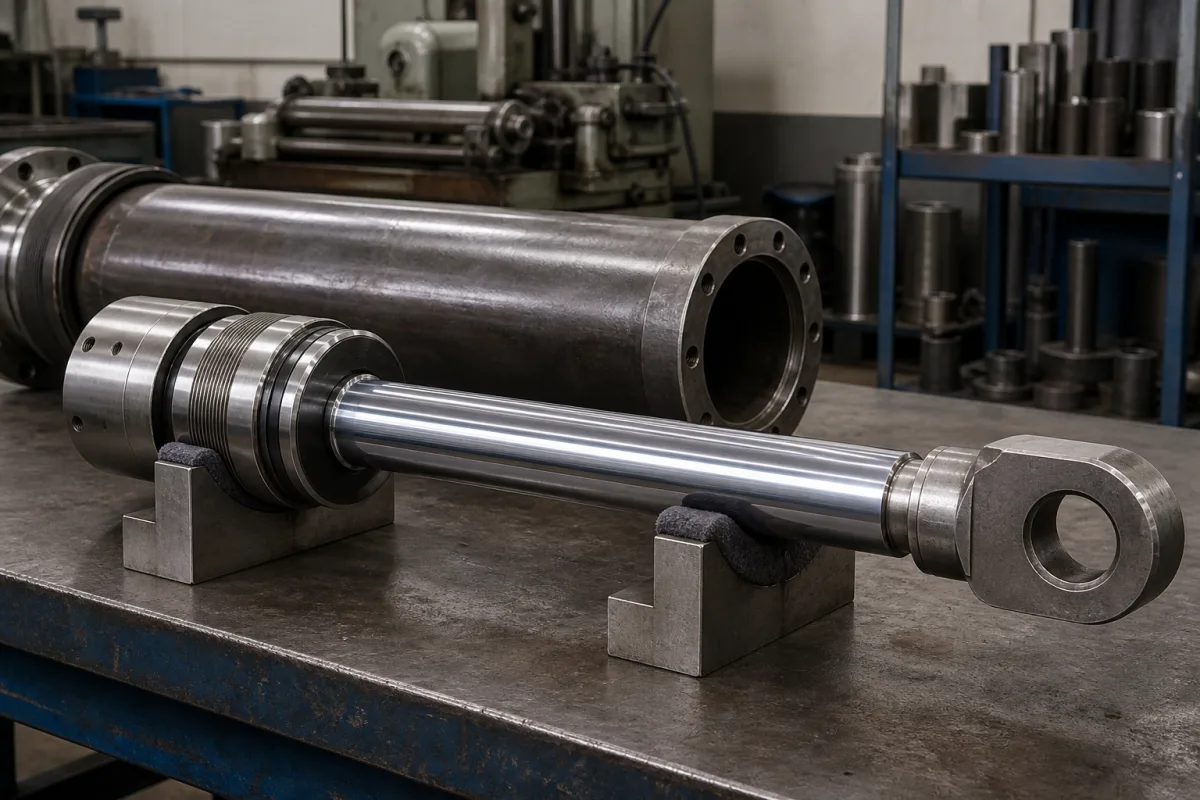
Technical details and manufacturing context for Piston/Rod Assembly
| Parameter | Typical range | Notes & selection driver |
|---|---|---|
| Bore Diameter | 32–200 mm | Determines force output; larger bore for higher force.ISO 6020-2 |
| Stroke Length | 50–1000 mm | Defines travel range; longer stroke increases overall length.ISO 6020-2 |
| Operating Pressure | 1.0–1.6 MPa | |
| Piston Rod Diameter | 12–70 mm | Affects buckling strength and weight.ISO 6195 |
| Piston Speed | 0.1–1.5 m/s | Higher speed may require special seals and cooling.ISO 8131 |
| Operating Temperature | -20–80 °C | Outside range affects seal life and material properties.ISO 8131 |
| Cylinder Tube Material | 304 ASTM | 304 stainless for corrosion resistance; 6061-T6 aluminum for weight reduction.ASTM A276 |
| Piston Rod Material | 1045 ASTM | Hard chrome plated for wear resistance.ASTM A29 |
| Seal Material | NBR ASTM D2000 | NBR for petroleum fluids; FKM for high temperature.ASTM D2000 |
| Surface Roughness (Piston Rod) | 0.2–0.4 µm Ra | Critical for seal life; smoother for dynamic seals.ISO 1302 |
| Weight | 2–50 kg | Depends on bore, stroke, and material; affects handling and mounting. |
| Cushioning Type | adjustable | Adjustable cushions reduce end-of-stroke impact.ISO 8131 |
Ranges are indicative industry figures for RFQ preparation, not a supplier commitment. Confirm every value and standard with the legal manufacturer before ordering.
This component is essential for the following industrial systems and equipment:
| pressure: | Up to 300 bar (4350 psi) |
| flow rate: | N/A (static assembly) |
| temperature: | -40°C to 200°C |
| slurry concentration: | Not recommended for abrasive slurries >5% solids by volume |
Indicative industry ranges for design and RFQ preparation. Confirm the exact figures and applicable standard with the manufacturer before specifying.
Quoted from the published standard.
Manufacturer profiles associated with Piston/Rod Assembly.
Manufacturer listings support early research and capability understanding. They are not certification, ranking, or transaction guarantees.
A practical evidence checklist for RFQ preparation and supplier evaluation.
CNFX does not score or rank suppliers. Buyers must verify all claims and documents with the legal manufacturer before ordering.
Common materials include carbon steel, stainless steel, and aluminum alloy. For example, cylinder tube may be 304 stainless steel (ASTM A276) for corrosion resistance or 6061-T6 aluminum for weight reduction. Piston rod material is often 1045 carbon steel (ASTM A29) with hard chrome plating for wear resistance. Seal material may be NBR (ASTM D2000) for petroleum fluids or FKM for high temperature.
The typical operating pressure range is 1.0 to 1.6 MPa. Above 1.6 MPa, seals may be damaged. Always verify the exact pressure rating with the manufacturer for your specific application.
Bore diameter determines the force output; a larger bore provides higher force for a given pressure. The standard range is 32 to 200 mm, per ISO 6020-2. Selecting the correct bore is critical for meeting force requirements.
Relevant standards include ISO 6020-2 for bore and stroke, ISO 6195 for rod diameter, ISO 8131 for speed and temperature, and ISO 1302 for surface roughness. These standards serve as procurement references; verify compliance with the manufacturer.
Editorial classification, named public sources where available, and source-reviewed manufacturer records.
Ask for use case, specification boundaries, supplier type, and RFQ preparation information for this product.
Compare manufacturer profiles with relevant product and process capability.