Integrated Cooling System
View system integration details
This page explains how Spray Headers and Nozzles is classified within Machinery and Equipment Manufacturing. Technical values and manufacturer relationships are research references; confirm the current specification and supplier evidence for each order.
A distribution and atomization assembly that delivers and disperses cooling fluid within an integrated cooling system.
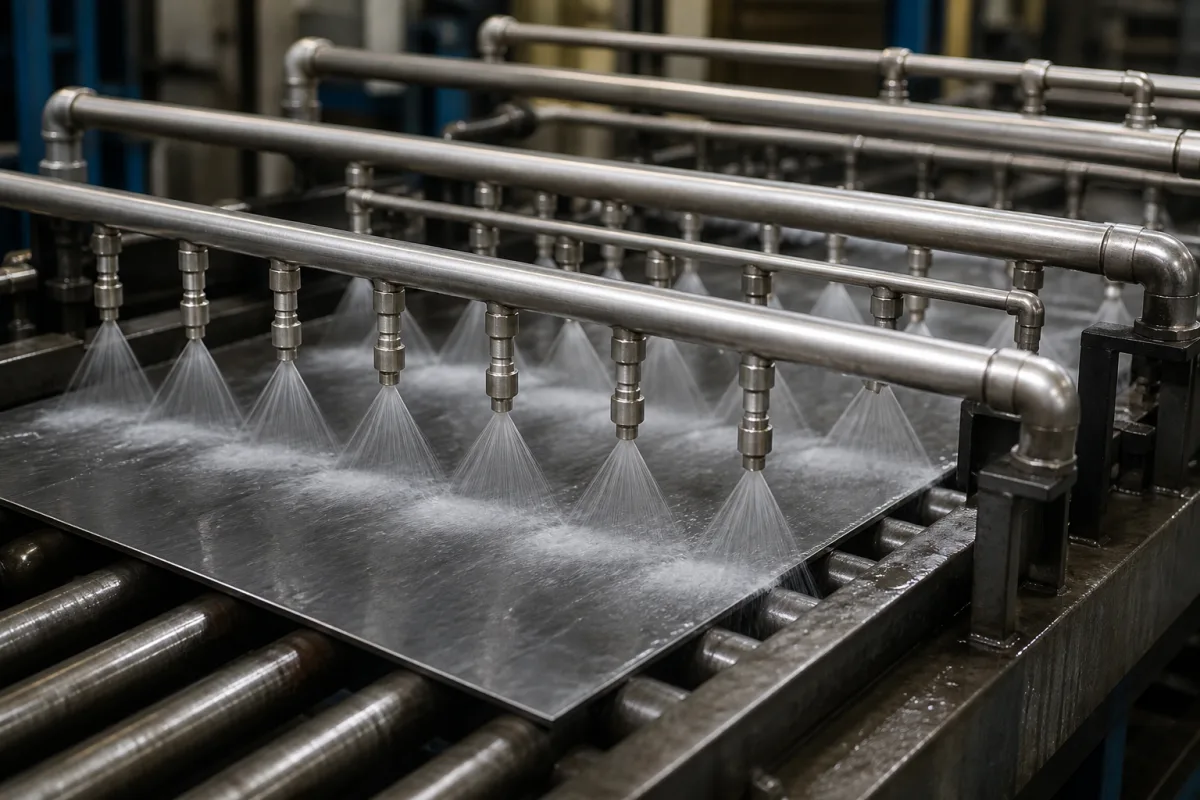
Technical details and manufacturing context for Spray Headers and Nozzles
| Parameter | Typical range | Notes & selection driver |
|---|---|---|
| Operating Pressure | 1.0–1.6 MPa | |
| Flow Rate | 10–50 L/min | Per nozzle at rated pressure |
| Spray Angle | 60–120 ° | Full cone angle |
| Nozzle Orifice Diameter | 1.5–6.0 mm | Determines droplet size and flow |
| Spray Coverage Width | 500–2000 mm | At 300 mm distance |
| Material | 304/316L | Stainless steel for corrosion resistanceASTM A240 |
| Connection Size | 1/2–2 inch | BSP threadISO 7-1 |
| Operating Temperature | -20–120 °C | Beyond this may affect seals |
| Weight | 2–15 kg | Per header assembly |
| Filtration Requirement | 50–200 μm | Prevents nozzle clogging |
Ranges are indicative industry figures for RFQ preparation, not a supplier commitment. Confirm every value and standard with the legal manufacturer before ordering.
| pressure: | Up to 10 bar (145 psi) |
| flow rate: | 0.5 to 50 L/min per nozzle |
| temperature: | -20°C to 150°C |
| slurry concentration: | Up to 15% solids by weight |
Indicative industry ranges for design and RFQ preparation. Confirm the exact figures and applicable standard with the manufacturer before specifying.
Quoted from the published standard.
A practical evidence checklist for RFQ preparation and supplier evaluation.
Compare the published product scope and source details, then include your specifications and quantity in an enquiry.
Manufacturer profiles associated with Spray Headers and Nozzles.
Explore company information and manufacturing capabilities, then discuss the scope of your project with a relevant supplier.
Ask for use case, specification boundaries, supplier type, and RFQ preparation information for this product.
Common materials include stainless steel (304/316), brass, and plastics such as PVC, PP, and PTFE. The choice depends on the fluid, temperature, and corrosion resistance requirements.
Consider the required flow rate, spray angle, droplet size, and coverage width. Also, ensure the operating pressure and temperature are within the specified ranges. Always verify with the manufacturer for model-specific performance.
Regular inspection and cleaning to prevent clogging. Check for wear and tear, and ensure filtration is adequate. Replace worn nozzles to maintain spray quality.
Clogging due to particulate matter, erosion of nozzle orifices, and seal failure at high temperatures or pressures. Regular monitoring and maintenance can mitigate these issues.
This component is essential for the following industrial systems and equipment:
Editorial classification, named public sources where available, and source-reviewed manufacturer records.
Compare manufacturer profiles with relevant product and process capability.