Industry-Verified Manufacturing Data (2026)

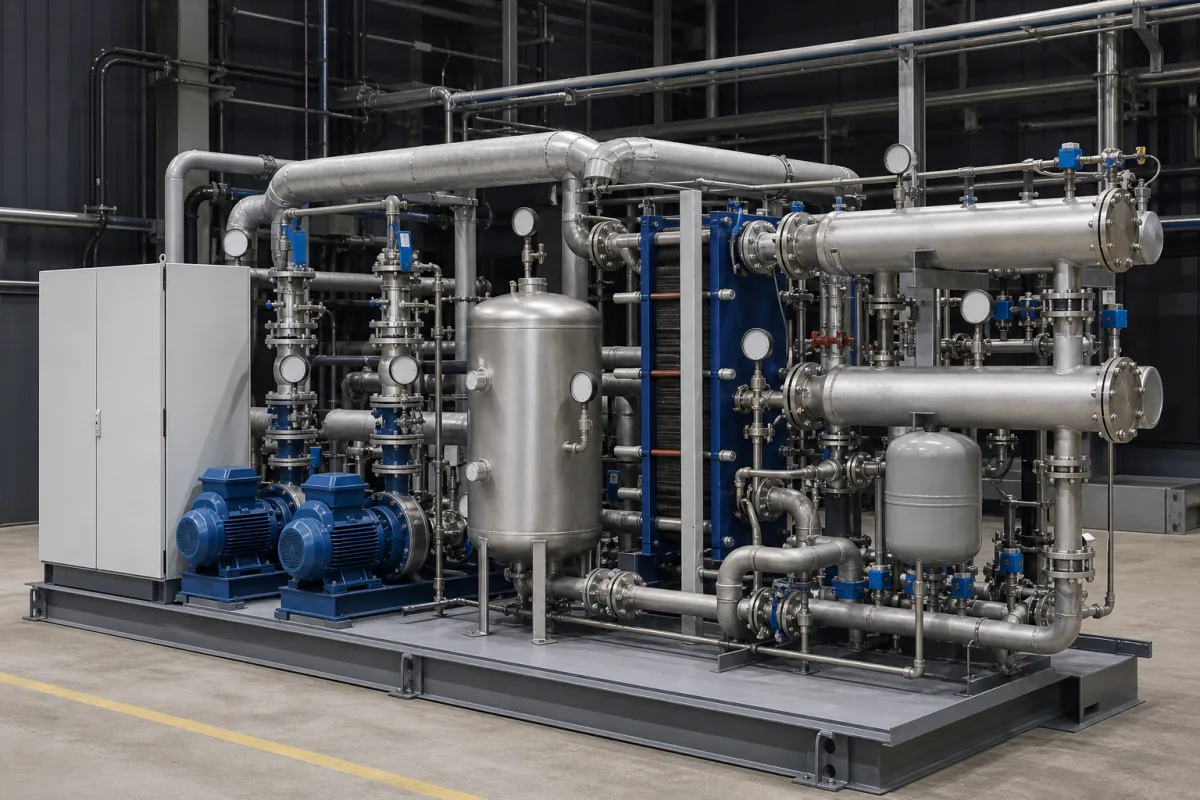
Integrated Cooling System

Based on aggregated insights from multiple verified factory profiles within the CNFX directory, the standard Integrated Cooling System used in the Basic Metal Manufacturing sector typically supports operational capacities ranging from standard industrial configurations to heavy-duty production requirements.

Technical Definition & Core Assembly

A canonical Integrated Cooling System is characterized by the integration of Water-Cooled Copper Mold and Spray Headers and Nozzles. In industrial production environments, manufacturers listed on CNFX commonly emphasize Copper alloy (for molds) construction to support stable, high-cycle operation across diverse manufacturing scenarios.

A specialized cooling subsystem designed to precisely control and manage the temperature of molten metal during the continuous casting process.
Product Specifications

Technical details and manufacturing context for Integrated Cooling System

Definition
The Integrated Cooling System is a critical component within the Integrated Continuous Casting Production System, responsible for the controlled solidification of molten metal as it passes through the casting machine. It ensures uniform cooling rates, prevents thermal stress and defects, and maintains the structural integrity and dimensional accuracy of the cast product throughout the solidification zone.
Working Principle
The system typically employs a series of water-cooled copper molds and secondary cooling zones (spray chambers). As the molten metal enters the mold, the primary cooling initiates solidification, forming a solid shell. The strand then passes through secondary cooling zones where controlled water sprays extract heat, allowing the core to solidify progressively and uniformly along the casting direction.
Common Materials
Copper alloy (for molds), Stainless steel (for piping and headers), Carbon steel (for structural framework)
Technical Parameters
  • Mold length and internal dimensions defining the initial solidification shell thickness and strand cross-section. (mm) Per Request
Components / BOM
  • Water-Cooled Copper Mold
    Provides primary cooling to initiate solidification and form the initial strand shell with the desired cross-sectional shape.
    Material: Copper alloy (often with chromium or silver plating)
  • Spray Headers and Nozzles
    Distribute cooling water as a fine spray or mist over the strand surface in the secondary cooling zones for controlled heat extraction.
    Material: Stainless steel
  • Water Circulation and Filtration Unit
    Pumps, filters, and controls to supply clean, temperature-controlled water at the required pressure and flow rate to all cooling zones.
    Material: Carbon steel, stainless steel, various polymers
Engineering Reasoning
0.5-2.0 MPa (5-20 bar) at 15-45°C coolant temperature
Coolant pressure drop below 0.3 MPa (3 bar) or temperature rise above 60°C
Design Rationale: Coolant vaporization at reduced pressure (below saturation pressure at operating temperature) causing cavitation and loss of heat transfer coefficient
Risk Mitigation (FMEA)
Trigger Coolant pump impeller erosion from suspended abrasive particles exceeding 25 μm diameter
Mode: Flow rate reduction below 80% of design specification (from 500 L/min to <400 L/min)
Strategy: Installation of dual-stage filtration system with 10 μm nominal filtration and magnetic separator
Trigger Thermal stress cycling from 300°C mold surface to 45°C coolant causing ΔT=255°C
Mode: Copper cooling plate crack propagation exceeding 2 mm depth at stress concentration points
Strategy: Implementation of graded thermal interface material with 15 W/m·K conductivity and 50 MPa yield strength

Industry Taxonomies & Aliases

Commonly used trade names and technical identifiers for Integrated Cooling System.

Industrial Ecosystem & Supply Chain DNA

Complementary Systems
Downstream Applications
Specialized Tooling

Application Fit & Sizing Matrix

Operational Limits
pressure: Max 25 bar (coolant circuit), 0.5-2 bar (molten metal contact pressure)
flow rate: 50-500 L/min (coolant), adjustable based on casting speed
temperature: 1500°C to 1800°C (molten metal interface), -10°C to 50°C (coolant side)
slurry concentration: Not applicable - designed for pure molten metals, not slurries
Media Compatibility
✓ Molten steel (carbon/alloy grades) ✓ Molten aluminum alloys ✓ Molten copper alloys
Unsuitable: Corrosive chloride-based molten salts or highly abrasive metal-ceramic slurries
Sizing Data Required
  • Casting throughput (tons/hour)
  • Required temperature drop (ΔT) across mold
  • Available cooling water temperature and flow capacity

Reliability & Engineering Risk Analysis

Failure Mode & Root Cause
Corrosion-induced leakage
Cause: Electrochemical degradation of metallic components (pipes, heat exchangers, fittings) due to water chemistry imbalances, galvanic couples, or inadequate corrosion inhibitors, leading to pinhole leaks or structural weakening.
Fouling and scaling
Cause: Accumulation of mineral deposits, biological growth, or particulate matter on heat transfer surfaces, reducing thermal efficiency, increasing pressure drop, and potentially causing localized overheating or flow blockage.
Maintenance Indicators
  • Unusual temperature rise in process fluid or coolant discharge, indicating reduced heat transfer efficiency
  • Abnormal pump noise (cavitation sounds, bearing wear) or visible leaks at joints, seals, or corrosion sites
Engineering Tips
  • Implement a rigorous water treatment program with regular chemical analysis and dosing to control pH, hardness, and biological growth, preventing corrosion and scaling.
  • Establish predictive maintenance practices, including vibration analysis for rotating equipment, infrared thermography for heat exchangers, and periodic ultrasonic thickness testing for corrosion monitoring.

Compliance & Manufacturing Standards

Reference Standards
ISO 14644-1:2015 (Cleanroom Classification) ANSI/ASHRAE 90.1-2022 (Energy Standard for Buildings) DIN EN 378-1:2017 (Refrigerating Systems and Heat Pumps)
Manufacturing Precision
  • Coolant Flow Rate: +/-5% of nominal
  • Temperature Control: +/-0.5°C
Quality Inspection
  • Pressure Leak Test (Hydrostatic/Pneumatic)
  • Thermal Performance Verification (Heat Load vs. Cooling Capacity)

Factories Producing Integrated Cooling System

Verified manufacturers with capability to produce this product in China

✓ 94% Supplier Capability Match Found

P Procurement Specialist from United Arab Emirates Feb 12, 2026
★★★★★
"Testing the Integrated Cooling System now; the technical reliability results are within 1% of the laboratory datasheet."
Technical Specifications Verified
T Technical Director from Australia Feb 09, 2026
★★★★★
"Impressive build quality. Especially the technical reliability is very stable during long-term operation."
Technical Specifications Verified
P Project Engineer from Singapore Feb 06, 2026
★★★★★
"As a professional in the Basic Metal Manufacturing sector, I confirm this Integrated Cooling System meets all ISO standards."
Technical Specifications Verified
Verification Protocol

“Feedback is collected from verified sourcing managers during RFQ (Request for Quote) and factory evaluation processes on CNFX. These reports represent historical performance data and technical audit summaries from our B2B manufacturing network.”

11 sourcing managers are analyzing this specification now. Last inquiry for Integrated Cooling System from Turkey (17m ago).

Supply Chain Compatible Machinery & Devices

Vacuum Induction Melting Furnace

Industrial furnace for melting metals under vacuum using electromagnetic induction

Explore Specs →
Electroslag Remelting Furnace

Secondary refining furnace for high-quality metal ingots

Explore Specs →
Molten Metal Flow Control Valve

Precision valve for regulating molten metal flow in casting and pouring operations.

Explore Specs →
Molten Metal Temperature Measurement System

Automated system for continuous temperature monitoring of molten metals during processing.

Explore Specs →

Frequently Asked Questions

How does the Integrated Cooling System improve continuous casting quality?

The system precisely regulates molten metal temperature during casting, reducing thermal stress and preventing defects like cracks or uneven solidification, resulting in higher quality metal products with consistent properties.

What maintenance is required for the water circulation and filtration unit?

Regular maintenance includes filter replacement every 3-6 months, pump inspection quarterly, and water quality testing to prevent mineral buildup and ensure optimal cooling performance and system longevity.

Can this cooling system be integrated with existing casting equipment?

Yes, the modular design with carbon steel structural framework allows for flexible integration with most continuous casting setups. Customizable spray header configurations ensure compatibility with various production line specifications.

Can I contact factories directly on CNFX?

CNFX is an open directory, not a transaction platform. Each factory profile provides direct contact information and production details to help you initiate direct inquiries with Chinese suppliers.

Get Quote for Integrated Cooling System

Request technical pricing, lead times, or customized specifications for Integrated Cooling System directly from verified manufacturing units.

Your business information is encrypted and only shared with verified Integrated Cooling System suppliers.

Thank you! Your message has been sent. We'll respond within 1–3 business days.

Need to Manufacture Integrated Cooling System?

Connect with verified factories specializing in this product category

Add Your Factory Contact Us
Previous Product
Integrated Continuous Casting Production System
Next Product
Integrated Direct Reduction Iron and Electric Arc Furnace Steelmaking System