Stretching Mechanism
View system integration details
This page explains how Tensioning Grippers is classified within Machinery and Equipment Manufacturing. Technical values and manufacturer relationships are research references; confirm the current specification and supplier evidence for each order.
Mechanical components designed to securely grip and apply controlled tension to materials during stretching processes.
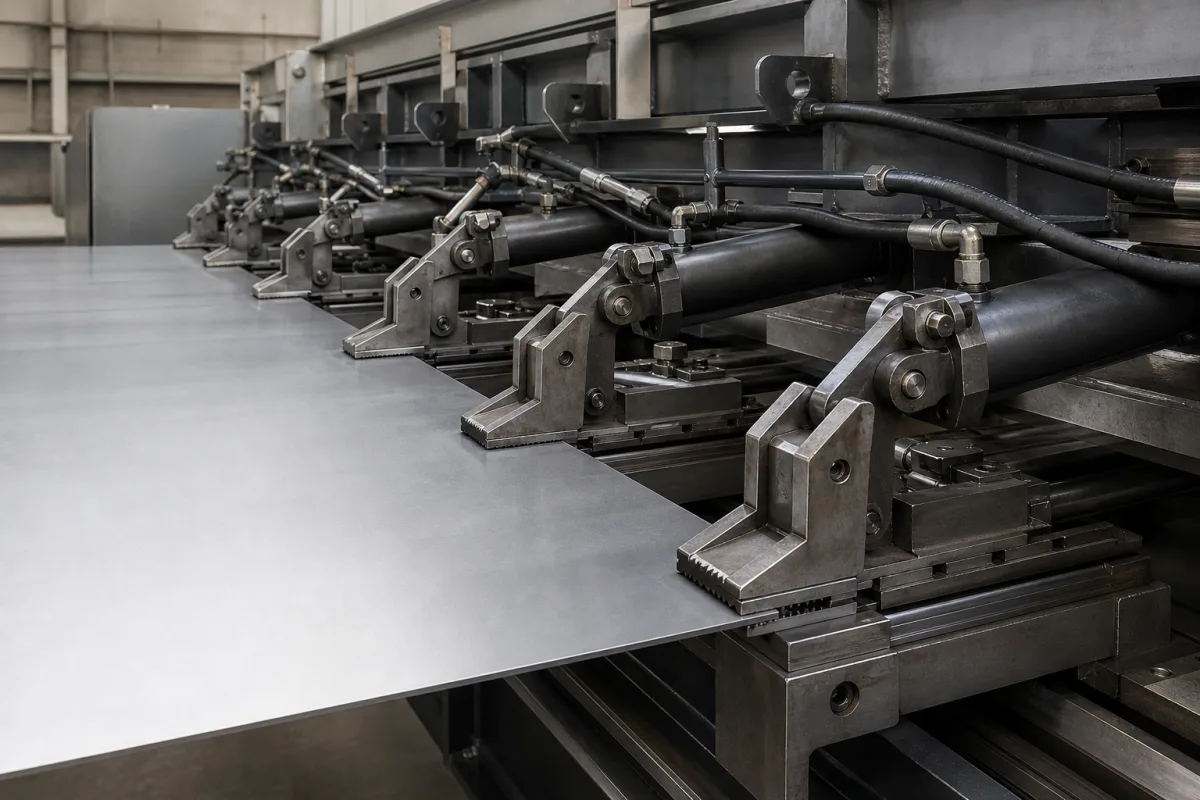
Technical details and manufacturing context for Tensioning Grippers
| Parameter | Typical range | Notes & selection driver |
|---|---|---|
| Gripping Force | 5–50 kN | Depends on material width and tension |
| Operating Pressure | 1.0–1.6 MPa | |
| Max. Tension | 10–100 kN | Higher tension requires larger gripper size |
| Gripping Width | 100–2000 mm | Custom widths available on request |
| Repeatability | ±0.05 mm | Ensures consistent tension across cycles |
| Operating Temperature | -40–85 °C | Outside range may affect seal integrity |
| Ingress Protection | IP54–IP65 | IP65 for dusty or wet environmentsIEC 60529 |
| Material | C45E–42CrMo4 | Alloy steel for high wear resistanceEN 10083 |
| Weight | 15–60 kg | Depends on size and material |
Ranges are indicative industry figures for RFQ preparation, not a supplier commitment. Confirm every value and standard with the legal manufacturer before ordering.
This component is essential for the following industrial systems and equipment:
| pressure: | Up to 10 MPa |
| other spec: | Max tensile load: 50 kN, Jaw opening range: 0-100 mm |
| temperature: | -40°C to 150°C |
Indicative industry ranges for design and RFQ preparation. Confirm the exact figures and applicable standard with the manufacturer before specifying.
Quoted from the published standard.
Manufacturer profiles associated with Tensioning Grippers.
Manufacturer listings support early research and capability understanding. They are not certification, ranking, or transaction guarantees.
A practical evidence checklist for RFQ preparation and supplier evaluation.
CNFX does not score or rank suppliers. Buyers must verify all claims and documents with the legal manufacturer before ordering.
Tensioning grippers are designed to grip materials such as fabrics, films, sheets, and wires. The specific material compatibility depends on the gripper design and the gripping surface material, which may include hardened steel, aluminum alloy, or polyurethane. Always verify with the manufacturer for your specific material.
Selection should be based on the required gripping force, maximum tension, gripping width, operating pressure, temperature range, and environmental conditions. The reference ranges provided (e.g., gripping force 5–50 kN, width 100–2000 mm) are general; confirm the exact specifications with the supplier for your application.
Regular inspection of gripping surfaces and actuation components is recommended to prevent slippage or uneven tension. Check for wear on gripping pads and ensure that pressure systems are calibrated. Follow the manufacturer's maintenance guidelines for optimal performance and longevity.
Tensioning grippers are available with ingress protection ratings up to IP65, making them suitable for dusty or wet environments. However, the operating temperature range is -40 to 85 °C. Verify that the selected model meets the environmental conditions of your facility.
Editorial classification, named public sources where available, and source-reviewed manufacturer records.
Ask for use case, specification boundaries, supplier type, and RFQ preparation information for this product.
Compare manufacturer profiles with relevant product and process capability.