Industry-Verified Manufacturing Data (2026)

Blast Furnace Gas Burner Nozzle

Based on aggregated insights from multiple verified factory profiles within the CNFX directory, the standard Blast Furnace Gas Burner Nozzle used in the Basic Metal Manufacturing sector typically supports operational capacities ranging from standard industrial configurations to heavy-duty production requirements.

Technical Definition & Core Assembly

A canonical Blast Furnace Gas Burner Nozzle is characterized by the integration of Nozzle Body and Orifice Insert. In industrial production environments, manufacturers listed on CNFX commonly emphasize High-Chromium Stainless Steel construction to support stable, high-cycle operation across diverse manufacturing scenarios.

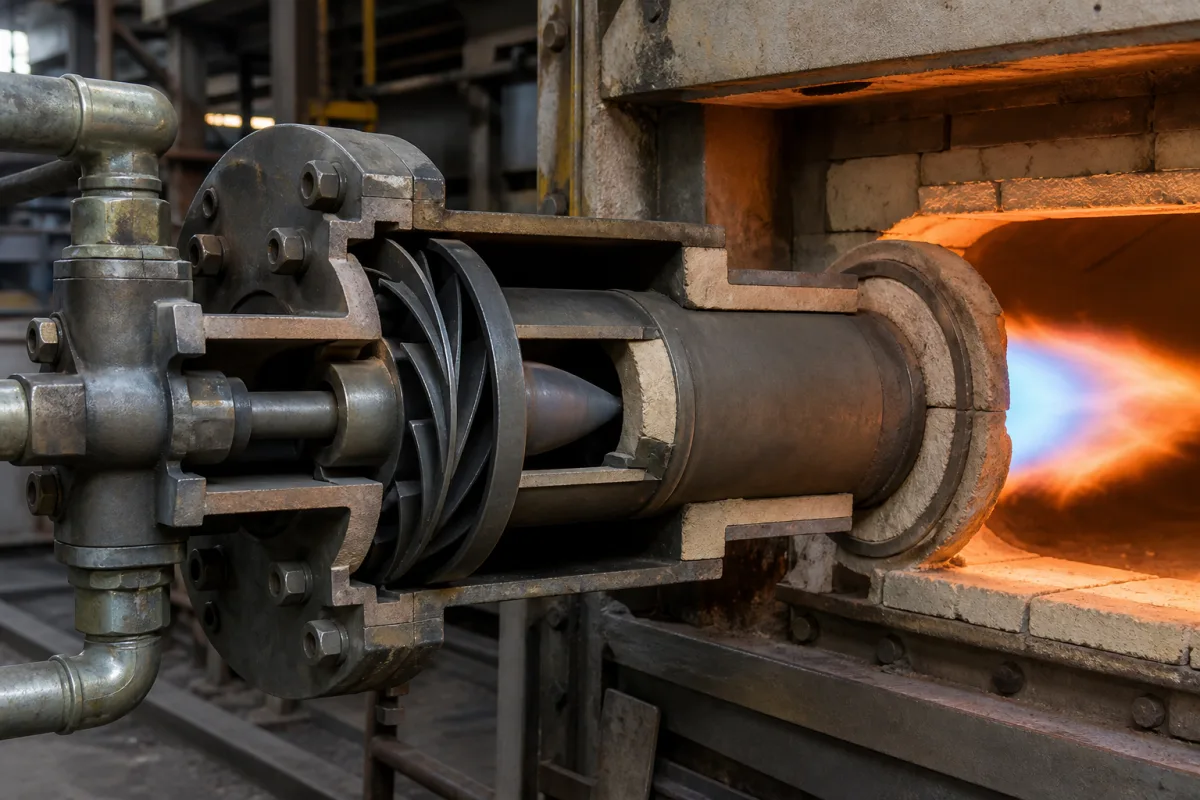
High-temperature nozzle for injecting and atomizing blast furnace gas in steelmaking furnaces
Product Specifications

Technical details and manufacturing context for Blast Furnace Gas Burner Nozzle

Definition
A precision-engineered nozzle component designed for controlled injection of blast furnace gas into steelmaking furnaces. It ensures optimal atomization and mixing of fuel gas with combustion air for efficient heat generation. The nozzle withstands extreme temperatures and corrosive environments while maintaining consistent flow patterns. Critical for maintaining stable furnace temperatures and reducing fuel consumption in iron and steel production processes.
Working Principle
Accelerates and directs blast furnace gas through a precisely shaped orifice, creating controlled turbulence and atomization for efficient combustion when mixed with oxygen.
Common Materials
High-Chromium Stainless Steel, Ceramic-Lined Alloy
Technical Parameters
  • Orifice diameter controlling gas flow rate (mm) Standard Spec
  • Spray angle determining flame pattern and coverage (degrees) Standard Spec
Components / BOM
  • Nozzle Body
    Main structural housing containing flow channels
    Material: High-Chromium Stainless Steel
  • Orifice Insert
    Precision-machined component defining flow characteristics
    Material: Tungsten Carbide
  • Thermal Barrier Coating Optional
    Protective layer reducing heat transfer to mounting assembly
    Material: Ceramic Composite
  • Mounting Flange
    Interface for secure attachment to burner assembly
    Material: Carbon Steel
Engineering Reasoning
0.8-1.2 MPa (8-12 bar) at 1200-1500°C gas temperature
Material yield strength threshold of 450 MPa at 850°C for Inconel 718 alloy
Design Rationale: Thermal fatigue from cyclic heating (1200°C) and cooling (200°C) during furnace charging cycles, causing crack initiation at stress concentrations exceeding 350 MPa
Risk Mitigation (FMEA)
Trigger Carbon deposition from gas decomposition at temperatures below 750°C
Mode: Nozzle orifice blockage reducing flow area by >40%
Strategy: Maintain gas preheat temperature above 800°C with PID-controlled electric heaters
Trigger Sulfur-induced corrosion from H₂S concentration exceeding 150 ppm in blast furnace gas
Mode: Intergranular corrosion reducing wall thickness below 2.5 mm minimum design thickness
Strategy: Apply aluminide diffusion coating (50-75 μm thickness) on internal surfaces

Industry Taxonomies & Aliases

Commonly used trade names and technical identifiers for Blast Furnace Gas Burner Nozzle.

Industrial Ecosystem & Supply Chain DNA

Complementary Systems
Downstream Applications
Specialized Tooling

Application Fit & Sizing Matrix

Operational Limits
pressure: 0.5-3.0 bar (7.3-43.5 psi)
flow rate: 100-5000 Nm³/h (3530-176,500 scfh)
temperature: 800-1600°C (1472-2912°F)
slurry concentration: Not applicable (gas-only application)
Media Compatibility
✓ Blast furnace gas (BFG) with typical composition: 20-30% CO, 15-25% CO₂, 2-5% H₂, balance N₂ ✓ Natural gas (as backup/auxiliary fuel) ✓ Coke oven gas (COG) blends
Unsuitable: Oxygen-enriched environments (>5% O₂) due to explosion risk and material oxidation
Sizing Data Required
  • Required gas flow rate (Nm³/h or scfh)
  • Furnace operating pressure (bar or psi)
  • Required atomization quality (Sauter Mean Diameter or spray angle specification)

Reliability & Engineering Risk Analysis

Failure Mode & Root Cause
Thermal fatigue cracking
Cause: Cyclic thermal stresses from rapid heating/cooling during burner operation, exacerbated by temperature fluctuations in blast furnace gas composition and flow rates.
High-temperature oxidation/corrosion
Cause: Exposure to aggressive combustion products containing sulfur compounds, chlorides, and particulates from blast furnace gas, leading to material degradation and thinning.
Maintenance Indicators
  • Irregular or unstable flame pattern with yellow tipping or lifting from nozzle, indicating poor gas/air mixing or nozzle obstruction.
  • Unusual high-frequency whistling or screeching noise during operation, suggesting gas flow restriction or nozzle erosion altering flow dynamics.
Engineering Tips
  • Implement regular thermographic inspections to monitor nozzle temperature distribution and detect hot spots indicative of thermal stress or refractory lining failure.
  • Optimize burner tuning and gas/air ratio controls to maintain stable, stoichiometric combustion, minimizing thermal cycling and reducing corrosive byproduct formation.

Compliance & Manufacturing Standards

Reference Standards
ISO 13705:2012 (Petroleum, petrochemical and natural gas industries - Fired heaters for general refinery service) ANSI/ASME B31.3:2022 (Process Piping) DIN EN 746-2:2010 (Industrial thermoprocessing equipment - Part 2: Safety requirements for combustion and fuel handling systems)
Manufacturing Precision
  • Bore diameter: ±0.05 mm
  • Nozzle alignment: ±0.1° angular deviation
Quality Inspection
  • Dye Penetrant Test (DPT) for surface crack detection
  • Ultrasonic Thickness Testing (UTT) for material integrity verification

Factories Producing Blast Furnace Gas Burner Nozzle

Verified manufacturers with capability to produce this product in China

✓ 95% Supplier Capability Match Found

P Project Engineer from Brazil Feb 10, 2026
★★★★★
"Great transparency on the Blast Furnace Gas Burner Nozzle components. Essential for our Basic Metal Manufacturing supply chain."
Technical Specifications Verified
S Sourcing Manager from Canada Feb 07, 2026
★★★★★
"The Blast Furnace Gas Burner Nozzle we sourced perfectly fits our Basic Metal Manufacturing production line requirements."
Technical Specifications Verified
P Procurement Specialist from United States Feb 04, 2026
★★★★★
"Found 29+ suppliers for Blast Furnace Gas Burner Nozzle on CNFX, but this spec remains the most cost-effective."
Technical Specifications Verified
Verification Protocol

“Feedback is collected from verified sourcing managers during RFQ (Request for Quote) and factory evaluation processes on CNFX. These reports represent historical performance data and technical audit summaries from our B2B manufacturing network.”

14 sourcing managers are analyzing this specification now. Last inquiry for Blast Furnace Gas Burner Nozzle from Thailand (1h ago).

Supply Chain Commonly Integrated Components

Signal Processor

Electronic device that conditions, amplifies, filters, and converts raw sensor signals into standardized outputs for temperature measurement systems

Explore Specs →
Purge Air System

A system that provides controlled airflow to clear optical paths and protect sensors in molten metal temperature measurement applications.

Explore Specs →
Degassing Chamber

A specialized vessel within a molten metal degassing system where dissolved gases are removed from molten metal through controlled processes.

Explore Specs →
Gas Control System

A system that regulates and controls the flow, pressure, and composition of gases used in molten metal degassing processes.

Explore Specs →

Frequently Asked Questions

What materials are used in this blast furnace gas burner nozzle?

This nozzle is constructed from high-chromium stainless steel for durability and features a ceramic-lined alloy interior for enhanced thermal resistance and longevity in high-temperature steelmaking environments.

What is the maximum operating temperature for this nozzle?

The nozzle is designed for maximum operating temperatures up to the specified °C (exact value depends on model), making it suitable for intense heat conditions in blast furnace gas injection applications.

How does this nozzle improve blast furnace gas combustion?

The nozzle features precise orifice design and optimal spray angle to ensure proper atomization and injection of blast furnace gas, promoting efficient combustion and consistent furnace performance in steel production.

Can I contact factories directly on CNFX?

CNFX is an open directory, not a transaction platform. Each factory profile provides direct contact information and production details to help you initiate direct inquiries with Chinese suppliers.

Get Quote for Blast Furnace Gas Burner Nozzle

Request technical pricing, lead times, or customized specifications for Blast Furnace Gas Burner Nozzle directly from verified manufacturing units.

Your business information is encrypted and only shared with verified Blast Furnace Gas Burner Nozzle suppliers.

Thank you! Your message has been sent. We'll respond within 1–3 business days.

Need to Manufacture Blast Furnace Gas Burner Nozzle?

Connect with verified factories specializing in this product category

Add Your Factory Contact Us
Previous Product
Billet Heater
Next Product
Blast Furnace Structure