Industry-Verified Manufacturing Data (2026)

Crucible Body

Based on aggregated insights from multiple verified factory profiles within the CNFX directory, the standard Crucible Body used in the Basic Metal Manufacturing sector typically supports operational capacities ranging from standard industrial configurations to heavy-duty production requirements.

Technical Definition & Core Assembly

A canonical Crucible Body is characterized by the integration of Base Plate and Side Walls. In industrial production environments, manufacturers listed on CNFX commonly emphasize Graphite construction to support stable, high-cycle operation across diverse manufacturing scenarios.

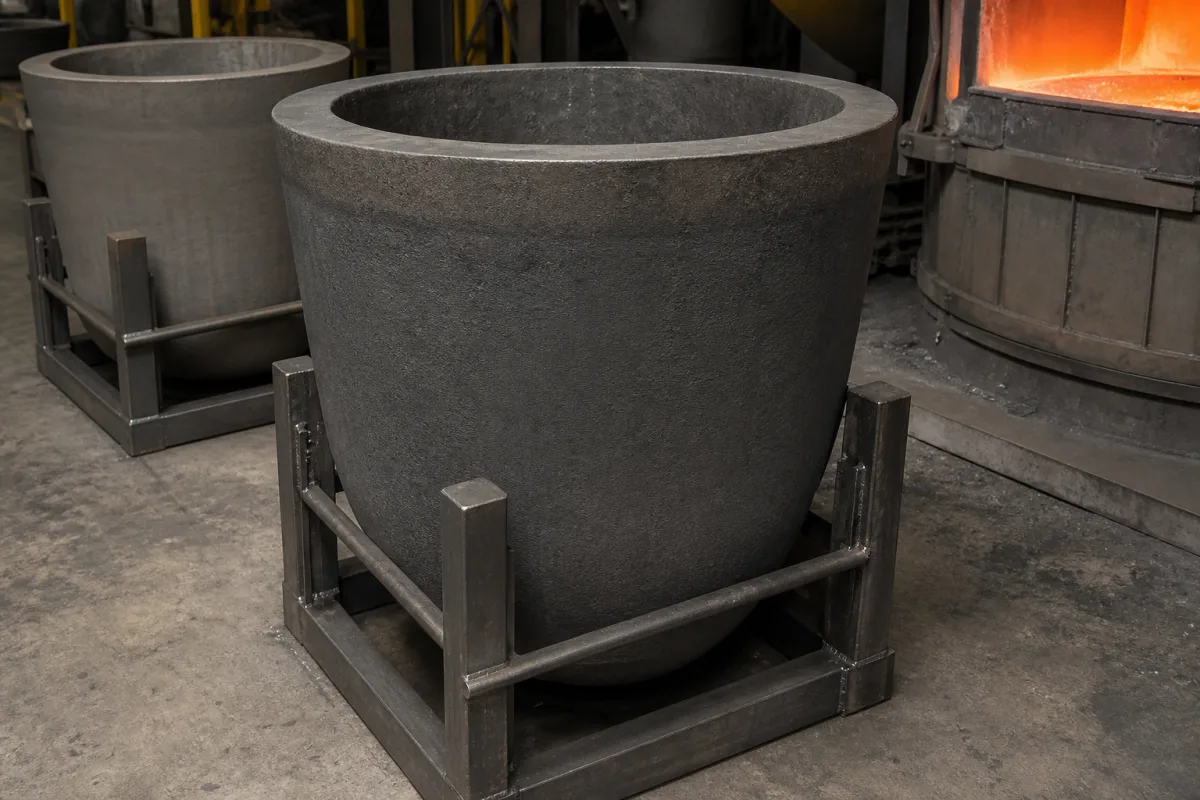
The main structural container of a crucible that holds materials during high-temperature processing.
Product Specifications

Technical details and manufacturing context for Crucible Body

Definition
The crucible body is the primary vessel component of a crucible system, designed to contain and protect materials during melting, calcination, or other thermal processes. It forms the core containment structure that directly interfaces with the processed substances while withstanding extreme temperatures and chemical interactions.
Working Principle
The crucible body functions as a thermally resistant container that isolates materials from the external environment while allowing controlled heat transfer. It maintains structural integrity under thermal stress and prevents contamination of the processed materials through its material composition and design.
Common Materials
Graphite, Silicon Carbide, Alumina, Quartz
Technical Parameters
  • Inner diameter and height dimensions determining capacity (mm) Standard Spec
Components / BOM
  • Base Plate
    Forms the bottom surface that supports the material load and provides thermal stability
    Material: Same as crucible body material
  • Side Walls
    Contain the materials and provide structural integrity during thermal expansion
    Material: Same as crucible body material
  • Rim/Lip
    Provides handling surface and interface for pouring or lid attachment
    Material: Same as crucible body material
Engineering Reasoning
Ambient to 1800°C with thermal gradient ≤200°C/cm
Material yield strength reduction to ≤50 MPa at 1850°C or thermal stress exceeding 150 MPa
Design Rationale: Creep deformation due to dislocation climb at >0.4Tm (Tm=melting point) and thermal stress from coefficient of thermal expansion mismatch (α=8.5×10⁻⁶/K for alumina-graphite composites)
Risk Mitigation (FMEA)
Trigger Cyclic thermal loading exceeding 1000 thermal cycles between 25°C and 1600°C
Mode: Radial crack propagation from thermal fatigue at stress concentration points
Strategy: Graded material composition with CTE gradient ≤2×10⁻⁶/K variation across wall thickness
Trigger Localized overheating to ≥1900°C due to induction coil misalignment
Mode: Graphite oxidation initiating at 750°C with accelerated kinetics above 1200°C (Arrhenius rate k=10⁵exp(-150kJ/mol/RT))
Strategy: Multilayer construction with silicon carbide barrier layer (≥2mm thickness) and oxygen partial pressure monitoring at <10⁻⁵ atm

Industry Taxonomies & Aliases

Commonly used trade names and technical identifiers for Crucible Body.

Applied To / Applications

This component is essential for the following industrial systems and equipment:

Industrial Ecosystem & Supply Chain DNA

Complementary Systems
Downstream Applications
Specialized Tooling

Application Fit & Sizing Matrix

Operational Limits
pressure: Atmospheric to 1.5 bar (vacuum to slight positive pressure)
other spec: Max thermal shock resistance: ΔT 200°C/min, Slurry concentration: Up to 80% solids by weight
temperature: Up to 1800°C (dependent on material)
Media Compatibility
✓ Molten aluminum alloys ✓ Ceramic powder sintering ✓ High-purity silicon crystal growth
Unsuitable: Hydrofluoric acid or strong alkaline solutions
Sizing Data Required
  • Maximum batch volume (liters)
  • Required heating/cooling rate (°C/min)
  • Process atmosphere (air, inert gas, vacuum)

Reliability & Engineering Risk Analysis

Failure Mode & Root Cause
Thermal fatigue cracking
Cause: Repeated heating and cooling cycles causing expansion/contraction stresses, often exacerbated by rapid temperature changes or localized overheating.
Chemical corrosion/erosion
Cause: Interaction with molten materials (metals, slags, fluxes) or atmospheric contaminants at high temperatures, leading to material degradation and wall thinning.
Maintenance Indicators
  • Visible cracks, especially radiating from corners or along weld seams
  • Abnormal discoloration or localized hot spots indicating uneven heating or material degradation
Engineering Tips
  • Implement controlled heating/cooling ramps (typically ≤200°C/hour) to minimize thermal shock stresses
  • Apply protective refractory coatings or washes compatible with the crucible material and process chemistry

Compliance & Manufacturing Standards

Reference Standards
ISO 3585:1998 (Borosilicate glass 3.3) ASTM C572-23 (Refractory crucibles) DIN 12330:1985 (Laboratory glassware - Crucibles)
Manufacturing Precision
  • Wall thickness: +/-0.5mm
  • Base flatness: 0.2mm
Quality Inspection
  • Thermal shock resistance test
  • Chemical resistance test

Factories Producing Crucible Body

Verified manufacturers with capability to produce this product in China

✓ 97% Supplier Capability Match Found

P Procurement Specialist from Canada Jan 23, 2026
★★★★★
"The technical documentation for this Crucible Body is very thorough, especially regarding technical reliability."
Technical Specifications Verified
T Technical Director from United States Jan 20, 2026
★★★★★
"Reliable performance in harsh Basic Metal Manufacturing environments. No issues with the Crucible Body so far."
Technical Specifications Verified
P Project Engineer from United Arab Emirates Jan 17, 2026
★★★★★
"Testing the Crucible Body now; the technical reliability results are within 1% of the laboratory datasheet."
Technical Specifications Verified
Verification Protocol

“Feedback is collected from verified sourcing managers during RFQ (Request for Quote) and factory evaluation processes on CNFX. These reports represent historical performance data and technical audit summaries from our B2B manufacturing network.”

15 sourcing managers are analyzing this specification now. Last inquiry for Crucible Body from Turkey (33m ago).

Supply Chain Compatible Machinery & Devices

Electromagnetic Induction Heater

Industrial heating device using electromagnetic induction for metal processing

Explore Specs →
Vacuum Induction Melting Furnace

Industrial furnace for melting metals under vacuum using electromagnetic induction

Explore Specs →
Electroslag Remelting Furnace

Secondary refining furnace for high-quality metal ingots

Explore Specs →
Molten Metal Flow Control Valve

Precision valve for regulating molten metal flow in casting and pouring operations.

Explore Specs →

Frequently Asked Questions

What materials are best for crucible bodies in basic metal manufacturing?

Graphite, silicon carbide, alumina, and quartz are optimal for crucible bodies due to their high-temperature resistance, thermal shock tolerance, and chemical inertness in metal processing environments.

What are the main components of a crucible body BOM?

The bill of materials typically includes the base plate for stability, rim/lip for handling and pouring, and side walls that form the main container structure to hold molten materials.

How do crucible bodies withstand extreme processing temperatures?

Crucible bodies are engineered with refractory materials that maintain structural integrity at high temperatures, often exceeding 1500°C, while resisting thermal expansion, corrosion, and mechanical stress during metal processing cycles.

Can I contact factories directly on CNFX?

CNFX is an open directory, not a transaction platform. Each factory profile provides direct contact information and production details to help you initiate direct inquiries with Chinese suppliers.

Get Quote for Crucible Body

Request technical pricing, lead times, or customized specifications for Crucible Body directly from verified manufacturing units.

Your business information is encrypted and only shared with verified Crucible Body suppliers.

Thank you! Your message has been sent. We'll respond within 1–3 business days.

Need to Manufacture Crucible Body?

Connect with verified factories specializing in this product category

Add Your Factory Contact Us
Previous Product
Crucible
Next Product
Cutting System