Industry-Verified Manufacturing Data (2026)

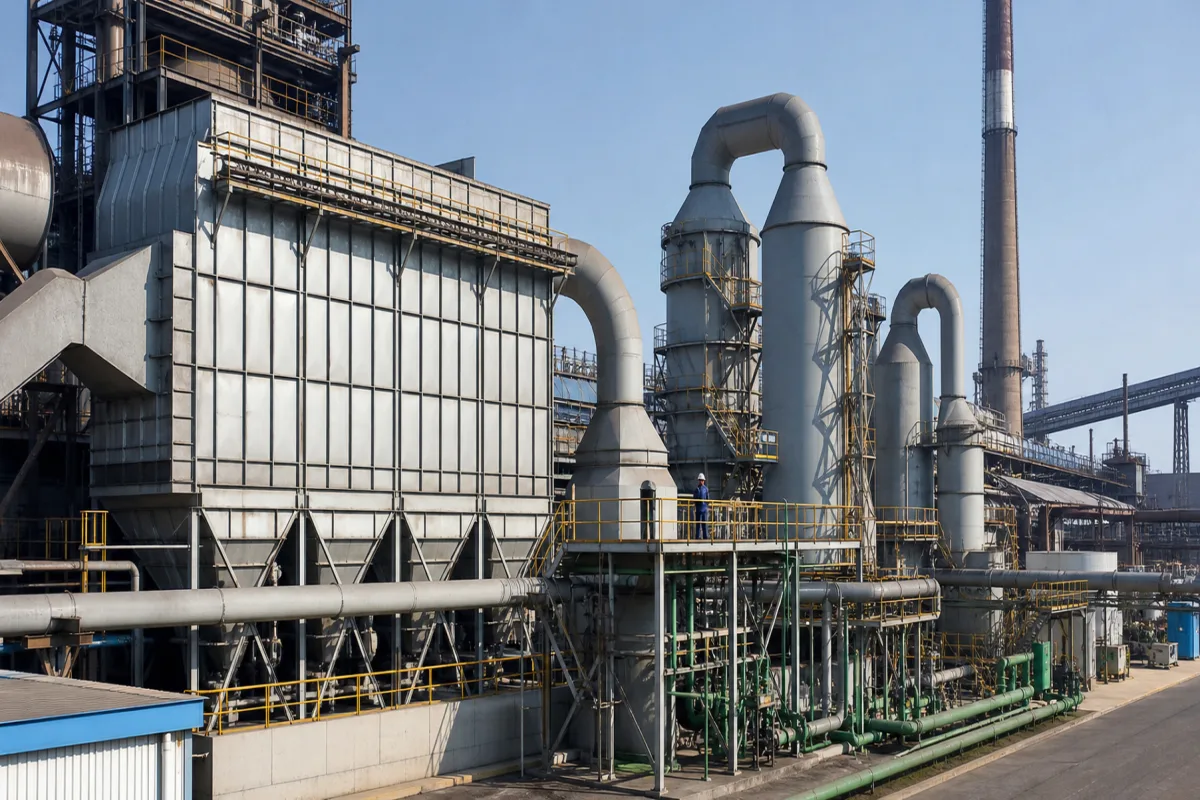
Gas Cleaning Plant

Based on aggregated insights from multiple verified factory profiles within the CNFX directory, the standard Gas Cleaning Plant used in the Basic Metal Manufacturing sector typically supports operational capacities ranging from standard industrial configurations to heavy-duty production requirements.

Technical Definition & Core Assembly

A canonical Gas Cleaning Plant is characterized by the integration of Gas Cooler and Cyclone Separator. In industrial production environments, manufacturers listed on CNFX commonly emphasize Carbon steel construction to support stable, high-cycle operation across diverse manufacturing scenarios.

A system for removing impurities from blast furnace gas in steelmaking.

Product Specifications

Technical details and manufacturing context for Gas Cleaning Plant

Definition
A critical component within the Integrated Blast Furnace and Basic Oxygen Furnace Steelmaking System responsible for cleaning and conditioning the hot, dust-laden gas produced by the blast furnace. It removes particulate matter (dust), cools the gas, and may adjust its composition to make it suitable for reuse as fuel in other plant processes (e.g., heating stoves, power generation) or for safe release, thereby recovering energy and reducing emissions.
Working Principle
Hot, raw blast furnace gas is first cooled, typically in a spray cooler or waste heat boiler. The cooled gas then passes through a series of cleaning stages, which may include cyclones for coarse dust removal, followed by wet scrubbers (e.g., venturi scrubbers) or electrostatic precipitators (ESPs) for fine particulate removal. The cleaned gas is then often dehydrated and its pressure boosted before being sent to the plant gas network.
Common Materials
Carbon steel, Refractory linings, Stainless steel (for corrosive zones)
Technical Parameters
  • Design gas flow capacity (Nm³/h) Per Request
Components / BOM
  • Gas Cooler
    Reduces the temperature of the hot raw gas, often recovering waste heat.
    Material: Carbon steel with refractory lining
  • Cyclone Separator
    Removes coarse dust particles from the gas stream using centrifugal force.
    Material: Carbon steel
  • Venturi Scrubber
    A wet scrubbing unit that uses high-velocity gas to atomize water, capturing fine dust via impaction.
    Material: Carbon steel / Stainless steel
  • Demister/Mist Eliminator
    Removes entrained water droplets from the gas after wet scrubbing.
    Material: Polypropylene / Stainless steel
Engineering Reasoning
0.8-1.2 bar inlet pressure, 0.5-0.8 bar outlet pressure, 150-250°C operating temperature
Inlet pressure <0.5 bar causes flow reversal, outlet pressure >1.5 bar ruptures bag filters, temperature >280°C melts PTFE filter media
Design Rationale: Pressure differential collapse across venturi scrubbers at ΔP<0.3 bar, thermal degradation of polypropylene demisters above 120°C, sulfuric acid dew point corrosion at 120-150°C with H2S>200 ppm
Risk Mitigation (FMEA)
Trigger Cyclic thermal stress from 150-250°C temperature swings during BF gas surges
Mode: Thermal fatigue cracking in quench tower refractory lining
Strategy: Install silicon carbide refractory with 0.8 W/m·K thermal conductivity and 4.5×10^-6 /°C expansion coefficient
Trigger Ammonium chloride deposition from NH3>50 ppm and HCl>20 ppm at 120-180°C
Mode: Flow restriction and pressure drop increase to ΔP>1.0 bar across electrostatic precipitator
Strategy: Maintain gas temperature above 180°C through preheater with 2.5 MW capacity and install soot blowers at 40 bar steam pressure

Industry Taxonomies & Aliases

Commonly used trade names and technical identifiers for Gas Cleaning Plant.

Industrial Ecosystem & Supply Chain DNA

Complementary Systems
Downstream Applications
Specialized Tooling

Application Fit & Sizing Matrix

Operational Limits
pressure: Up to 10 bar (maximum design pressure)
flow rate: 50,000-500,000 Nm³/h (standard volumetric flow)
temperature: 50-400°C (typical operating range)
slurry concentration: Up to 30% solids by weight (for wet scrubbing systems)
Media Compatibility
✓ Stainless Steel 316L (corrosion resistant) ✓ FRP/Fiberglass Reinforced Plastic (chemical resistant) ✓ High-Alumina Ceramic Linings (abrasion resistant)
Unsuitable: Chlorine-rich environments (risk of chloride stress corrosion cracking)
Sizing Data Required
  • Gas Flow Rate (Nm³/h)
  • Inlet Impurity Concentration (g/Nm³)
  • Required Outlet Purity Specification (ppm or mg/Nm³)

Reliability & Engineering Risk Analysis

Failure Mode & Root Cause
Corrosion-induced thinning
Cause: Exposure to acidic gases (e.g., SOx, NOx) and moisture forming corrosive acids, accelerated by high temperatures and inadequate material selection.
Fouling and plugging
Cause: Accumulation of particulates, tars, or salts in scrubbers, ducts, or mist eliminators due to insufficient cleaning, poor gas velocity control, or inadequate filtration upstream.
Maintenance Indicators
  • Unusual increase in system pressure drop across scrubbers or filters, indicating flow restriction.
  • Visible leaks, discoloration, or weeping at welds and joints, especially in wet scrubbing sections.
Engineering Tips
  • Implement real-time corrosion monitoring (e.g., corrosion coupons, ultrasonic thickness testing) at critical zones and upgrade materials to high-alloy steels or linings where needed.
  • Optimize preventive cleaning schedules for internals using automated sootblowing or chemical cleaning, and ensure proper upstream particulate removal to reduce fouling load.

Compliance & Manufacturing Standards

Reference Standards
ISO 14001:2015 - Environmental management systems ASME B31.3 - Process piping ATEX Directive 2014/34/EU - Equipment for explosive atmospheres
Manufacturing Precision
  • Flange alignment: +/- 0.5mm
  • Pressure vessel wall thickness: -0/+10% of nominal thickness
Quality Inspection
  • Leak testing per ASME BPVC Section V
  • Material verification via PMI (Positive Material Identification)

Factories Producing Gas Cleaning Plant

Verified manufacturers with capability to produce this product in China

✓ 98% Supplier Capability Match Found

S Sourcing Manager from Singapore Jan 04, 2026
★★★★★
"Standard OEM quality for Basic Metal Manufacturing applications. The Gas Cleaning Plant arrived with full certification."
Technical Specifications Verified
P Procurement Specialist from Germany Jan 01, 2026
★★★★☆
"Great transparency on the Gas Cleaning Plant components. Essential for our Basic Metal Manufacturing supply chain. (Delivery took slightly longer than expected, but technical support was excellent.)"
Technical Specifications Verified
T Technical Director from Brazil Dec 29, 2025
★★★★★
"The Gas Cleaning Plant we sourced perfectly fits our Basic Metal Manufacturing production line requirements."
Technical Specifications Verified
Verification Protocol

“Feedback is collected from verified sourcing managers during RFQ (Request for Quote) and factory evaluation processes on CNFX. These reports represent historical performance data and technical audit summaries from our B2B manufacturing network.”

5 sourcing managers are analyzing this specification now. Last inquiry for Gas Cleaning Plant from Vietnam (1h ago).

Supply Chain Compatible Machinery & Devices

Vacuum Induction Melting Furnace

Industrial furnace for melting metals under vacuum using electromagnetic induction

Explore Specs →
Electroslag Remelting Furnace

Secondary refining furnace for high-quality metal ingots

Explore Specs →
Molten Metal Flow Control Valve

Precision valve for regulating molten metal flow in casting and pouring operations.

Explore Specs →
Molten Metal Temperature Measurement System

Automated system for continuous temperature monitoring of molten metals during processing.

Explore Specs →

Frequently Asked Questions

What impurities does this gas cleaning plant remove from blast furnace gas?

Our gas cleaning plant effectively removes particulate matter, dust, moisture, and corrosive elements from blast furnace gas, ensuring cleaner emissions and protecting downstream equipment in steelmaking operations.

Why is stainless steel used in specific zones of the gas cleaning plant?

Stainless steel is strategically employed in corrosive zones to withstand harsh chemical environments and high temperatures, enhancing durability and reducing maintenance needs in the gas cleaning process.

How does the venturi scrubber component improve gas cleaning efficiency?

The venturi scrubber uses high-velocity gas flow to atomize scrubbing liquid, creating fine droplets that capture fine particulates and contaminants from blast furnace gas with high efficiency.

Can I contact factories directly on CNFX?

CNFX is an open directory, not a transaction platform. Each factory profile provides direct contact information and production details to help you initiate direct inquiries with Chinese suppliers.

Get Quote for Gas Cleaning Plant

Request technical pricing, lead times, or customized specifications for Gas Cleaning Plant directly from verified manufacturing units.

Your business information is encrypted and only shared with verified Gas Cleaning Plant suppliers.

Thank you! Your message has been sent. We'll respond within 1–3 business days.

Need to Manufacture Gas Cleaning Plant?

Connect with verified factories specializing in this product category

Add Your Factory Contact Us
Previous Product
Forging-Grade Titanium Alloy Bar Stock
Next Product
Gas Control System