Industry-Verified Manufacturing Data (2026)

Hearth

Based on aggregated insights from multiple verified factory profiles within the CNFX directory, the standard Hearth used in the Basic Metal Manufacturing sector typically supports operational capacities ranging from standard industrial configurations to heavy-duty production requirements.

Technical Definition & Core Assembly

A canonical Hearth is characterized by the integration of Hearth Bottom and Hearth Wall. In industrial production environments, manufacturers listed on CNFX commonly emphasize Carbon refractory bricks construction to support stable, high-cycle operation across diverse manufacturing scenarios.

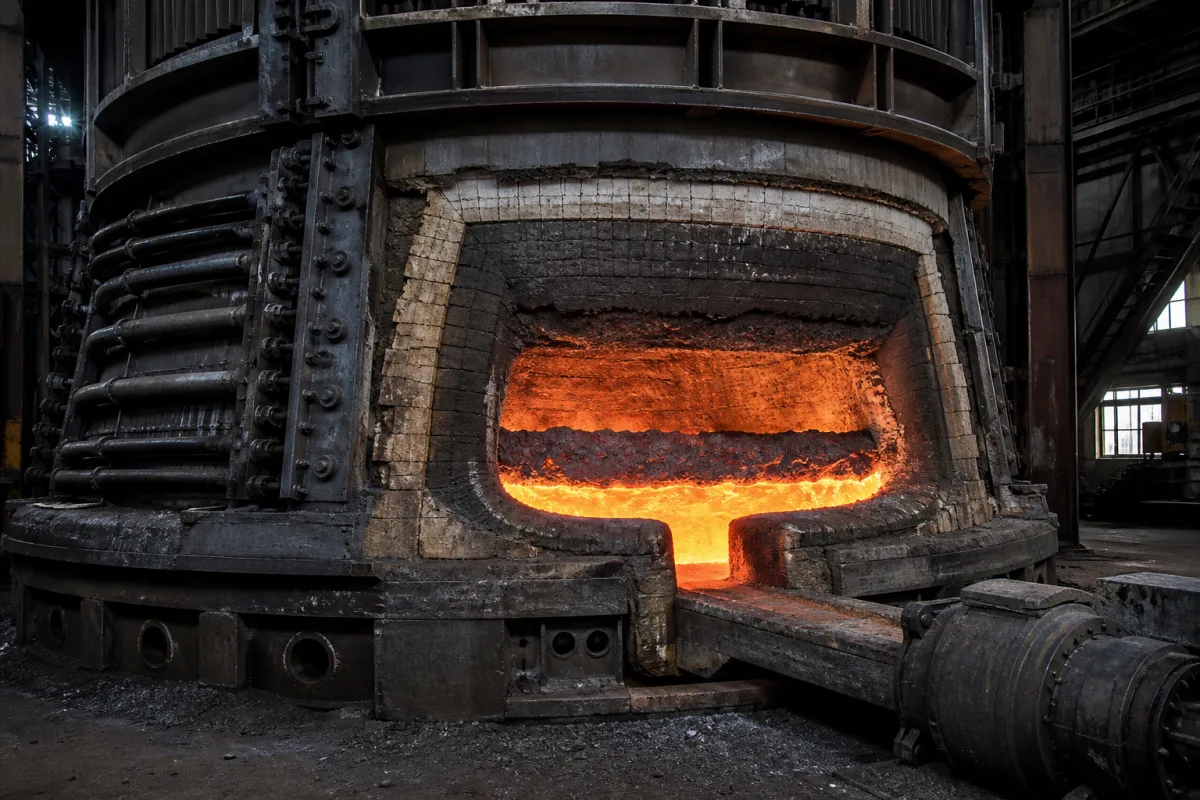
The bottom section of a blast furnace where molten iron and slag accumulate before tapping.
Product Specifications

Technical details and manufacturing context for Hearth

Definition
The hearth is the critical lower section of a blast furnace structure, forming a refractory-lined basin that collects and temporarily stores the molten iron (hot metal) and slag produced during the smelting process. It is designed to withstand extreme temperatures, chemical corrosion from molten materials, and significant mechanical stress. The hearth's integrity is essential for the safe and continuous operation of the furnace, facilitating the periodic tapping of iron and slag through dedicated tap holes.
Working Principle
The hearth receives the descending burden of reduced iron ore, coke, and flux. As these materials melt in the higher-temperature zones above, the resulting liquid iron, being denser, sinks to the bottom of the hearth, while the lighter slag floats on top. The hearth's refractory lining contains and protects the furnace shell from the molten materials. Cooling systems (often staves or sprays) manage the intense heat. The accumulated molten products are then drained at scheduled intervals through tap holes located in the hearth walls.
Common Materials
Carbon refractory bricks, Graphite blocks, Ceramic cup materials (e.g., silicon carbide), Steel shell
Technical Parameters
  • Internal diameter and depth of the hearth, critical for determining furnace capacity and campaign life. (mm) Per Request
Components / BOM
  • Hearth Bottom
    Forms the base of the hearth, supporting the weight of the molten bath and designed for erosion resistance.
    Material: Carbon blocks, ceramic composite
  • Hearth Wall
    Vertical refractory lining containing the molten iron and slag, integrated with cooling systems.
    Material: Carbon bricks, graphite, cooling staves
  • Tap Hole
    An opening in the hearth wall, plugged with clay, used to drain molten iron.
    Material: Refractory clay, steel sleeve
  • Slag Notch
    An opening located higher on the hearth wall for draining the slag layer.
    Material: Refractory, steel
Engineering Reasoning
1450-1550°C temperature, 2.5-3.5 bar pressure
Thermal stress exceeding 250 MPa at refractory interface, refractory erosion beyond 75% thickness
Design Rationale: Thermal fatigue from cyclic heating (1450-1550°C) and cooling (800-1000°C) during tapping cycles, combined with chemical corrosion from molten iron (4.5-5.0% carbon) and basic slag (CaO/SiO₂ ratio 1.2-1.5)
Risk Mitigation (FMEA)
Trigger Refractory thermal spalling due to rapid temperature gradients exceeding 200°C/min during tapping
Mode: Molten iron breakthrough through hearth refractory lining
Strategy: Multi-layer refractory design with graded thermal expansion coefficients (5.0-8.0×10⁻⁶/K) and controlled cooling rate below 100°C/min
Trigger Carbon monoxide gas bubble accumulation exceeding 0.15 m³/m² at hearth-slag interface
Mode: Slag foaming and hearth pressure fluctuations exceeding ±0.5 bar
Strategy: Gas venting system with 0.02 m diameter tuyeres at 1.2 m spacing and slag basicity control (CaO/SiO₂ ratio maintained at 1.3±0.1)

Industry Taxonomies & Aliases

Commonly used trade names and technical identifiers for Hearth.

Applied To / Applications

This component is essential for the following industrial systems and equipment:

Industrial Ecosystem & Supply Chain DNA

Complementary Systems
Downstream Applications
Specialized Tooling

Application Fit & Sizing Matrix

Operational Limits
pressure: 0.1-0.3 MPa (atmospheric to slight positive pressure)
temperature: 1400-1600°C (typical iron tapping temperature)
iron flow rate: 2-10 tons/minute (typical tapping rates)
slag concentration: 15-40% by volume (typical blast furnace slag content)
Media Compatibility
✓ molten iron (pig iron) ✓ blast furnace slag (CaO-SiO2-Al2O3 based) ✓ hot reducing gases (CO, H2)
Unsuitable: oxidizing atmospheres (causes refractory degradation and iron re-oxidation)
Sizing Data Required
  • furnace inner volume (m³)
  • desired iron production rate (tons/day)
  • tapping frequency and duration (hours)

Reliability & Engineering Risk Analysis

Failure Mode & Root Cause
Thermal fatigue cracking
Cause: Repeated heating and cooling cycles cause expansion/contraction stresses in refractory materials, leading to cracks and structural failure over time.
Creep deformation
Cause: Sustained high temperatures (typically above 1000°C) cause gradual plastic deformation in metal components like grates or supports, reducing structural integrity.
Maintenance Indicators
  • Visible cracks or spalling in refractory lining (visual)
  • Unusual popping or cracking sounds during heating/cooling cycles (audible)
Engineering Tips
  • Implement controlled heating/cooling ramps (≤100°C/hour) to minimize thermal shock and extend refractory life.
  • Conduct regular infrared thermography surveys to identify hot spots and uneven temperature distribution for proactive repairs.

Compliance & Manufacturing Standards

Reference Standards
ISO 14001:2015 (Environmental Management Systems) ANSI Z21.50-2017/CSA 2.22-2017 (Gas-Fired Unvented Room Heaters) CE Marking (EU Safety, Health, and Environmental Requirements)
Manufacturing Precision
  • Flue Gas Temperature: +/- 5°C
  • Surface Flatness: 0.5 mm/m
Quality Inspection
  • Non-Destructive Testing (NDT) for Weld Integrity
  • Thermal Efficiency and Emissions Testing

Factories Producing Hearth

Verified manufacturers with capability to produce this product in China

✓ 98% Supplier Capability Match Found

P Project Engineer from Singapore Feb 06, 2026
★★★★★
"Testing the Hearth now; the technical reliability results are within 1% of the laboratory datasheet."
Technical Specifications Verified
S Sourcing Manager from Germany Feb 03, 2026
★★★★★
"Impressive build quality. Especially the technical reliability is very stable during long-term operation."
Technical Specifications Verified
P Procurement Specialist from Brazil Jan 31, 2026
★★★★★
"As a professional in the Basic Metal Manufacturing sector, I confirm this Hearth meets all ISO standards."
Technical Specifications Verified
Verification Protocol

“Feedback is collected from verified sourcing managers during RFQ (Request for Quote) and factory evaluation processes on CNFX. These reports represent historical performance data and technical audit summaries from our B2B manufacturing network.”

19 sourcing managers are analyzing this specification now. Last inquiry for Hearth from UAE (30m ago).

Supply Chain Compatible Machinery & Devices

Vacuum Induction Melting Furnace

Industrial furnace for melting metals under vacuum using electromagnetic induction

Explore Specs →
Electroslag Remelting Furnace

Secondary refining furnace for high-quality metal ingots

Explore Specs →
Molten Metal Flow Control Valve

Precision valve for regulating molten metal flow in casting and pouring operations.

Explore Specs →
Molten Metal Temperature Measurement System

Automated system for continuous temperature monitoring of molten metals during processing.

Explore Specs →

Frequently Asked Questions

What materials are used in blast furnace hearth construction?

Hearths typically use carbon refractory bricks, graphite blocks, ceramic cup materials like silicon carbide, and a protective steel shell to withstand extreme temperatures and corrosive molten materials.

How does the hearth function in a blast furnace?

The hearth is the bottom section where molten iron and slag accumulate before tapping. It collects and temporarily stores these materials while maintaining structural integrity under high thermal and chemical stress.

What are the key components of a furnace hearth?

Essential components include the hearth bottom (foundation), hearth wall (containment structure), slag notch (for slag removal), and tap hole (for molten iron extraction).

Can I contact factories directly on CNFX?

CNFX is an open directory, not a transaction platform. Each factory profile provides direct contact information and production details to help you initiate direct inquiries with Chinese suppliers.

Get Quote for Hearth

Request technical pricing, lead times, or customized specifications for Hearth directly from verified manufacturing units.

Your business information is encrypted and only shared with verified Hearth suppliers.

Thank you! Your message has been sent. We'll respond within 1–3 business days.

Need to Manufacture Hearth?

Connect with verified factories specializing in this product category

Add Your Factory Contact Us
Previous Product
Handling System
Next Product
Hearth Bottom