Downcoiler
View system integration details
This page explains how Mandrel is classified within Basic Metal Manufacturing. Technical values and manufacturer relationships are research references; confirm the current specification and supplier evidence for each order.
A cylindrical tool or shaft used in a downcoiler to form and support the coil of metal strip during the winding process.
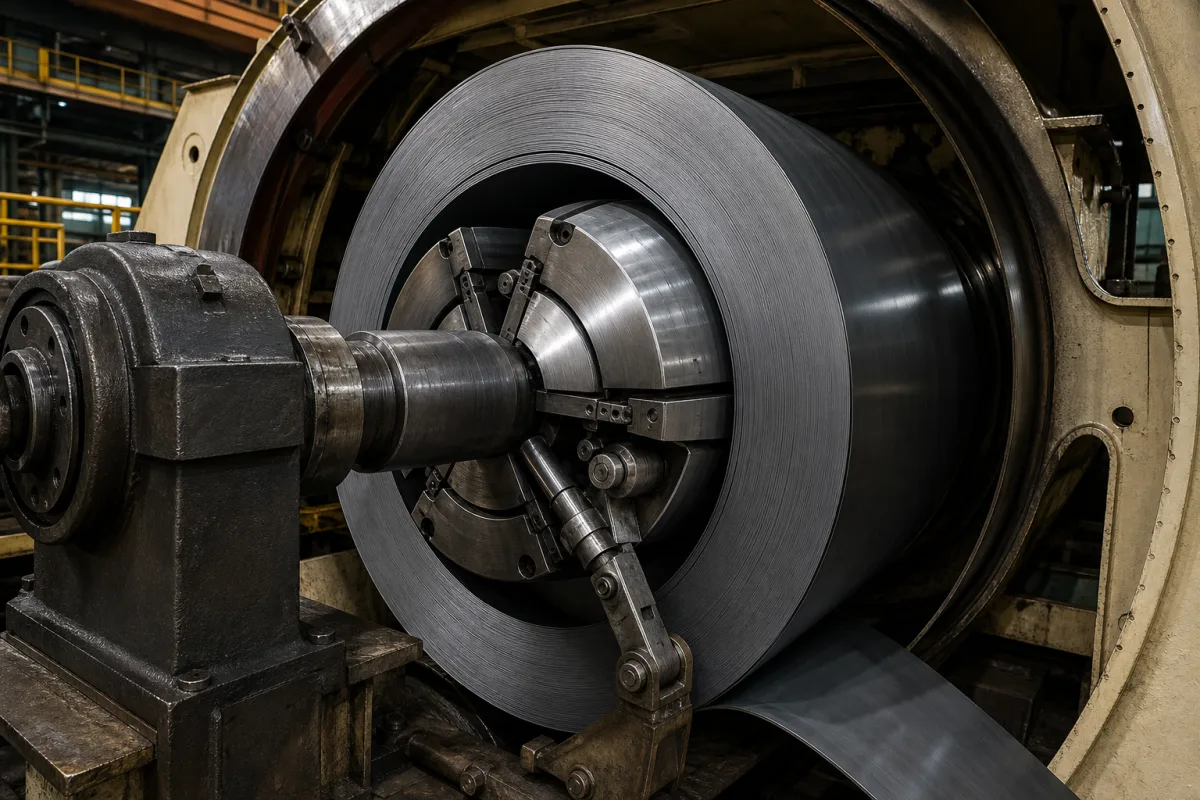
Technical details and manufacturing context for Mandrel
What to specify in your RFQ
These are the quantities to specify to the manufacturer when sizing or requesting a quote. The manufacturer's own documentation governs the exact figures and applicable standard.
This component is essential for the following industrial systems and equipment:
| pressure: | Mechanical load only, no fluid pressure |
| other spec: | Max rotational speed: 100-500 RPM (depending on coil weight and diameter), Surface hardness: 45-60 HRC for wear resistance |
| temperature: | Ambient to 150°C (typical steel processing) |
Indicative industry ranges for design and RFQ preparation. Confirm the exact figures and applicable standard with the manufacturer before specifying.
Quoted from the published standard.
Manufacturer profiles associated with Mandrel.
Manufacturer listings support early research and capability understanding. They are not certification, ranking, or transaction guarantees.
A practical evidence checklist for RFQ preparation and supplier evaluation.
CNFX does not score or rank suppliers. Buyers must verify all claims and documents with the legal manufacturer before ordering.
The mandrel serves as the central forming and supporting structure around which metal strip is wound to create coils. It expands to grip the strip end and provides rigidity during winding, then contracts to release the finished coil.
According to the directory, mandrels are typically made from alloy steel or tool steel. The specific grade should be confirmed with the manufacturer for the intended application.
The mandrel uses hydraulic or mechanical mechanisms to expand radially outward for gripping and winding, and to contract radially inward for coil release. The exact mechanism depends on the design.
The diameter range (expanded and contracted) is a key specification. It must match the downcoiler and coil requirements. Always verify the exact values with the equipment manufacturer.
Editorial classification, named public sources where available, and source-reviewed manufacturer records.
Ask for use case, specification boundaries, supplier type, and RFQ preparation information for this product.
Compare manufacturer profiles with relevant product and process capability.