Structured Manufacturing Data (2026)

Material Handling System

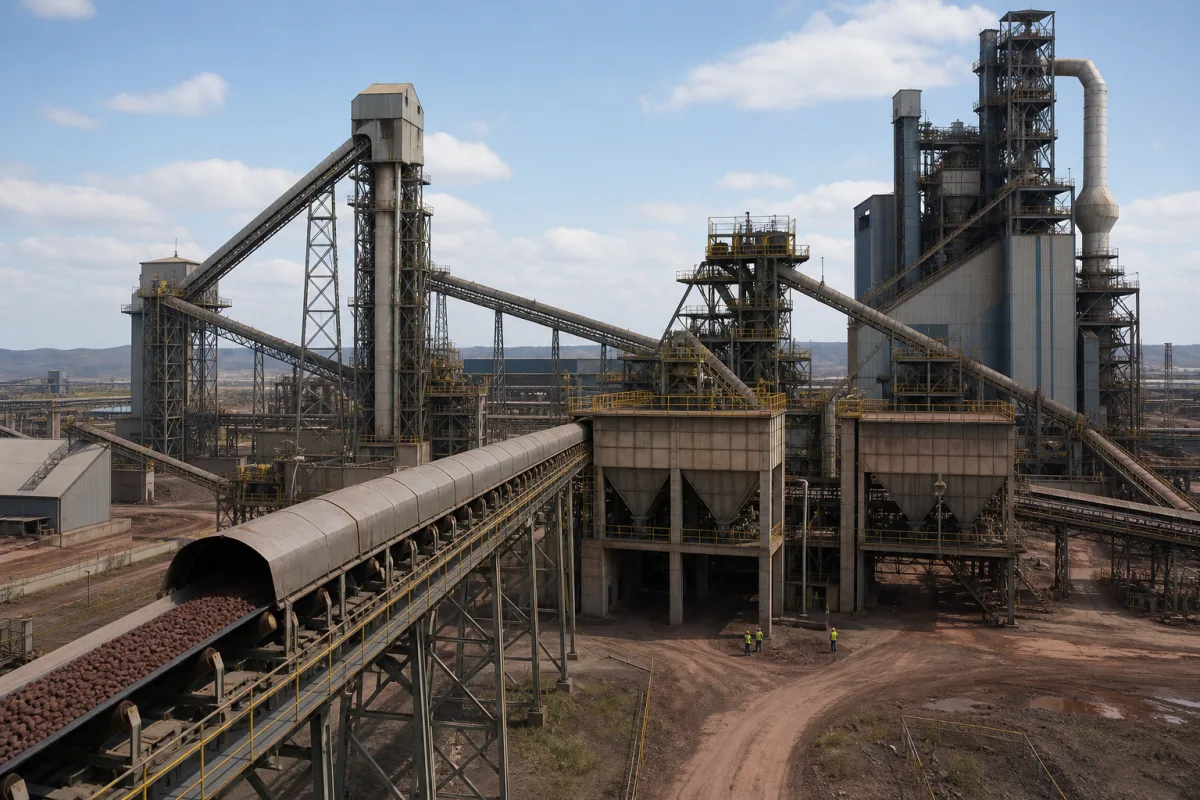
Based on aggregated insights from structured factory profiles within the CNFX directory, the standard Material Handling System used in the Basic Metal Manufacturing sector typically supports operational capacities ranging from standard industrial configurations to heavy-duty production requirements.

Technical Definition & Core Assembly

A canonical Material Handling System is characterized by the integration of Belt Conveyor and Bucket Elevator. In industrial production environments, manufacturers listed on CNFX commonly emphasize Carbon steel construction to support stable, high-cycle operation across diverse manufacturing scenarios.

Automated system for transporting raw materials, intermediate products, and finished goods within the steelmaking facility.

Product Specifications

Technical details and manufacturing context for Material Handling System

Definition
A comprehensive material handling system within the Integrated Direct Reduction Iron and Electric Arc Furnace Steelmaking System, responsible for the efficient, automated movement of iron ore, DRI (Direct Reduced Iron), scrap metal, additives, slag, and finished steel products between processing stages, storage areas, and loading points. It ensures continuous material flow, minimizes manual handling, and optimizes production logistics.
Working Principle
Utilizes a combination of conveyors (belt, chain, roller), cranes, hoists, transfer cars, and automated guided vehicles (AGVs) controlled by a central PLC or SCADA system. The system receives signals from production units, follows programmed routes and sequences to pick up, transport, and deposit materials at designated locations, often integrating weighing, sorting, and tracking functions.
Common Materials
Carbon steel, Alloy steel, Wear-resistant liners
Technical Parameters
  • Maximum handling capacity (tonnes per hour) (t/h) Standard Spec
Components / BOM
  • Belt Conveyor
    Transports bulk materials (iron ore, DRI) over long distances horizontally or at inclines
    Material: Steel frame with rubber/steel cord belt
  • Bucket Elevator
    Vertically lifts bulk materials between different floor levels
    Material: Steel casing with steel buckets
  • Transfer Car
    Moves heavy loads (ladles, scrap buckets) on rails between processing stations
    Material: Heavy-duty steel structure
  • Control Panel
    Houses PLC, motor starters, and HMI for system automation and monitoring
    Material: Stainless steel enclosure

Industry Taxonomies & Aliases

Commonly used trade names and technical identifiers for Material Handling System.

Industrial Ecosystem & Supply Chain Structure

Complementary Systems
Downstream Applications
Specialized Tooling

Application Fit & Sizing Matrix

Operational Limits
pressure: 0-10 bar
flow rate: Up to 500 tons/hour
temperature: -20°C to 80°C
slurry concentration: Max 40% solids by weight
Media Compatibility
✓ Steel billets and slabs ✓ Iron ore pellets ✓ Finished steel coils
Unsuitable: Highly corrosive chemical slurries
Sizing Data Required
  • Maximum throughput requirement (tons/hour)
  • Facility layout and conveyor path length
  • Material density and particle size distribution

Reliability & Engineering Risk Analysis

Failure Mode & Root Cause
Belt misalignment and tracking failure
Cause: Improper installation, worn pulleys, material buildup on rollers, or structural misalignment leading to edge damage and premature wear.
Bearing seizure in conveyor rollers
Cause: Lack of lubrication, ingress of contaminants (dust, moisture), excessive loading, or misalignment causing overheating and mechanical failure.
Maintenance Indicators
  • Unusual grinding or squealing noises from rollers or drives
  • Visible material spillage along conveyor edges indicating tracking issues
Engineering Tips
  • Implement laser alignment tools for precise pulley and roller alignment during installation and maintenance
  • Establish predictive maintenance using vibration analysis and infrared thermography to detect bearing issues before failure

Compliance & Manufacturing Standards

Reference Standards
ISO 9001:2015 - Quality Management Systems ANSI/ASME B20.1 - Safety Standards for Conveyors and Related Equipment CE Marking - Machinery Directive 2006/42/EC
Manufacturing Precision
  • Belt Tracking: +/- 5mm over 10m length
  • Roller Alignment: +/- 0.5mm perpendicular to travel direction
Quality Inspection
  • Load Testing - 125% of rated capacity for 4 hours
  • Non-Destructive Testing (NDT) - Ultrasonic weld inspection on structural components

Factories Producing Material Handling System

Manufacturer profiles with relevant production capability in China

Manufacturer listings support early research and capability understanding. They are not certification, ranking, or transaction guarantees.

Technical documentation
4/5
Manufacturing capability
4/5
Inspection readiness
5/5
Supplier transparency
3/5

These scores are example evaluation dimensions, not real customer ratings, country-specific buyer feedback, or live inquiry activity.

Supply Chain Compatible Machinery & Devices

Electromagnetic Induction Heater

Industrial heating device using electromagnetic induction for metal processing

Explore Specs →
Vacuum Induction Melting Furnace

Industrial furnace for melting metals under vacuum using electromagnetic induction

Explore Specs →
Electroslag Remelting Furnace

Secondary refining furnace for high-quality metal ingots

Explore Specs →
Molten Metal Flow Control Valve

Precision valve for regulating molten metal flow in casting and pouring operations.

Explore Specs →

Frequently Asked Questions

What materials can this handling system transport in steel manufacturing?

This system is designed to transport carbon steel, alloy steel raw materials, intermediate products, and finished goods throughout the steelmaking facility using wear-resistant liners for durability.

What components are included in the material handling system?

The system includes belt conveyors for horizontal transport, bucket elevators for vertical lifting, transfer cars for moving materials between processes, and a central control panel for automation.

How does this system improve efficiency in basic metal manufacturing?

By automating material transport between production stages, it reduces manual handling, minimizes downtime, increases throughput, and enhances safety in steelmaking operations.

Can I contact factories directly on CNFX?

CNFX is an open directory, not a transaction platform. Each factory profile provides direct contact information and production details to help you initiate direct inquiries with Chinese suppliers.

Data Basis

CNFX manufacturer profiles, technical classification, publicly available product information, and ongoing plausibility checks.

Preliminary Technical Classification
This page supports structured research, RFQ preparation, and supplier evaluation. It does not replace buyer-led supplier qualification, standards review, or technical approval.

Request Manufacturing Insight for Material Handling System

Ask for use case, specification boundaries, supplier type, and RFQ preparation information for Material Handling System.

Your business information is used only to process this request.

Thank you! Your message has been sent. We'll respond within 1–3 business days.

Need to Manufacture Material Handling System?

Compare manufacturer profiles with relevant product and process capability.

Create Manufacturer Profile Contact Us
Previous Product
Mandrel
Next Product
Material Hoppers / Lock Hoppers