Roughing Mill Stands
View system integration details
This page explains how Mill Housing is classified within Basic Metal Manufacturing. Technical values and manufacturer relationships are research references; confirm the current specification and supplier evidence for each order.
The main structural frame of a rolling mill stand that supports all other components and withstands rolling forces.
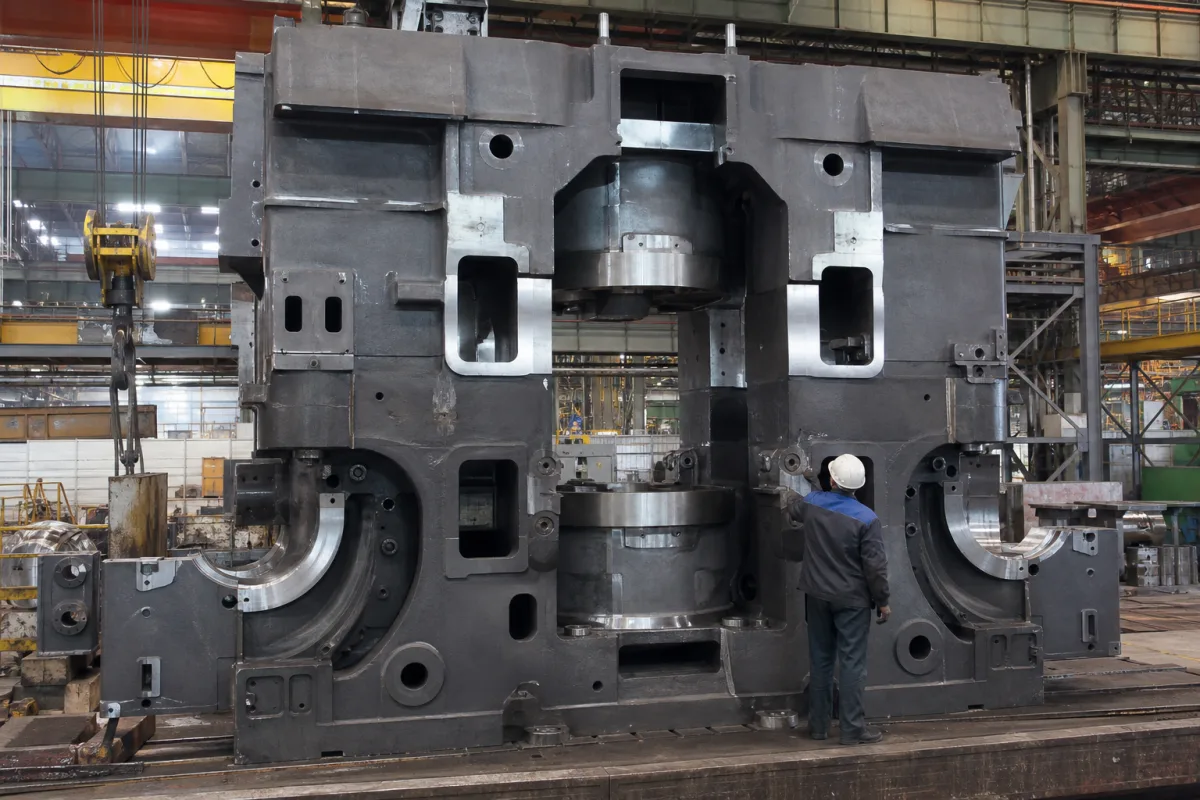
Technical details and manufacturing context for Mill Housing
| Parameter | Typical range | Notes & selection driver |
|---|---|---|
| Rated Rolling Force | 500–2000 kN | Determines maximum strip reduction capability. |
| Frame Section Modulus | 5000–15000 cm³ | Higher values reduce deflection under load. |
| Elastic Deformation | 0.1–0.5 mm | Affects strip thickness accuracy. |
| Material Grade | ZG270-500 | Cast steel with high strength and toughness.GB/T 11352 |
| Operating Temperature | -20–80 °C | Beyond this range, material properties degrade. |
| Surface Hardness | 160–220 HBW | Ensures wear resistance in guideways. |
| Machining Tolerance | ±0.05 mm | Critical for bearing seat alignment.ISO 2768-mK |
| Weight | 5–30 t | Affects foundation and crane requirements. |
| Footprint (L×W×H) | 2000×1500×2500 mm | Typical maximum envelope for medium mills. |
Ranges are indicative industry figures for RFQ preparation, not a supplier commitment. Confirm every value and standard with the legal manufacturer before ordering.
This component is essential for the following industrial systems and equipment:
| pressure: | Up to 100 MPa static, 150 MPa peak dynamic |
| other spec: | Max rolling force: 50 MN, Vibration tolerance: 0.5 mm/s RMS, Fatigue cycles: 10^7 at design load |
| temperature: | Ambient to 150°C (operating), -20°C to 200°C (material limits) |
Indicative industry ranges for design and RFQ preparation. Confirm the exact figures and applicable standard with the manufacturer before specifying.
Quoted from the published standard.
2 companies list this product among what they make. Company figures are quoted from each company's own website; every card states where the relationship came from.
Manufacturer listings support early research and capability understanding. They are not certification, ranking, or transaction guarantees.
A practical evidence checklist for RFQ preparation and supplier evaluation.
CNFX does not score or rank suppliers. Buyers must verify all claims and documents with the legal manufacturer before ordering.
The mill housing is the main structural frame of a rolling mill stand. It supports all other components, such as work rolls, backup rolls, and bearings, and withstands the immense forces generated during metal rolling to maintain alignment and stability.
Mill housings are typically made of cast steel or forged steel. A common material grade is ZG270-500, as specified in GB/T 11352, which offers high strength and toughness.
Key parameters include rated rolling force (500–2000 kN), frame section modulus (5000–15000 cm³), elastic deformation (0.1–0.5 mm), operating temperature (-20 to 80 °C), surface hardness (160–220 HBW), machining tolerance (±0.05 mm), weight (5–30 t), and footprint (2000×1500×2500 mm). Always confirm these values with the manufacturer for your specific application.
The housing's rigidity prevents deflection under load, maintaining the precise roll gap. This directly influences strip thickness accuracy and overall product quality. Elastic deformation of 0.1–0.5 mm is typical, but lower values are preferred for tighter tolerances.
Editorial classification, named public sources where available, and source-reviewed manufacturer records.
Ask for use case, specification boundaries, supplier type, and RFQ preparation information for this product.
Compare manufacturer profiles with relevant product and process capability.