Industry-Verified Manufacturing Data (2026)

Molten Metal Temperature Sensor Probe

Based on aggregated insights from multiple verified factory profiles within the CNFX directory, the standard Molten Metal Temperature Sensor Probe used in the Basic Metal Manufacturing sector typically supports operational capacities ranging from standard industrial configurations to heavy-duty production requirements.

Technical Definition & Core Assembly

A canonical Molten Metal Temperature Sensor Probe is characterized by the integration of Thermocouple Element and Ceramic Protection Tube. In industrial production environments, manufacturers listed on CNFX commonly emphasize Alumina Ceramic construction to support stable, high-cycle operation across diverse manufacturing scenarios.

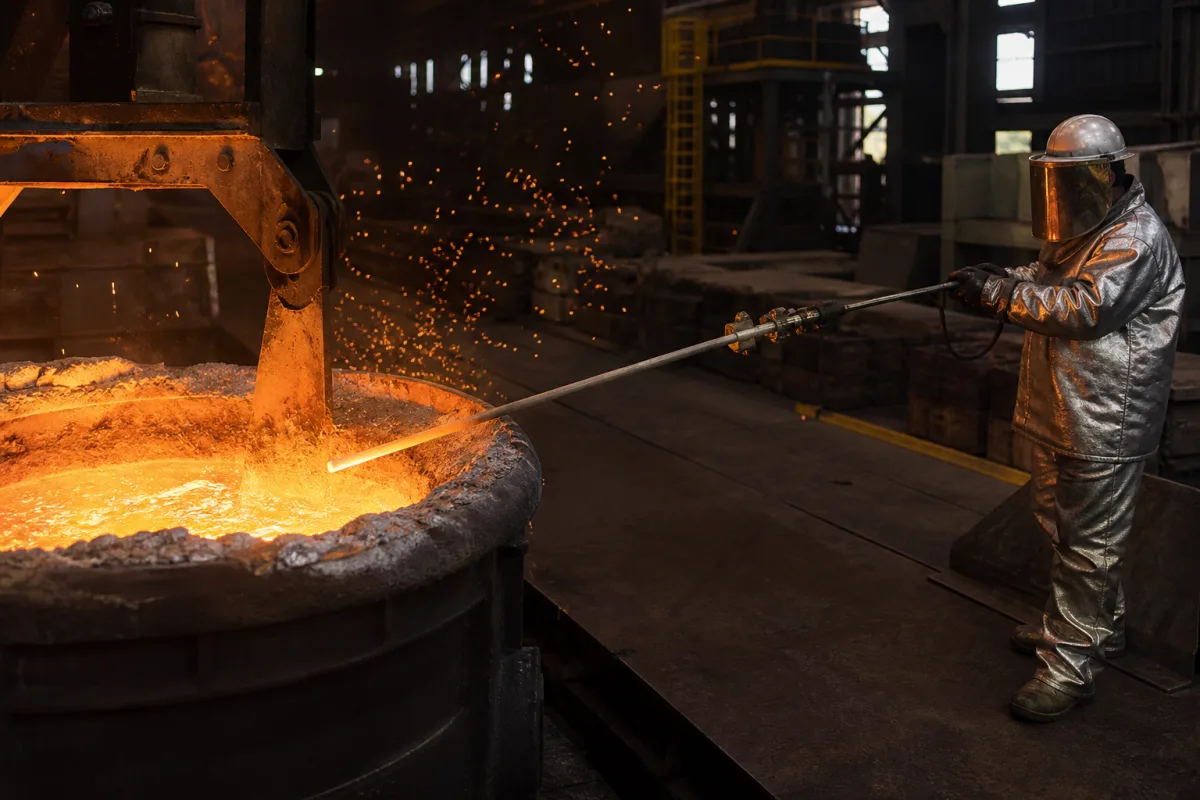
High-temperature immersion probe for continuous molten metal temperature monitoring
Product Specifications

Technical details and manufacturing context for Molten Metal Temperature Sensor Probe

Definition
A specialized industrial sensor component designed for direct immersion into molten metal streams or baths to provide real-time temperature measurements. It enables precise thermal control in basic metal production processes like smelting, refining, and casting. The probe withstands extreme temperatures and corrosive molten metal environments while maintaining measurement accuracy. It integrates with temperature control systems to optimize energy efficiency and product quality in non-ferrous and specialty metal production.
Working Principle
Utilizes thermocouple or resistance temperature detector (RTD) elements within a protective sheath, generating electrical signals proportional to molten metal temperature through the Seebeck effect or resistance change.
Common Materials
Alumina Ceramic, Molybdenum Alloy, Platinum-Rhodium Thermocouple Wire
Technical Parameters
  • Time to reach 90% of final temperature reading (seconds) Standard Spec
  • Operating temperature measurement range (°C) Standard Spec
Components / BOM
  • Thermocouple Element
    Generates voltage signal proportional to temperature
    Material: Platinum-Rhodium Alloy
  • Ceramic Protection Tube
    Provides thermal and chemical protection for sensing element
    Material: High-Purity Alumina
  • Metal Sheath Optional
    Outer protective layer against mechanical damage
    Material: Molybdenum Alloy
  • Connection Head
    Houses electrical connections and provides mounting interface
    Material: Stainless Steel
Engineering Reasoning
600-1600°C
1650°C for alumina sheath, 1800°C for molybdenum sheath
Design Rationale: Thermal degradation of protective sheath material leading to thermocouple junction contamination by molten metal
Risk Mitigation (FMEA)
Trigger Thermal shock from rapid immersion exceeding 200°C/s
Mode: Sheath cracking and thermocouple wire exposure
Strategy: Gradual preheating to 400°C before immersion using controlled insertion mechanism
Trigger Aluminum melt attack on alumina sheath at 750°C with 0.5% magnesium content
Mode: Sheath dissolution and measurement drift exceeding ±10°C
Strategy: Molybdenum disilicide coating with 50μm thickness for aluminum applications

Industry Taxonomies & Aliases

Commonly used trade names and technical identifiers for Molten Metal Temperature Sensor Probe.

Industrial Ecosystem & Supply Chain DNA

Complementary Systems
Downstream Applications
Specialized Tooling

Application Fit & Sizing Matrix

Operational Limits
accuracy: ±1°C to ±3°C
pressure: 0 to 2 bar (atmospheric to low pressure)
temperature: 1200°C to 1800°C
response time: 3 to 8 seconds typical
immersion depth: 300mm to 1500mm standard
Media Compatibility
✓ Aluminum alloys (600-800°C) ✓ Copper alloys (1000-1200°C) ✓ Steel/iron melts (1500-1700°C)
Unsuitable: Chlorine-containing atmospheres or highly corrosive fluxes
Sizing Data Required
  • Required immersion depth (based on vessel geometry)
  • Target temperature range and accuracy needs
  • Installation method (port size, mounting flange requirements)

Reliability & Engineering Risk Analysis

Failure Mode & Root Cause
Thermal shock cracking
Cause: Rapid temperature changes causing differential expansion between protective sheath and sensing element, leading to ceramic or metal fatigue and fracture.
Chemical corrosion/erosion
Cause: Exposure to aggressive molten metal alloys (e.g., aluminum, zinc) or slag components that degrade protective sheathing materials over time.
Maintenance Indicators
  • Erratic or drifting temperature readings compared to other process indicators
  • Visible physical damage to probe tip such as cracks, pitting, or material buildup on sensing surface
Engineering Tips
  • Implement controlled pre-heating protocols before immersion to minimize thermal shock stress on probe materials
  • Use alloy-specific protective sheathing materials (e.g., alumina for aluminum, silicon carbide for iron-based alloys) matched to the molten metal chemistry

Compliance & Manufacturing Standards

Reference Standards
ISO 9001:2015 - Quality management systems ASTM E988 - Standard Specification for Thermocouple Sheath Materials CE Marking - EU conformity for safety and performance
Manufacturing Precision
  • Temperature Accuracy: +/- 1.5°C at 1600°C
  • Sheath Diameter: +/- 0.05mm
Quality Inspection
  • Thermal Shock Test - rapid immersion in molten metal
  • Calibration Verification - against certified reference standards

Factories Producing Molten Metal Temperature Sensor Probe

Verified manufacturers with capability to produce this product in China

✓ 92% Supplier Capability Match Found

T Technical Director from United States Jan 27, 2026
★★★★★
"Great transparency on the Molten Metal Temperature Sensor Probe components. Essential for our Basic Metal Manufacturing supply chain."
Technical Specifications Verified
P Project Engineer from United Arab Emirates Jan 24, 2026
★★★★☆
"The Molten Metal Temperature Sensor Probe we sourced perfectly fits our Basic Metal Manufacturing production line requirements. (Delivery took slightly longer than expected, but technical support was excellent.)"
Technical Specifications Verified
S Sourcing Manager from Australia Jan 21, 2026
★★★★★
"Found 34+ suppliers for Molten Metal Temperature Sensor Probe on CNFX, but this spec remains the most cost-effective."
Technical Specifications Verified
Verification Protocol

“Feedback is collected from verified sourcing managers during RFQ (Request for Quote) and factory evaluation processes on CNFX. These reports represent historical performance data and technical audit summaries from our B2B manufacturing network.”

10 sourcing managers are analyzing this specification now. Last inquiry for Molten Metal Temperature Sensor Probe from Brazil (47m ago).

Supply Chain Commonly Integrated Components

Signal Processor

Electronic device that conditions, amplifies, filters, and converts raw sensor signals into standardized outputs for temperature measurement systems

Explore Specs →
Purge Air System

A system that provides controlled airflow to clear optical paths and protect sensors in molten metal temperature measurement applications.

Explore Specs →
Degassing Chamber

A specialized vessel within a molten metal degassing system where dissolved gases are removed from molten metal through controlled processes.

Explore Specs →
Gas Control System

A system that regulates and controls the flow, pressure, and composition of gases used in molten metal degassing processes.

Explore Specs →

Frequently Asked Questions

What materials make this molten metal temperature sensor probe durable for high-temperature applications?

The probe features an alumina ceramic protection tube for thermal shock resistance, a molybdenum alloy sheath for structural integrity at extreme temperatures, and platinum-rhodium thermocouple wire for accurate temperature measurement in molten metal environments.

How does the immersion length affect the performance of this temperature sensor probe?

The immersion length determines how deep the probe penetrates the molten metal, ensuring the thermocouple element reaches the optimal measurement zone. Proper immersion minimizes temperature gradient errors and provides representative temperature readings for process control.

What maintenance is required for continuous molten metal temperature monitoring with this probe?

Regular inspection of the ceramic protection tube for cracks, checking connection head seals for integrity, and verifying calibration accuracy. The robust materials minimize frequent replacement, but periodic thermocouple verification ensures consistent Class accuracy in harsh basic metal production environments.

Can I contact factories directly on CNFX?

CNFX is an open directory, not a transaction platform. Each factory profile provides direct contact information and production details to help you initiate direct inquiries with Chinese suppliers.

Get Quote for Molten Metal Temperature Sensor Probe

Request technical pricing, lead times, or customized specifications for Molten Metal Temperature Sensor Probe directly from verified manufacturing units.

Your business information is encrypted and only shared with verified Molten Metal Temperature Sensor Probe suppliers.

Thank you! Your message has been sent. We'll respond within 1–3 business days.

Need to Manufacture Molten Metal Temperature Sensor Probe?

Connect with verified factories specializing in this product category

Add Your Factory Contact Us
Previous Product
Molten Metal Temperature Measurement System
Next Product
Molten Metal Transfer Car