Industry-Verified Manufacturing Data (2026)

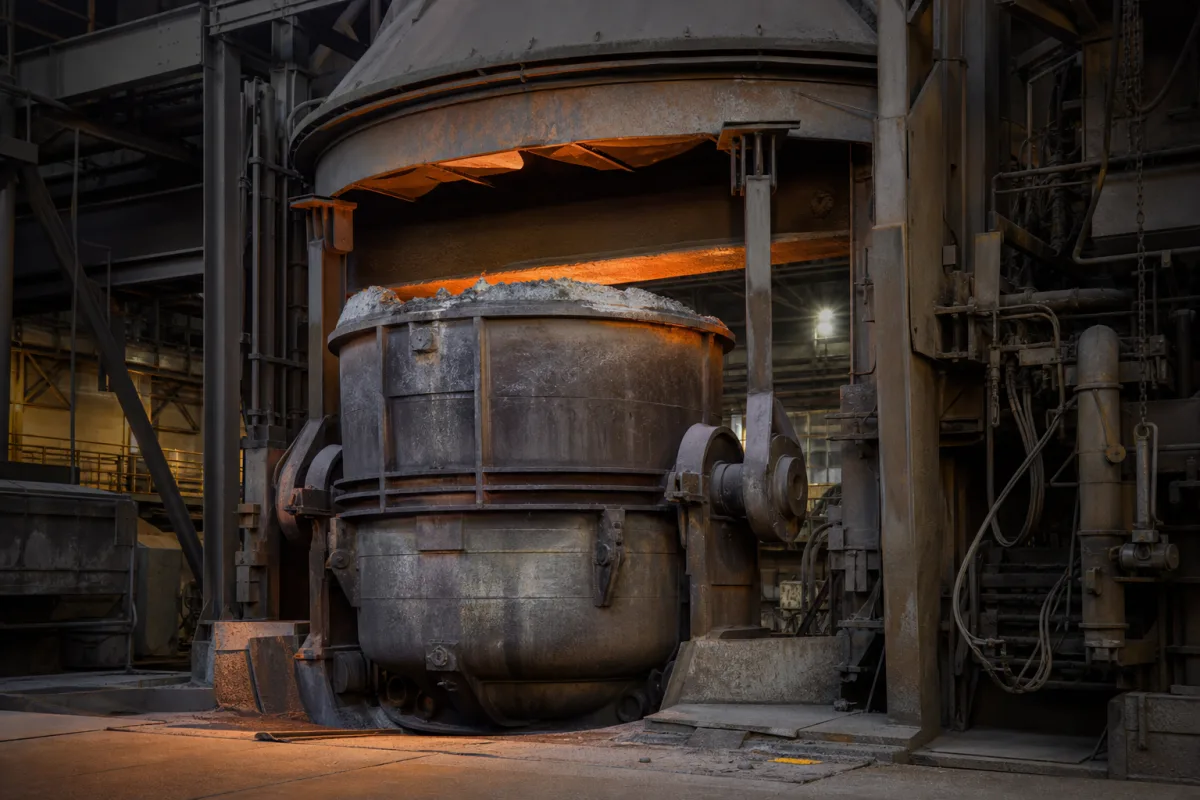
Treatment Ladle

Based on aggregated insights from multiple verified factory profiles within the CNFX directory, the standard Treatment Ladle used in the Basic Metal Manufacturing sector typically supports operational capacities ranging from standard industrial configurations to heavy-duty production requirements.

Technical Definition & Core Assembly

A canonical Treatment Ladle is characterized by the integration of Ladle Shell and Refractory Lining. In industrial production environments, manufacturers listed on CNFX commonly emphasize Refractory-lined steel construction to support stable, high-cycle operation across diverse manufacturing scenarios.

A specialized vessel used to transport and treat molten metal during vacuum degassing processes.

Product Specifications

Technical details and manufacturing context for Treatment Ladle

Definition
The Treatment Ladle is a critical component of the Vacuum Induction Degassing Unit, designed to hold and transport molten metal while undergoing vacuum treatment. It facilitates the removal of dissolved gases and impurities from the molten metal through controlled vacuum exposure, ensuring high-quality metal production with improved mechanical properties and reduced defects.
Working Principle
The Treatment Ladle operates by containing molten metal and being positioned within the vacuum chamber of the degassing unit. Under vacuum conditions, dissolved gases (such as hydrogen and nitrogen) are extracted from the molten metal through reduced pressure, while temperature control and inert gas purging may be applied to enhance impurity removal and prevent re-oxidation.
Common Materials
Refractory-lined steel
Technical Parameters
  • Ladle diameter and height dimensions critical for capacity and vacuum chamber compatibility (mm) Per Request
Components / BOM
  • Ladle Shell
    Structural outer casing providing mechanical strength and support
    Material: Carbon steel
  • Refractory Lining
    Insulating layer protecting the shell from high temperatures and chemical corrosion
    Material: Magnesia-carbon or alumina-silica refractory
  • Pouring Spout
    Controlled outlet for transferring treated molten metal
    Material: Refractory-coated steel
  • Lifting Lugs
    Attachment points for crane handling and positioning within the vacuum chamber
    Material: Forged steel
Engineering Reasoning
0.1-1.5 bar absolute pressure, 1550-1650°C temperature
0.08 bar absolute pressure (vacuum collapse), 1700°C (refractory failure), 2.5 bar (structural yield)
Design Rationale: Refractory spalling due to thermal stress exceeding 35 MPa at ΔT>200°C, vacuum implosion at pressure differential >1.42 bar
Risk Mitigation (FMEA)
Trigger Refractory lining erosion rate exceeding 2 mm/cycle
Mode: Molten metal breakthrough causing vessel failure
Strategy: Zirconia-alumina composite lining with 95% density and 0.5 mm maximum pore size
Trigger Vacuum seal degradation at leak rate >1×10⁻⁴ mbar·L/s
Mode: Atmospheric air ingress causing oxidation and temperature drop
Strategy: Double metallic C-ring seals with helium leak testing at 1×10⁻⁶ mbar·L/s acceptance

Industry Taxonomies & Aliases

Commonly used trade names and technical identifiers for Treatment Ladle.

Industrial Ecosystem & Supply Chain DNA

Complementary Systems
Downstream Applications
Specialized Tooling

Application Fit & Sizing Matrix

Operational Limits
pressure: 0.1-1.0 bar absolute (vacuum degassing range)
flow rate: 50-200 tons/hour (molten metal throughput)
temperature: 1500-1700°C (typical for molten steel)
slag concentration: Up to 5% by volume (slag handling capacity)
Media Compatibility
✓ Molten steel (carbon/alloy) ✓ Molten aluminum alloys ✓ Molten copper alloys
Unsuitable: Chlorine-containing atmospheres (causes refractory degradation)
Sizing Data Required
  • Required molten metal capacity (tons)
  • Vacuum system connection diameter (mm)
  • Process cycle time (minutes per treatment)

Reliability & Engineering Risk Analysis

Failure Mode & Root Cause
Thermal fatigue cracking
Cause: Rapid temperature cycling between molten metal pouring and cooling phases, causing expansion/contraction stresses exceeding material limits
Refractory lining degradation
Cause: Chemical attack from slag/metal interactions and mechanical wear during pouring/tilting operations
Maintenance Indicators
  • Visible cracks or bulging in ladle shell exterior
  • Abnormal tilting resistance or uneven pouring patterns
Engineering Tips
  • Implement controlled preheating/cooling cycles to minimize thermal shock
  • Establish regular refractory thickness monitoring and lining replacement schedule based on usage cycles

Compliance & Manufacturing Standards

Reference Standards
ISO 9001:2015 - Quality Management Systems ASTM A36/A36M - Standard Specification for Carbon Structural Steel CE Marking - Pressure Equipment Directive 2014/68/EU
Manufacturing Precision
  • Wall Thickness: +/-2% of nominal thickness
  • Overall Dimensional Accuracy: +/-5mm for length and diameter
Quality Inspection
  • Ultrasonic Testing (UT) for weld integrity and material defects
  • Hydrostatic Pressure Test to verify leak-tightness and structural strength

Factories Producing Treatment Ladle

Verified manufacturers with capability to produce this product in China

✓ 98% Supplier Capability Match Found

T Technical Director from Singapore Jan 23, 2026
★★★★★
"Testing the Treatment Ladle now; the technical reliability results are within 1% of the laboratory datasheet."
Technical Specifications Verified
P Project Engineer from Germany Jan 20, 2026
★★★★☆
"Impressive build quality. Especially the technical reliability is very stable during long-term operation. (Delivery took slightly longer than expected, but technical support was excellent.)"
Technical Specifications Verified
S Sourcing Manager from Brazil Jan 17, 2026
★★★★★
"As a professional in the Basic Metal Manufacturing sector, I confirm this Treatment Ladle meets all ISO standards."
Technical Specifications Verified
Verification Protocol

“Feedback is collected from verified sourcing managers during RFQ (Request for Quote) and factory evaluation processes on CNFX. These reports represent historical performance data and technical audit summaries from our B2B manufacturing network.”

17 sourcing managers are analyzing this specification now. Last inquiry for Treatment Ladle from Thailand (1h ago).

Supply Chain Compatible Machinery & Devices

Vacuum Induction Melting Furnace

Industrial furnace for melting metals under vacuum using electromagnetic induction

Explore Specs →
Electroslag Remelting Furnace

Secondary refining furnace for high-quality metal ingots

Explore Specs →
Molten Metal Flow Control Valve

Precision valve for regulating molten metal flow in casting and pouring operations.

Explore Specs →
Molten Metal Temperature Measurement System

Automated system for continuous temperature monitoring of molten metals during processing.

Explore Specs →

Frequently Asked Questions

What is the primary function of a treatment ladle in basic metal manufacturing?

A treatment ladle is a specialized vessel used to transport and treat molten metal during vacuum degassing processes, which remove impurities like hydrogen and oxygen to improve metal quality.

Why is refractory lining important in treatment ladles?

Refractory lining provides thermal insulation and chemical resistance, protecting the steel shell from extreme temperatures (often exceeding 1500°C) and corrosive molten metals during degassing operations.

What maintenance considerations are important for treatment ladles?

Regular inspection of refractory lining wear, checking lifting lugs for structural integrity, and monitoring pouring spout erosion are crucial for safe operation and preventing molten metal leaks.

Can I contact factories directly on CNFX?

CNFX is an open directory, not a transaction platform. Each factory profile provides direct contact information and production details to help you initiate direct inquiries with Chinese suppliers.

Get Quote for Treatment Ladle

Request technical pricing, lead times, or customized specifications for Treatment Ladle directly from verified manufacturing units.

Your business information is encrypted and only shared with verified Treatment Ladle suppliers.

Thank you! Your message has been sent. We'll respond within 1–3 business days.

Need to Manufacture Treatment Ladle?

Connect with verified factories specializing in this product category

Add Your Factory Contact Us
Previous Product
Torpedo-shaped vessel
Next Product
Trunnion Ring