Industry-Verified Manufacturing Data (2026)

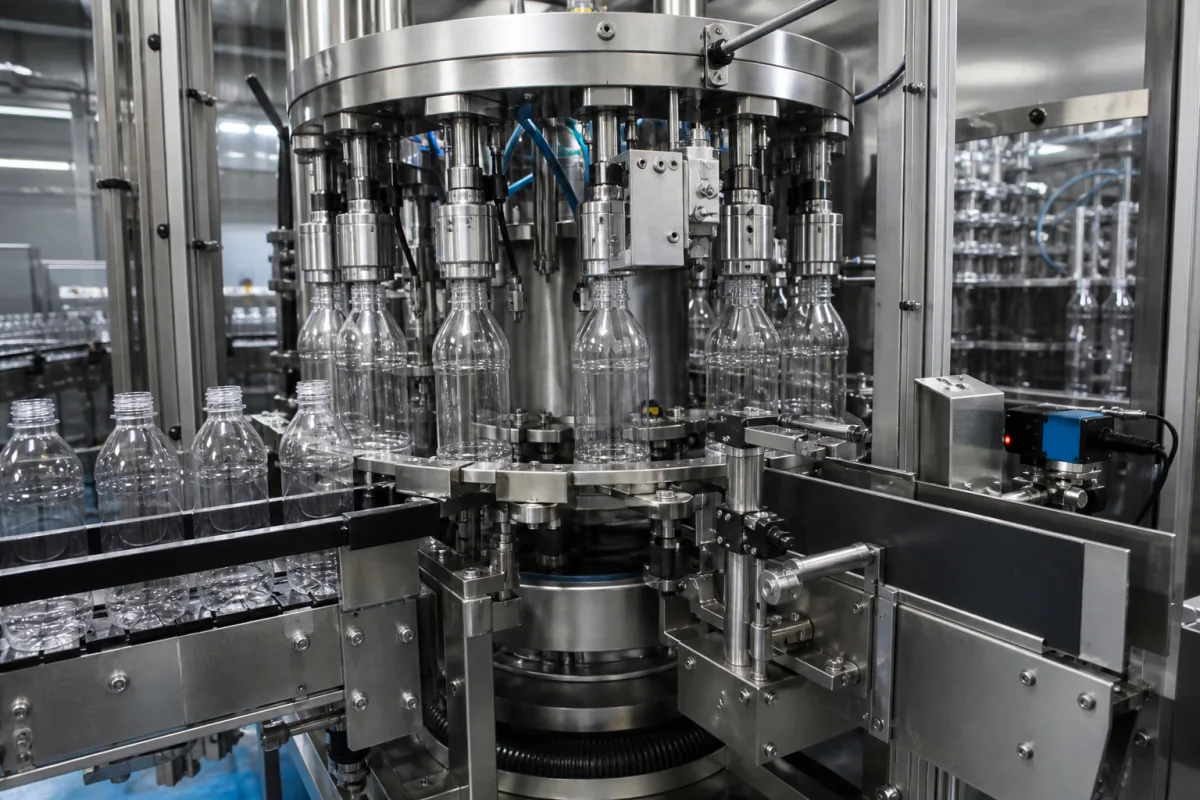
Automated Beverage Container Integrity Testing System

Based on aggregated insights from multiple verified factory profiles within the CNFX directory, the standard Automated Beverage Container Integrity Testing System used in the Beverage Manufacturing sector typically supports operational capacities ranging from standard industrial configurations to heavy-duty production requirements.

Technical Definition & Core Assembly

A canonical Automated Beverage Container Integrity Testing System is characterized by the integration of Test Chamber Module and Pressure/Vacuum Transducer. In industrial production environments, manufacturers listed on CNFX commonly emphasize stainless steel frame construction to support stable, high-cycle operation across diverse manufacturing scenarios.

Automated system for non-destructive testing of beverage container seals and structural integrity.

Product Specifications

Technical details and manufacturing context for Automated Beverage Container Integrity Testing System

Definition
An automated industrial system designed to perform non-destructive integrity testing on filled beverage containers (bottles, cans, pouches) post-filling and sealing. It ensures containers are free from micro-leaks, faulty seals, and structural weaknesses that could compromise product shelf life, safety, or quality. The system integrates into production lines to provide 100% inline inspection, automatically rejecting defective units and logging data for quality assurance and traceability.
Working Principle
Utilizes a combination of pressure decay testing, vacuum decay testing, or force/displacement sensors to detect minute leaks or seal failures without damaging the container or product.
Common Materials
stainless steel frame, aluminum sensor housings, food-grade polyurethane seals, industrial-grade PLC controller
Technical Parameters
  • Maximum testing speed (containers/min) Customizable
  • Applied pressure/vacuum for leak detection (kPa) Customizable
  • Minimum detectable leak rate (cc/min) Customizable
Components / BOM
  • Test Chamber Module
    Seals and pressurizes the container for testing
    Material: Stainless Steel
  • Pressure/Vacuum Transducer
    Measures pressure changes to detect leaks
    Material: Stainless Steel / Ceramic
  • PLC Controller
    System logic, sequence control, and data processing
    Material: Electronic Components / Plastic Housing
  • HMI Touchscreen
    Operator interface for control, monitoring, and parameter setting
    Material: Glass / Plastic
  • Rejection Actuator
    Physically removes containers flagged as defective from the line
    Material: Aluminum / Steel
  • Infeed/Outfeed Conveyor Section
    Transports containers into and out of the test station
    Material: Stainless Steel Frame, Food-Grade Belt
  • Safety Light Curtain Optional
    Protects operators by halting machine if access is detected
    Material: Aluminum Housing, IR LEDs
Engineering Reasoning
0.1-2.0 bar differential pressure
3.5 bar differential pressure
Design Rationale: Plastic deformation of container walls exceeding yield strength (PET: 55 MPa, aluminum: 280 MPa) causing permanent seal displacement >0.5 mm
Risk Mitigation (FMEA)
Trigger Pneumatic regulator drift exceeding ±0.05 bar/hour
Mode: Overpressure-induced container deformation
Strategy: Dual-redundant pressure sensors with 0.01 bar resolution and automatic regulator reset
Trigger Infrared sensor calibration loss at 850 nm wavelength
Mode: False seal integrity readings
Strategy: Triple-wavelength verification (850 nm, 940 nm, 1550 nm) with automatic calibration against NIST-traceable standards

Industry Taxonomies & Aliases

Commonly used trade names and technical identifiers for Automated Beverage Container Integrity Testing System.

Industrial Ecosystem & Supply Chain DNA

Complementary Systems
Downstream Applications
Specialized Tooling

Application Fit & Sizing Matrix

Operational Limits
humidity: 20-80% RH non-condensing
pressure: 0-100 psi test pressure range
flow rate: Up to 60 containers/minute
temperature: 5°C to 40°C (operating environment)
container size range: 50ml to 2L capacity
slurry concentration: Not applicable (non-destructive testing)
Media Compatibility
✓ Carbonated beverage containers (PET bottles) ✓ Aluminum cans with pull-tab seals ✓ Glass bottles with crown caps
Unsuitable: High-viscosity products with particulate matter (e.g., fruit pulps with seeds)
Sizing Data Required
  • Production line speed (containers/minute)
  • Container types and sizes to be tested
  • Required test sensitivity/accuracy specifications

Reliability & Engineering Risk Analysis

Failure Mode & Root Cause
Sensor Drift/Calibration Loss
Cause: Environmental contamination (dust, moisture, beverage residue) accumulating on optical or pressure sensors, leading to inaccurate readings and false rejections/acceptances.
Mechanical Wear in Conveyor/Handling System
Cause: Cyclic fatigue and abrasive wear on belts, rollers, or guides due to continuous high-speed operation and friction from container movement, potentially causing misalignment or jams.
Maintenance Indicators
  • Increased false rejection rate or inconsistent test results compared to baseline performance
  • Unusual audible noises (grinding, squealing, or irregular motor sounds) from the conveyor or actuator mechanisms
Engineering Tips
  • Implement a strict, data-driven preventive maintenance schedule for sensor calibration and cleaning, using statistical process control (SPC) to track performance drift and optimize intervals.
  • Upgrade to wear-resistant materials (e.g., polyurethane belts, ceramic-coated guides) and install vibration/alignment monitoring sensors to detect mechanical issues early, reducing unscheduled downtime.

Compliance & Manufacturing Standards

Reference Standards
ISO 9001:2015 - Quality management systems ANSI/ASQ Z1.4-2008 - Sampling procedures and tables for inspection by attributes CE Marking - Machinery Directive 2006/42/EC
Manufacturing Precision
  • Pressure sensor accuracy: +/-0.25% FS
  • Seal detection repeatability: +/-0.05mm
Quality Inspection
  • Helium Leak Test (ASTM E499/E499M)
  • Automated Visual Inspection with machine vision system

Factories Producing Automated Beverage Container Integrity Testing System

Verified manufacturers with capability to produce this product in China

✓ 95% Supplier Capability Match Found

T Technical Director from Brazil Jan 30, 2026
★★★★★
"Reliable performance in harsh Beverage Manufacturing environments. No issues with the Automated Beverage Container Integrity Testing System so far."
Technical Specifications Verified
P Project Engineer from Canada Jan 27, 2026
★★★★☆
"Testing the Automated Beverage Container Integrity Testing System now; the Maximum Throughput (containers/min) results are within 1% of the laboratory datasheet. (Delivery took slightly longer than expected, but technical support was excellent.)"
Technical Specifications Verified
S Sourcing Manager from United States Jan 24, 2026
★★★★★
"Impressive build quality. Especially the Maximum Throughput (containers/min) is very stable during long-term operation."
Technical Specifications Verified
Verification Protocol

“Feedback is collected from verified sourcing managers during RFQ (Request for Quote) and factory evaluation processes on CNFX. These reports represent historical performance data and technical audit summaries from our B2B manufacturing network.”

8 sourcing managers are analyzing this specification now. Last inquiry for Automated Beverage Container Integrity Testing System from Poland (56m ago).

Supply Chain Commonly Integrated Components

Central Control Unit (PLC)

The programmable logic controller that serves as the central processing and control unit for the automated beverage batch blending system.

Explore Specs →
Precision Metering Pump Assembly

A precision fluid handling component designed to accurately measure and dispense specific volumes of liquid ingredients within an automated beverage blending system.

Explore Specs →
Sanitary Flow Meter

A precision instrument designed to measure the volumetric or mass flow rate of liquids in hygienic processing environments, featuring smooth surfaces and cleanable designs to prevent contamination.

Explore Specs →
Ingredient Inlet Valve Manifold

A multi-port valve assembly that controls and directs the flow of liquid ingredients into an automated beverage blending system.

Explore Specs →

Frequently Asked Questions

What types of beverage containers can this system test?

The system accommodates various container sizes with adjustable diameter and height ranges (specified in mm), suitable for cans, bottles, and other beverage packaging formats commonly used in manufacturing.

How sensitive is the leak detection capability?

The system offers precise leak detection sensitivity measured in cc/min, ensuring identification of even minor seal failures to maintain product quality and prevent contamination.

What safety features are included in the system?

The system includes a safety light curtain for operator protection, food-grade polyurethane seals for contamination prevention, and industrial-grade PLC controls for reliable, safe operation in beverage production environments.

Can I contact factories directly on CNFX?

CNFX is an open directory, not a transaction platform. Each factory profile provides direct contact information and production details to help you initiate direct inquiries with Chinese suppliers.

Get Quote for Automated Beverage Container Integrity Testing System

Request technical pricing, lead times, or customized specifications for Automated Beverage Container Integrity Testing System directly from verified manufacturing units.

Your business information is encrypted and only shared with verified Automated Beverage Container Integrity Testing System suppliers.

Thank you! Your message has been sent. We'll respond within 1–3 business days.

Need to Manufacture Automated Beverage Container Integrity Testing System?

Connect with verified factories specializing in this product category

Add Your Factory Contact Us
Previous Product
Automated Beverage Container Friction Testing System
Next Product
Automated Beverage Container Leak Detection System