Editorial Technical Reference

CO₂ Supply System

This page explains how CO₂ Supply System is classified within Beverage Manufacturing. Technical values and manufacturer relationships are research references; confirm the current specification and supplier evidence for each order.

Technical Definition & Core Assembly

A subsystem within a filling machine that provides controlled carbon dioxide for beverage carbonation and pressurization during the filling process.
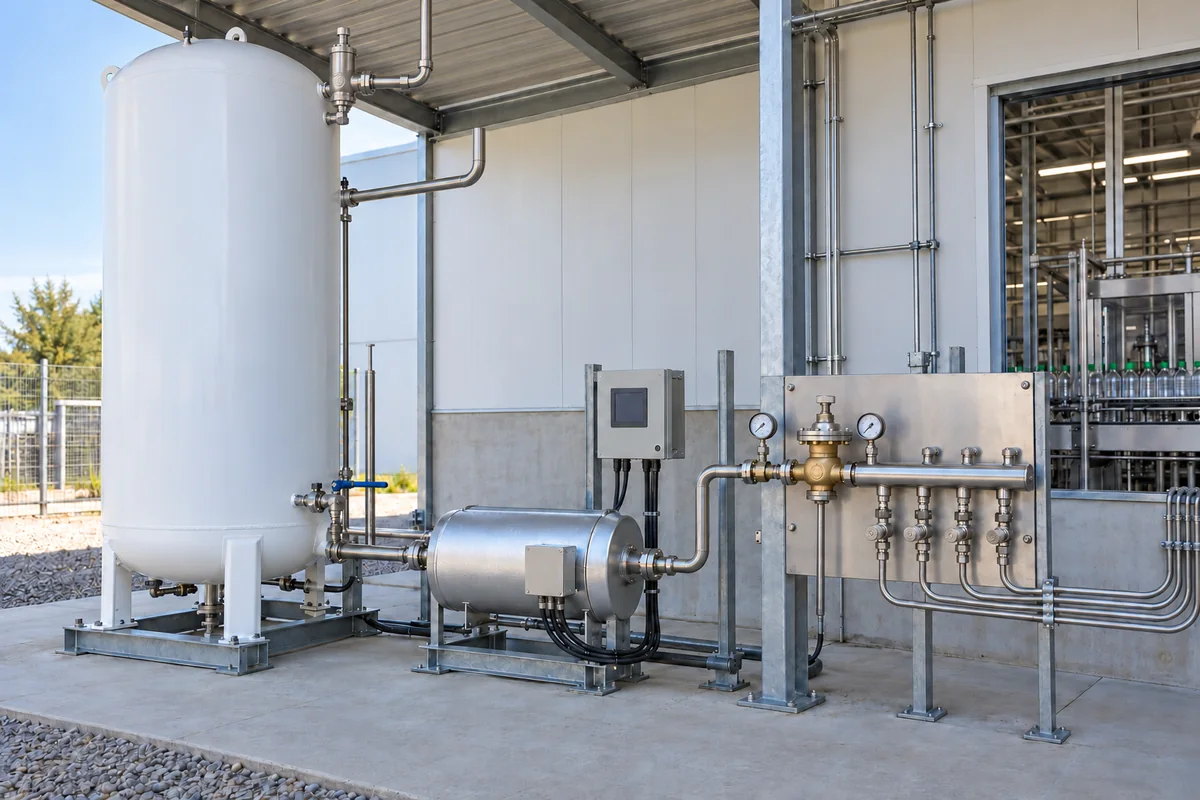
Representative product image. Confirm appearance and specifications with the manufacturer.

Product Specifications

Technical details and manufacturing context for CO₂ Supply System

Definition
The CO₂ Supply System is an integral component of beverage filling machines, responsible for delivering precise amounts of carbon dioxide to carbonate beverages and maintain pressure within the filling system. It ensures consistent carbonation levels and prevents oxidation during the bottling or canning process. The system typically consists of a CO₂ storage tank, pressure regulators, flow control valves, and distribution lines. It maintains a constant pressure supply to the filling heads, where CO₂ is injected into beverages or used to create a protective atmosphere that displaces oxygen from containers before filling. This subsystem is designed for integration into filling lines with rated capacities from 500 to 5000 L/h, operating pressures of 1.0–1.6 MPa, and pressure control accuracy of ±0.02 MPa. It requires CO₂ purity of 99.9–99.998% (ISO 14513) and operates within a temperature range of 0–50°C. The system is available with supply voltages of 220–480 V AC (3-phase, 50/60 Hz, IEC 60038) and power consumption of 1.5–7.5 kW, including vaporizer and controls. Inlet pressure ranges from 1.5–2.5 MPa (from bulk tank or cylinder) and outlet pressure from 0.5–1.0 MPa (to carbonator or filler). Wetted parts are typically stainless steel 316L (ASTM A240), with food-grade polymers and copper alloys also used. The unit is skid-mounted, weighing 150–800 kg, and has ingress protection ratings of IP54–IP65 (IEC 60529). These specifications are reference ranges; actual values must be confirmed with the manufacturer for specific models and applications. The system is not a standalone product but a component designed for integration into filling machines. For procurement, verify that the system meets the required capacity, pressure, and purity standards for your specific beverage production line. Regular maintenance includes checking pressure regulators and valves for wear, ensuring CO₂ purity, and monitoring for leaks. Failure to maintain proper pressure can lead to inconsistent carbonation or oxidation, affecting product quality.
Working Principle
The CO₂ Supply System operates by receiving CO₂ from a bulk tank or cylinder at an inlet pressure of 1.5–2.5 MPa. Pressure regulators reduce this to the operating range of 1.0–1.6 MPa, and flow control valves meter the gas to the filling heads. At the filling heads, CO₂ is injected into the beverage to achieve carbonation, or used to purge containers with a protective atmosphere, displacing oxygen to prevent oxidation. The system maintains a constant pressure supply, with control accuracy of ±0.02 MPa, ensuring consistent carbonation levels. The system includes a vaporizer to convert liquid CO₂ to gas if needed, and all wetted parts are made of corrosion-resistant materials like stainless steel 316L.
Common Materials
Stainless steel, Food-grade polymers, Copper alloys
Technical Parameters
ParameterTypical rangeNotes & selection driver
Rated Capacity500–5000 L/hMatch to filling machine output
Pressure Control Accuracy±0.02 MPaCritical for consistent carbonation
CO₂ Purity Requirement99.9–99.998 %Food grade requiredISO 14513
Supply Voltage220–480 V AC3-phase, 50/60 HzIEC 60038
Power Consumption1.5–7.5 kWIncludes vaporizer and controls
Operating Temperature0–50 °CBelow 0°C CO₂ may liquefy
Inlet Pressure Range1.5–2.5 MPaFrom bulk tank or cylinder
Outlet Pressure Range0.5–1.0 MPaTo carbonator or filler
Material316LStainless steel for wetted partsASTM A240
Ingress ProtectionIP54–IP65For washdown environmentsIEC 60529
Weight150–800 kgSkid-mounted unit

Ranges are indicative industry figures for RFQ preparation, not a supplier commitment. Confirm every value and standard with the legal manufacturer before ordering.

Components / BOM
  • CO₂ Storage Tank
    Stores liquid or gaseous carbon dioxide under pressure
    Material: Stainless steel
  • Pressure Regulator
    Controls and maintains consistent CO₂ pressure to filling heads
    Material: Brass or stainless steel
  • Flow Control Valve
    Precisely regulates CO₂ flow rate to each filling station
    Material: Stainless steel
  • Distribution Manifold
    Distributes CO₂ to multiple filling heads simultaneously
    Material: Stainless steel
  • Safety Relief Valve
    Prevents over-pressurization of the system
    Material: Stainless steel
  • Vaporizer
    Converts liquid CO2 to gas before regulation.

Industry Taxonomies & Aliases

Commonly used trade names and technical identifiers for CO₂ Supply System.

Applied To / Applications

This component is essential for the following industrial systems and equipment:

Industrial Ecosystem & Supply Chain Structure

Complementary Systems
Downstream Applications
Specialized Tooling

Application Fit & Sizing Matrix

Operational Limits
pressure: Up to 10 bar (maximum working pressure)
flow rate: 0.5 to 5.0 m³/h (CO₂ gas at STP)
temperature: 0°C to 40°C (operating range)
slurry concentration: Not applicable (gas-only system)
Media Compatibility
✓ Carbonated beverages (soft drinks, beer) ✓ Food-grade CO₂ gas (99.9% purity) ✓ Stainless steel 316L wetted parts
Unsuitable: Corrosive chemical environments (e.g., chlorine, strong acids)
Sizing Data Required
  • Required CO₂ consumption rate (kg/h or m³/h)
  • Filling machine throughput (bottles/hour)
  • Desired carbonation level (volumes of CO₂)

Reliability & Engineering Risk Analysis

Failure Mode & Root Cause
Corrosion in piping and valves
Cause: Moisture contamination in CO₂ supply leading to carbonic acid formation, which attacks metal components, especially in high-pressure sections and at joints.
Pressure regulator failure
Cause: Contaminant buildup (e.g., oil, particulates) or icing from rapid gas expansion causing diaphragm damage, seat wear, or valve sticking, resulting in inaccurate pressure control or leaks.
Maintenance Indicators
  • Hissing or whistling sounds from valves or fittings indicating gas leaks
  • Frost formation on pipes or regulators suggesting moisture accumulation or blockages
Engineering Tips
  • Install and maintain high-efficiency coalescing filters and desiccant dryers upstream to remove moisture and oil contaminants, preventing corrosion and icing.
  • Implement a routine pressure decay test and ultrasonic leak detection program to identify and address leaks early, reducing stress on components and maintaining system integrity.

Indicative industry ranges for design and RFQ preparation. Confirm the exact figures and applicable standard with the manufacturer before specifying.

Compliance & Manufacturing Standards

Applicable Standards
ISO 9809-1:2019 (Gas cylinders - Refillable seamless steel gas cylinders - Design, construction and testing) ANSI/CGA G-6.1:2019 (Carbon Dioxide) DIN 477-1:2016 (Gas cylinders - 10-litre to 150-litre water capacity for compressed, liquefied and dissolved gases - Part 1: Manufacture)

Quoted from the published standard.

Manufacturing Precision
  • Pressure Vessel Wall Thickness: +/-0.1mm
  • Valve Seat Flatness: 0.05mm
Quality Inspection
  • Hydrostatic Pressure Test (to 1.5x working pressure)
  • Leak Detection Test (Helium Mass Spectrometry)

Manufacturers of CO₂ Supply System

Manufacturer profiles associated with CO₂ Supply System.

Sourcing CO₂ Supply System from China?
Tell us your specification and target quantity — we will match it against manufacturer records and come back with the factories that fit.
Request manufacturers We manufacture this

Manufacturer listings support early research and capability understanding. They are not certification, ranking, or transaction guarantees.

Technical documentation
Request current drawings, revision history, and a signed specification sheet.
Manufacturing capability
Verify equipment lists, process limits, capacity, and representative production evidence.
Inspection readiness
Confirm test methods, calibrated equipment, sampling plans, and traceable reports.
Supplier transparency
Check the legal entity, factory address, ownership, certifications, and direct contacts.

CNFX does not score or rank suppliers. Buyers must verify all claims and documents with the legal manufacturer before ordering.

Supply Chain Compatible Machinery & Devices

Automated Beverage Container Leak Detection System

The Automated Beverage Container Leak Detection System is an industrial device designed for integration into bottling or canning lines.

Explore Specs →
Automated Beverage Container Depalletizing Machine

Industrial machine that automatically removes beverage containers from pallets for production line feeding

Explore Specs →
Regeneration Section

A dedicated section within an industrial system designed to restore or renew the functional properties of materials, media, or components through controlled processes.

Explore Specs →
High-Speed Rotary Bottle Filling Machine

Automated industrial machine for precise liquid filling of beverage containers at high production rates.

Explore Specs →

Frequently Asked Questions

What is the typical capacity range of a CO₂ supply system?

The rated capacity is typically 500–5000 L/h, matched to the filling machine output. The exact capacity required depends on the production line speed and the carbonation level of the beverage.

What CO₂ purity is required for beverage applications?

The system requires CO₂ purity of 99.9–99.998% (ISO 14513). Food-grade CO₂ is essential to avoid contamination and ensure consistent carbonation.

How does the system prevent oxidation during filling?

The system uses CO₂ to create a protective atmosphere that displaces oxygen from containers before filling. This reduces oxidation and helps maintain product quality.

What maintenance is required for the CO₂ supply system?

Regular maintenance includes checking pressure regulators and valves for wear, verifying CO₂ purity, and inspecting for leaks. Also, ensure the vaporizer (if present) is functioning correctly. Follow the manufacturer's guidelines for specific intervals.

Data Basis

Editorial classification, named public sources where available, and source-reviewed manufacturer records.

Preliminary Technical Classification
This page supports structured research, RFQ preparation, and supplier evaluation. It does not replace buyer-led supplier qualification, standards review, or technical approval.
Buyer enquiry

Request manufacturing insight for CO₂ Supply System

Ask for use case, specification boundaries, supplier type, and RFQ preparation information for this product.

Where it goes
Straight to the CNFX editorial desk, and to the manufacturer if this product is linked to a claimed profile. Nothing is broadcast to a supplier list.
Your details stay here
We do not sell or rent enquiry data, and we do not add you to a mailing list. Used only to answer this request.
No commission, no middleman
CNFX is a directory. We take no cut of any order and never negotiate on a supplier's behalf.
What we don't claim
A listing is not an endorsement. Qualify every supplier and verify every figure yourself before ordering.

Your business information is used only to process this request.

Thank you! Your message has been sent. We'll respond within 1–3 business days.
Sorry, we couldn't send your message. Please try again, or email us at contact@cnfx.com.

Need to Manufacture CO₂ Supply System?

Compare manufacturer profiles with relevant product and process capability.

Previous Product
Vacuum Gripper End-Effector
Last Product
Get QuotesChat