Industry-Verified Manufacturing Data (2026)

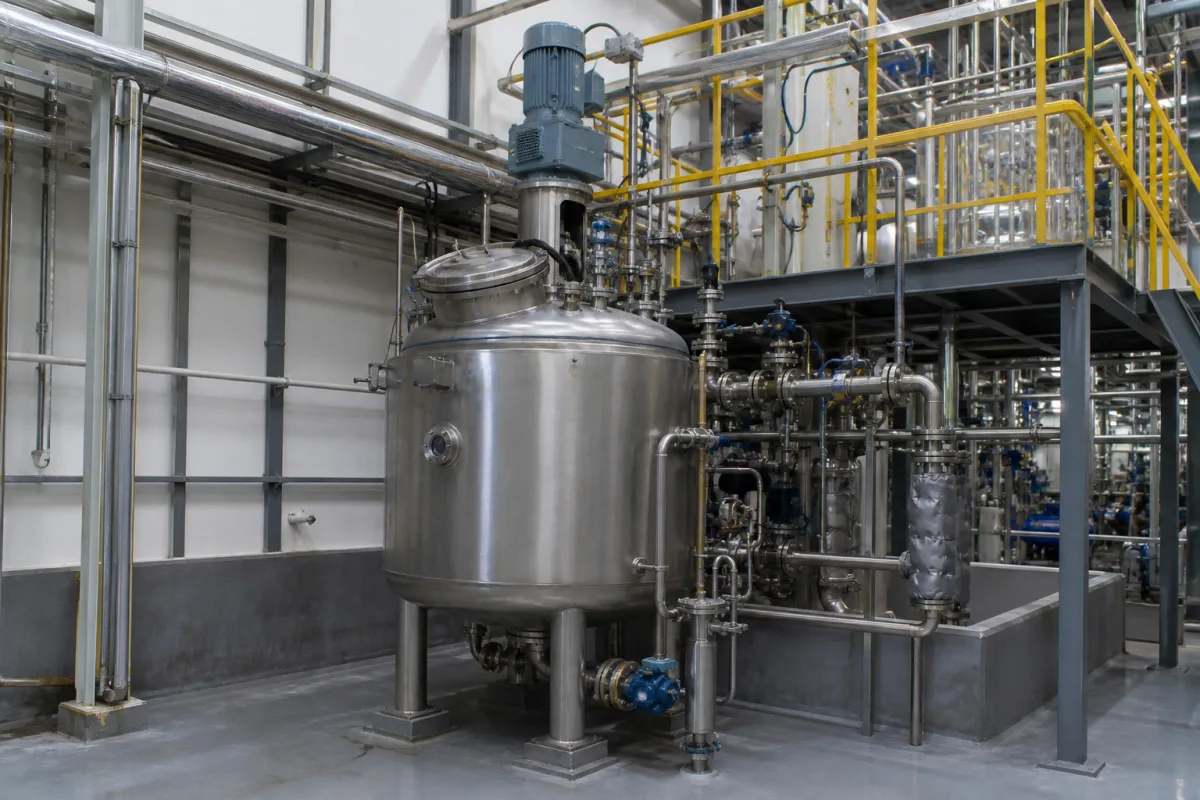
Mixing Reactor Vessel

Based on aggregated insights from multiple verified factory profiles within the CNFX directory, the standard Mixing Reactor Vessel used in the Chemical Manufacturing sector typically supports operational capacities ranging from standard industrial configurations to heavy-duty production requirements.

Technical Definition & Core Assembly

A canonical Mixing Reactor Vessel is characterized by the integration of Agitator/Impeller and Jacket. In industrial production environments, manufacturers listed on CNFX commonly emphasize Stainless Steel (e.g., 316L) construction to support stable, high-cycle operation across diverse manufacturing scenarios.

A specialized vessel designed for mixing and reacting chemicals in industrial neutralization processes.
Product Specifications

Technical details and manufacturing context for Mixing Reactor Vessel

Definition
A critical component within the Industrial Chemical Neutralization System, the Mixing Reactor Vessel is a sealed container where chemical reactants are combined, agitated, and allowed to react under controlled conditions to achieve neutralization. It ensures thorough mixing for uniform reaction and efficient treatment of chemical waste or process streams.
Working Principle
Chemical reactants are introduced into the vessel. An internal agitator (impeller) rotates to create turbulence, ensuring homogeneous mixing of the contents. The vessel may include features for temperature control (jackets) and pressure management to optimize the neutralization reaction kinetics and safety.
Common Materials
Stainless Steel (e.g., 316L), Glass-Lined Steel, Hastelloy
Technical Parameters
  • Working volume capacity of the vessel. (L) Customizable
Components / BOM
  • Agitator/Impeller
    Rotates to mix the vessel contents, ensuring homogeneity and efficient reaction.
    Material: Stainless Steel
  • Jacket
    An outer shell through which heating or cooling media circulates to control the reaction temperature.
    Material: Carbon Steel or Stainless Steel
  • Baffles
    Internal vertical plates that prevent vortex formation and improve mixing efficiency.
    Material: Stainless Steel
Engineering Reasoning
0.1-2.0 MPa (1-20 bar) at 20-150°C
3.5 MPa (35 bar) internal pressure at 180°C
Design Rationale: Yield strength degradation of 316L stainless steel (205 MPa at 20°C → 165 MPa at 180°C) combined with stress corrosion cracking from chloride ions (>25 ppm) at weld seams
Risk Mitigation (FMEA)
Trigger Impeller shaft misalignment exceeding 0.05 mm/m
Mode: Bearing seizure at 3000 rpm causing motor overload
Strategy: Laser-aligned coupling installation with 0.01 mm/m tolerance and vibration monitoring at 4-20 kHz
Trigger pH sensor drift of ±0.5 units over 1000 hours
Mode: Incomplete neutralization producing exothermic reaction (ΔT > 50°C)
Strategy: Triple-redundant pH probes with automated calibration every 24 hours using NIST-traceable buffers

Industry Taxonomies & Aliases

Commonly used trade names and technical identifiers for Mixing Reactor Vessel.

Industrial Ecosystem & Supply Chain DNA

Complementary Systems
Downstream Applications
Specialized Tooling

Application Fit & Sizing Matrix

Operational Limits
pressure: Up to 10 bar (g)
flow rate: Up to 50 m³/h
temperature: -20°C to 200°C
slurry concentration: Up to 40% solids by weight
Media Compatibility
✓ Acid-base neutralization reactions ✓ Polymerization processes ✓ Pharmaceutical intermediate synthesis
Unsuitable: Highly corrosive hydrofluoric acid environments
Sizing Data Required
  • Required batch volume (m³)
  • Desired mixing intensity (kW/m³)
  • Process cycle time (hours)

Reliability & Engineering Risk Analysis

Failure Mode & Root Cause
Corrosion fatigue cracking
Cause: Cyclic thermal and mechanical stresses combined with corrosive process fluids, leading to crack initiation and propagation at stress concentration points like welds or nozzles.
Impeller shaft seal failure
Cause: Wear from abrasive slurries, misalignment, or improper lubrication causing leakage, contamination, or loss of mixing efficiency.
Maintenance Indicators
  • Unusual vibration or audible knocking during operation, indicating imbalance, bearing wear, or loose components.
  • Visible leaks, discoloration, or weeping at welds, seals, or connections, suggesting corrosion, fatigue, or seal degradation.
Engineering Tips
  • Implement regular vibration analysis and thermography to detect early signs of imbalance, misalignment, or bearing wear before catastrophic failure.
  • Use corrosion-resistant materials or linings (e.g., Hastelloy, rubber lining) and ensure proper chemical compatibility with process fluids to reduce degradation.

Compliance & Manufacturing Standards

Reference Standards
ISO 9001:2015 - Quality management systems ASME BPVC Section VIII - Rules for construction of pressure vessels DIN EN 13445 - Unfired pressure vessels
Manufacturing Precision
  • Bore diameter: +/-0.05mm
  • Surface flatness: 0.15mm per meter
Quality Inspection
  • Hydrostatic pressure test
  • Ultrasonic thickness measurement

Factories Producing Mixing Reactor Vessel

Verified manufacturers with capability to produce this product in China

✓ 95% Supplier Capability Match Found

P Procurement Specialist from Brazil Feb 20, 2026
★★★★★
"Reliable performance in harsh Chemical Manufacturing environments. No issues with the Mixing Reactor Vessel so far."
Technical Specifications Verified
T Technical Director from Canada Feb 17, 2026
★★★★★
"Testing the Mixing Reactor Vessel now; the technical reliability results are within 1% of the laboratory datasheet."
Technical Specifications Verified
P Project Engineer from United States Feb 14, 2026
★★★★★
"Impressive build quality. Especially the technical reliability is very stable during long-term operation."
Technical Specifications Verified
Verification Protocol

“Feedback is collected from verified sourcing managers during RFQ (Request for Quote) and factory evaluation processes on CNFX. These reports represent historical performance data and technical audit summaries from our B2B manufacturing network.”

18 sourcing managers are analyzing this specification now. Last inquiry for Mixing Reactor Vessel from Thailand (37m ago).

Supply Chain Compatible Machinery & Devices

Continuous Flow Reactor System

Automated chemical synthesis system for continuous production.

Explore Specs →
Modular Distillation Column System

Pre-engineered modular system for continuous separation of chemical mixtures via distillation.

Explore Specs →
Automated Batch Crystallization System

Automated system for controlled crystallization of chemical compounds in batch processes.

Explore Specs →
Automated pH Monitoring and Dosing System

Automated system for continuous pH monitoring and chemical dosing in process streams.

Explore Specs →

Frequently Asked Questions

What materials are best for corrosive chemical mixing in neutralization processes?

For corrosive chemicals in neutralization, 316L stainless steel offers good general resistance, glass-lined steel provides excellent corrosion protection for acids, and Hastelloy is ideal for highly corrosive environments with chlorides or oxidizing agents.

How do baffles improve mixing efficiency in reactor vessels?

Baffles prevent vortex formation and promote turbulent flow, ensuring uniform mixing and heat transfer throughout the vessel, which is critical for consistent reaction rates and product quality in neutralization processes.

What is the purpose of the jacket in a mixing reactor vessel?

The jacket allows for precise temperature control by circulating heating or cooling fluids, maintaining optimal reaction conditions for exothermic or endothermic neutralization reactions to ensure safety and efficiency.

Can I contact factories directly on CNFX?

CNFX is an open directory, not a transaction platform. Each factory profile provides direct contact information and production details to help you initiate direct inquiries with Chinese suppliers.

Get Quote for Mixing Reactor Vessel

Request technical pricing, lead times, or customized specifications for Mixing Reactor Vessel directly from verified manufacturing units.

Your business information is encrypted and only shared with verified Mixing Reactor Vessel suppliers.

Thank you! Your message has been sent. We'll respond within 1–3 business days.

Need to Manufacture Mixing Reactor Vessel?

Connect with verified factories specializing in this product category

Add Your Factory Contact Us
Previous Product
Mixing Element
Next Product
Mixing Vessel