Editorial Technical Reference

Data Logging Module

This page explains how Data Logging Module is classified within Computer, Electronic and Optical Product Manufacturing. Technical values and manufacturer relationships are research references; confirm the current specification and supplier evidence for each order.

Technical Definition & Core Assembly

A hardware component that collects, stores, and manages operational data from industrial equipment and sensors.
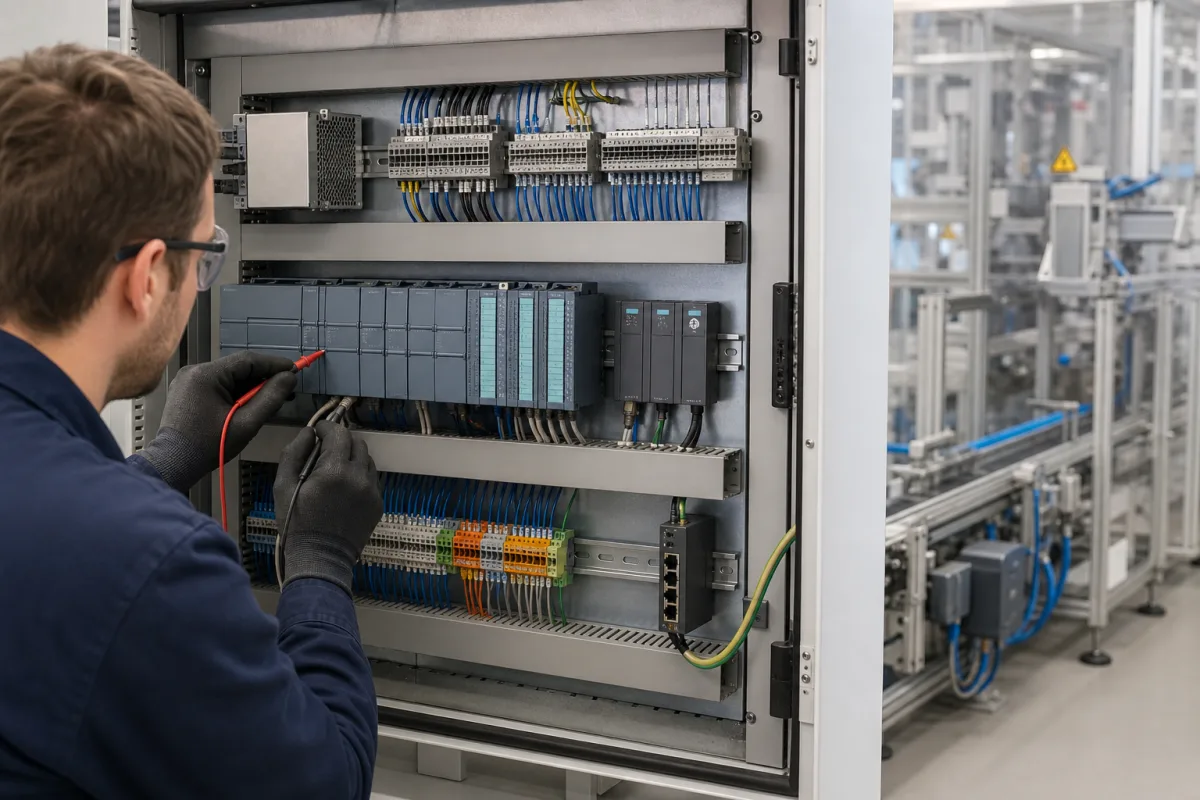
Representative product image. Confirm appearance and specifications with the manufacturer.

Product Specifications

Technical details and manufacturing context for Data Logging Module

Definition
The Data Logging Module is an embedded electronic component within Industrial Systems that continuously acquires measurement data from connected sensors and equipment, converts analog signals to digital format, timestamps the data, and stores it in non-volatile memory for subsequent analysis, monitoring, and quality control purposes. It is designed for integration into industrial control cabinets or DIN-rail mounting, operating within a wide input voltage range of 9–36 V DC and consuming no more than 5 W at 24 V DC. The module provides 4 to 8 configurable analog input channels with 16-bit resolution, supporting sampling rates from 1 to 1000 Hz per channel. Data is stored in industrial-grade flash memory with capacities ranging from 8 to 32 GB, ensuring reliable retention even in harsh environments. Communication interfaces include RS-485 and Ethernet, with Modbus RTU/TCP protocol support for seamless integration into existing industrial networks. The module is designed to operate in extended temperature ranges from -40°C to 85°C, with storage temperature matching the operating range, and it withstands relative humidity from 5% to 95% non-condensing. Its ingress protection rating of IP65 to IP67 makes it dust-tight and water-resistant, suitable for demanding industrial settings. The compact dimensions of 100 x 75 x 30 mm and a weight of ≤300 g facilitate easy installation. A real-time clock maintains timestamp accuracy within ±2 seconds per day. The module is built with a printed circuit board, microcontroller unit, and flash memory chip, ensuring robust performance. For procurement and verification, it is essential to confirm model-specific values and standards with the legal manufacturer or supplier, as the listed parameters are reference ranges. The module's operating principle involves signal acquisition, analog-to-digital conversion, timestamping, and storage, with low power consumption and optional communication for data retrieval. It is a critical component for data logging in industrial automation, process monitoring, and quality assurance applications.
Working Principle
The module receives electrical signals from various sensors (temperature, pressure, flow, etc.) through input interfaces. These analog signals are processed by an analog-to-digital converter (ADC) with 16-bit resolution, converting them to digital data. A real-time clock adds precise timestamps to each sample. The digitized and timestamped data is then stored in non-volatile flash memory or SD card storage. The module operates on low power consumption, typically ≤5 W at 24 V DC, and may include communication interfaces such as RS-485 or Ethernet for data retrieval and integration with control systems. The sampling rate is programmable from 1 to 1000 Hz per channel, allowing flexibility for different application requirements. The module is designed for continuous operation in industrial environments, with robust construction and protection against dust and water ingress.
Common Materials
Printed Circuit Board (PCB), Microcontroller Unit (MCU), Flash Memory Chip
Technical Parameters
ParameterTypical rangeNotes & selection driver
Input Voltage Range9–36 V DCWide range for industrial power supplies
Power Consumption≤5 WAt 24 V DC, typical
Number of Analog Inputs4–8 channelsConfigurable
Analog Input Resolution16 bitHigh resolution for accurate data
Sampling Rate1–1000 HzPer channel, programmable
Data Storage Capacity8–32 GBIndustrial-grade flash memory
Communication InterfaceRS-485, EthernetModbus RTU/TCP supported
Operating Temperature Range-40–85 °CExtended temperature for harsh environmentsIEC 60068-2-1, IEC 60068-2-2
Storage Temperature Range-40–85 °CSame as operatingIEC 60068-2-1, IEC 60068-2-2
Relative Humidity5–95 % RHNon-condensingIEC 60068-2-78
Ingress Protection RatingIP65–IP67Dust-tight and water-resistantIEC 60529
Dimensions (W x H x D)100 x 75 x 30 mmCompact DIN-rail mount
Weight≤300 gLightweight for easy installation
Real-Time Clock Accuracy±2 s/dayMaintains timestamp accuracy

Ranges are indicative industry figures for RFQ preparation, not a supplier commitment. Confirm every value and standard with the legal manufacturer before ordering.

Components / BOM
  • Analog-to-Digital Converter
    Converts analog sensor signals to digital values
    Material: Semiconductor integrated circuit
  • Real-Time Clock
    Provides precise timestamps for all logged data
    Material: Quartz crystal oscillator with backup battery
  • Communication Interface Optional
    Enables data transfer to external systems (RS-485, Ethernet, etc.)
    Material: PCB with connector ports
  • Data Storage Memory
    Stores the logged data on the module.

Industry Taxonomies & Aliases

Commonly used trade names and technical identifiers for Data Logging Module.

Applied To / Applications

This component is essential for the following industrial systems and equipment:

Industrial Ecosystem & Supply Chain Structure

Complementary Systems
Downstream Applications
Specialized Tooling

Application Fit & Sizing Matrix

Operational Limits
pressure: 0 to 10 bar
other spec: IP67 rating, 24V DC power, 1000 Hz sampling rate
temperature: -40°C to +85°C
Media Compatibility
✓ Water-based fluids ✓ Hydraulic oils ✓ Compressed air systems
Unsuitable: Corrosive chemical environments (e.g., strong acids, chlorides)
Sizing Data Required
  • Data sampling rate required (Hz)
  • Number of sensor inputs needed
  • Required data storage capacity (GB)

Reliability & Engineering Risk Analysis

Failure Mode & Root Cause
Memory corruption
Cause: Power supply fluctuations or electrical noise causing data corruption in non-volatile memory (e.g., EEPROM, flash).
Sensor interface failure
Cause: Degradation of communication ports (e.g., RS-485, Ethernet) due to environmental factors like moisture, dust, or connector wear.
Maintenance Indicators
  • Inconsistent or missing data logs despite operational sensors.
  • Unusual LED patterns or audible alarms indicating communication or power faults.
Engineering Tips
  • Implement surge protection and uninterruptible power supplies (UPS) to stabilize input power and prevent data loss during outages.
  • Regularly clean and inspect connectors, and use environmental sealing to protect against moisture and contaminants.

Indicative industry ranges for design and RFQ preparation. Confirm the exact figures and applicable standard with the manufacturer before specifying.

Compliance & Manufacturing Standards

Applicable Standards
IEC 61010-1:2010 - Safety Requirements for Electrical Equipment for Measurement, Control, and Laboratory Use CE Marking - Conformity with EU Directives (e.g., EMC Directive 2014/30/EU)

Quoted from the published standard.

Manufacturing Precision
  • Dimensional Stability: +/-0.05mm across operating temperature range
  • Electrical Contact Resistance: +/-5% of nominal value
Quality Inspection
  • Environmental Stress Screening (ESS) - Temperature and Vibration Testing
  • Functional Testing - Data Integrity and Communication Protocol Verification

Manufacturers of Data Logging Module

Manufacturer profiles associated with Data Logging Module.

Sourcing Data Logging Module from China?
Tell us your specification and target quantity — we will match it against manufacturer records and come back with the factories that fit.
Request manufacturers We manufacture this

Manufacturer listings support early research and capability understanding. They are not certification, ranking, or transaction guarantees.

Technical documentation
Request current drawings, revision history, and a signed specification sheet.
Manufacturing capability
Verify equipment lists, process limits, capacity, and representative production evidence.
Inspection readiness
Confirm test methods, calibrated equipment, sampling plans, and traceable reports.
Supplier transparency
Check the legal entity, factory address, ownership, certifications, and direct contacts.

CNFX does not score or rank suppliers. Buyers must verify all claims and documents with the legal manufacturer before ordering.

Supply Chain Commonly Integrated Components

Solder Paste Printer

A solder paste printer is a precision machine used in the assembly of printed circuit boards (PCBs).

Explore Specs →
Wireless Radio Module

A hardware component that enables wireless communication by transmitting and receiving radio frequency signals.

Explore Specs →
Vision Alignment System

A computer vision-based subsystem that ensures precise alignment of components during automated chassis assembly.

Explore Specs →
Ethernet Magnetics

Passive electronic component that provides electrical isolation, signal conditioning, and EMI filtering for Ethernet interfaces

Explore Specs →

Frequently Asked Questions

What is the input voltage range for the data logging module?

The module accepts a DC input voltage range of 9 to 36 V DC, which is suitable for industrial power supplies. Always verify the exact voltage requirements with the manufacturer for your specific model.

How many analog input channels does the module support?

The module provides 4 to 8 configurable analog input channels. The exact number depends on the model configuration, so confirm with the supplier.

What communication interfaces are available?

The module supports RS-485 and Ethernet interfaces, with Modbus RTU/TCP protocol support. This allows integration into industrial networks for data retrieval and monitoring.

What is the operating temperature range?

The module operates in a temperature range of -40°C to 85°C, as per IEC 60068-2-1 and IEC 60068-2-2 standards. Ensure the environment meets these conditions and verify with the manufacturer.

Data Basis

Editorial classification, named public sources where available, and source-reviewed manufacturer records.

Preliminary Technical Classification
This page supports structured research, RFQ preparation, and supplier evaluation. It does not replace buyer-led supplier qualification, standards review, or technical approval.
Buyer enquiry

Request manufacturing insight for Data Logging Module

Ask for use case, specification boundaries, supplier type, and RFQ preparation information for this product.

Where it goes
Straight to the CNFX editorial desk, and to the manufacturer if this product is linked to a claimed profile. Nothing is broadcast to a supplier list.
Your details stay here
We do not sell or rent enquiry data, and we do not add you to a mailing list. Used only to answer this request.
No commission, no middleman
CNFX is a directory. We take no cut of any order and never negotiate on a supplier's behalf.
What we don't claim
A listing is not an endorsement. Qualify every supplier and verify every figure yourself before ordering.

Your business information is used only to process this request.

Thank you! Your message has been sent. We'll respond within 1–3 business days.
Sorry, we couldn't send your message. Please try again, or email us at contact@cnfx.com.

Need to Manufacture Data Logging Module?

Compare manufacturer profiles with relevant product and process capability.

Previous Product
XY Positioning Stage
Last Product
Get QuotesChat