Industry-Verified Manufacturing Data (2026)

Electrolyte Reservoir

Based on aggregated insights from multiple verified factory profiles within the CNFX directory, the standard Electrolyte Reservoir used in the Computer, Electronic and Optical Product Manufacturing sector typically supports operational capacities ranging from standard industrial configurations to heavy-duty production requirements.

Technical Definition & Core Assembly

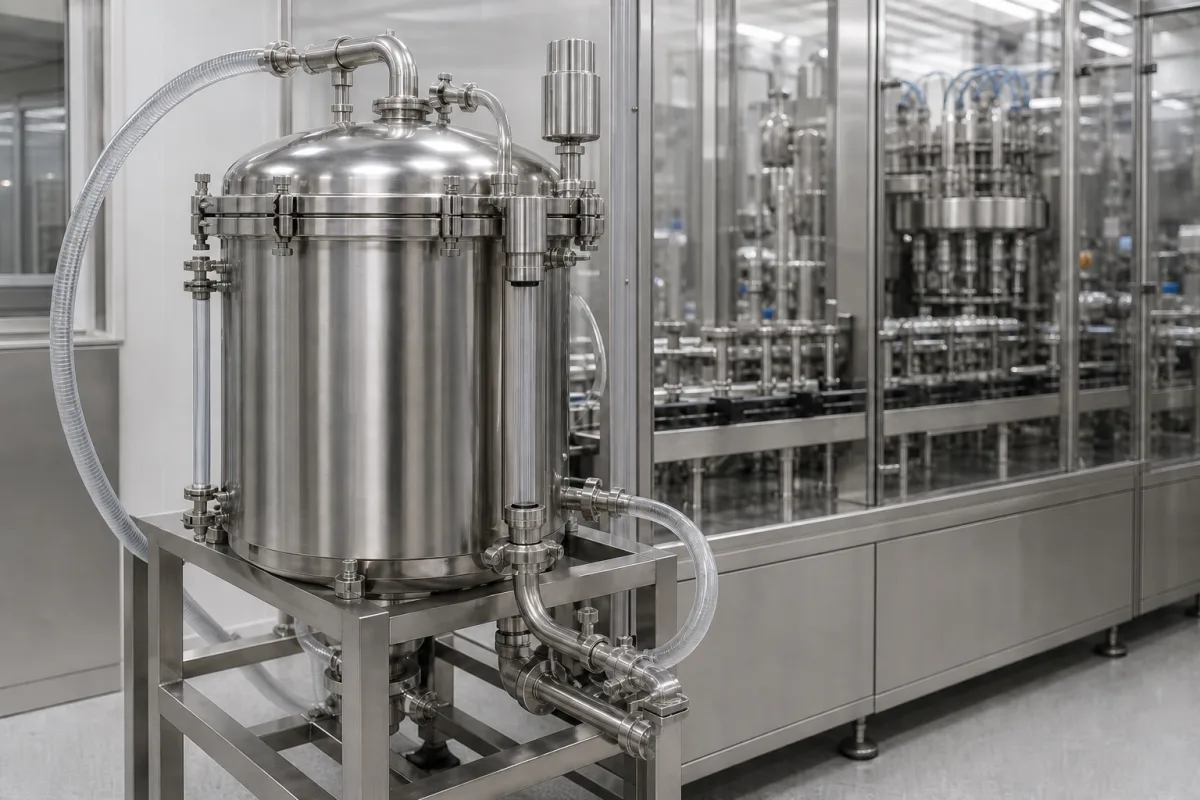
A canonical Electrolyte Reservoir is characterized by the integration of Tank Body and Level Sensor. In industrial production environments, manufacturers listed on CNFX commonly emphasize Stainless steel 316L construction to support stable, high-cycle operation across diverse manufacturing scenarios.

A container designed to store and supply electrolyte solution within an electrolyte filling system for battery manufacturing.
Product Specifications

Technical details and manufacturing context for Electrolyte Reservoir

Definition
The electrolyte reservoir is a critical component of electrolyte filling systems used in battery production lines. It serves as the primary storage and supply vessel for electrolyte solutions, maintaining them at controlled conditions before precise dispensing into battery cells. The reservoir ensures consistent electrolyte quality, prevents contamination, and enables continuous operation of the filling process.
Working Principle
The electrolyte reservoir stores electrolyte solution and supplies it to the filling system through controlled pumping or gravity feed. It typically includes level sensors to monitor electrolyte volume, temperature control systems to maintain optimal electrolyte properties, and agitation systems to prevent sedimentation or stratification of the electrolyte mixture. The reservoir maintains a closed environment to prevent moisture absorption and contamination.
Common Materials
Stainless steel 316L, Polypropylene, Fluoropolymer linings
Technical Parameters
  • Storage capacity of the reservoir (L) Standard Spec
Components / BOM
  • Tank Body
    Primary containment vessel for electrolyte storage
    Material: Stainless steel 316L or corrosion-resistant polymer
  • Level Sensor
    Monitors electrolyte volume and triggers refill alerts
    Material: Stainless steel with PTFE coating
  • Agitator
    Maintains uniform electrolyte composition by preventing sedimentation
    Material: Stainless steel with chemical-resistant seals
  • Temperature Control Jacket
    Maintains electrolyte at optimal temperature through heating/cooling
    Material: Stainless steel with insulation
  • Filling/Draining Ports
    Connections for electrolyte supply and system maintenance
    Material: Stainless steel with quick-disconnect fittings
Engineering Reasoning
0.1-2.0 bar (gauge pressure)
3.5 bar internal pressure or -0.3 bar vacuum
Design Rationale: Polymer creep deformation exceeding 2% strain at 60°C or brittle fracture at -20°C due to polypropylene's glass transition temperature of 0°C
Risk Mitigation (FMEA)
Trigger Electrolyte decomposition generating 0.5 L/min hydrogen gas at 45°C
Mode: Pressure buildup exceeding 3.5 bar causing reservoir rupture
Strategy: Integrated pressure relief valve with 2.8 bar cracking pressure and venturi gas separator
Trigger Polypropylene oxidation reducing tensile strength by 40% after 1000 hours at 80°C
Mode: Stress cracking at injection molding seams under 1.8 bar operating pressure
Strategy: UV-stabilized copolymer formulation with 2.1% carbon black additive and 3 mm minimum wall thickness

Industry Taxonomies & Aliases

Commonly used trade names and technical identifiers for Electrolyte Reservoir.

Applied To / Applications

This component is essential for the following industrial systems and equipment:

Industrial Ecosystem & Supply Chain DNA

Complementary Systems
Downstream Applications
Specialized Tooling

Application Fit & Sizing Matrix

Operational Limits
pressure: 0 to 2 bar (operating), 3 bar max (burst)
flow rate: 0.1 to 10 L/min (typical), 15 L/min max
temperature: -20°C to 80°C (operating), -40°C to 100°C (storage)
slurry concentration: Up to 40% solids by weight (for slurry electrolytes)
Media Compatibility
✓ Lithium-ion battery electrolytes (e.g., LiPF6 in EC/DMC) ✓ Aqueous electrolytes (e.g., KOH solution) ✓ Solid-state electrolyte precursors (slurry form)
Unsuitable: Hydrofluoric acid (HF) or highly corrosive halogenated media
Sizing Data Required
  • Maximum daily electrolyte consumption (L/day)
  • Required buffer capacity (hours of autonomy)
  • Physical space constraints (L x W x H in mm)

Reliability & Engineering Risk Analysis

Failure Mode & Root Cause
Corrosion-induced leakage
Cause: Chemical attack from acidic or alkaline electrolytes degrading reservoir material, often accelerated by temperature fluctuations or impurities.
Structural fatigue cracking
Cause: Cyclic thermal expansion/contraction or mechanical vibration stresses, particularly at weld joints or mounting points, leading to material fatigue.
Maintenance Indicators
  • Visible electrolyte weeping or crust formation on external surfaces
  • Abnormal audible hissing or bubbling from venting systems during operation
Engineering Tips
  • Implement routine ultrasonic thickness testing at high-stress areas to monitor corrosion rates and schedule proactive replacements
  • Install vibration isolation mounts and thermal expansion loops in piping connections to reduce mechanical stress concentrations

Compliance & Manufacturing Standards

Reference Standards
ISO 9001:2015 - Quality Management Systems ASTM B117 - Salt Spray (Fog) Testing CE Marking - EU Safety, Health, and Environmental Requirements
Manufacturing Precision
  • Volume Capacity: +/- 2% of nominal
  • Sealing Surface Flatness: 0.05mm across diameter
Quality Inspection
  • Leak Test - Pressure Decay Method
  • Material Verification - X-Ray Fluorescence (XRF) Analysis

Factories Producing Electrolyte Reservoir

Verified manufacturers with capability to produce this product in China

✓ 95% Supplier Capability Match Found

T Technical Director from Brazil Jan 02, 2026
★★★★★
"Great transparency on the Electrolyte Reservoir components. Essential for our Computer, Electronic and Optical Product Manufacturing supply chain."
Technical Specifications Verified
P Project Engineer from Canada Dec 30, 2025
★★★★☆
"The Electrolyte Reservoir we sourced perfectly fits our Computer, Electronic and Optical Product Manufacturing production line requirements. (Delivery took slightly longer than expected, but technical support was excellent.)"
Technical Specifications Verified
S Sourcing Manager from United States Dec 27, 2025
★★★★★
"Found 28+ suppliers for Electrolyte Reservoir on CNFX, but this spec remains the most cost-effective."
Technical Specifications Verified
Verification Protocol

“Feedback is collected from verified sourcing managers during RFQ (Request for Quote) and factory evaluation processes on CNFX. These reports represent historical performance data and technical audit summaries from our B2B manufacturing network.”

9 sourcing managers are analyzing this specification now. Last inquiry for Electrolyte Reservoir from Mexico (1h ago).

Supply Chain Compatible Machinery & Devices

Modular Industrial Edge Computing Device

Rugged computing platform for industrial data processing at the network edge

Explore Specs →
Industrial Smart Camera Module

Embedded vision system for industrial automation and quality inspection.

Explore Specs →
Industrial Wireless Power Transfer Module

Wireless power transfer module for industrial equipment applications

Explore Specs →
Industrial Smart Sensor Module

Modular industrial sensor with embedded processing and wireless connectivity

Explore Specs →

Frequently Asked Questions

What materials are used in this electrolyte reservoir and why?

This reservoir uses 316L stainless steel for corrosion resistance, polypropylene for chemical compatibility, and fluoropolymer linings to prevent electrolyte contamination and ensure long-term durability in battery manufacturing environments.

How does the temperature control jacket improve battery manufacturing?

The temperature control jacket maintains optimal electrolyte temperature, ensuring consistent viscosity and chemical properties during battery filling, which improves battery performance, safety, and production yield.

What maintenance is required for the electrolyte reservoir?

Regular inspection of seals and linings, cleaning of ports and sensors, and verification of agitator and temperature control functions are recommended to prevent contamination and ensure reliable electrolyte supply.

Can I contact factories directly on CNFX?

CNFX is an open directory, not a transaction platform. Each factory profile provides direct contact information and production details to help you initiate direct inquiries with Chinese suppliers.

Get Quote for Electrolyte Reservoir

Request technical pricing, lead times, or customized specifications for Electrolyte Reservoir directly from verified manufacturing units.

Your business information is encrypted and only shared with verified Electrolyte Reservoir suppliers.

Thank you! Your message has been sent. We'll respond within 1–3 business days.

Need to Manufacture Electrolyte Reservoir?

Connect with verified factories specializing in this product category

Add Your Factory Contact Us
Previous Product
Electrolyte Filling System
Next Product
Electron Gun