Ingredient Hopper
View system integration details
This page explains how Agitator is classified within Food Manufacturing. Technical values and manufacturer relationships are research references; confirm the current specification and supplier evidence for each order.
A mechanical component within an ingredient hopper that mixes, blends, or stirs materials to prevent settling, ensure homogeneity, and facilitate material flow.
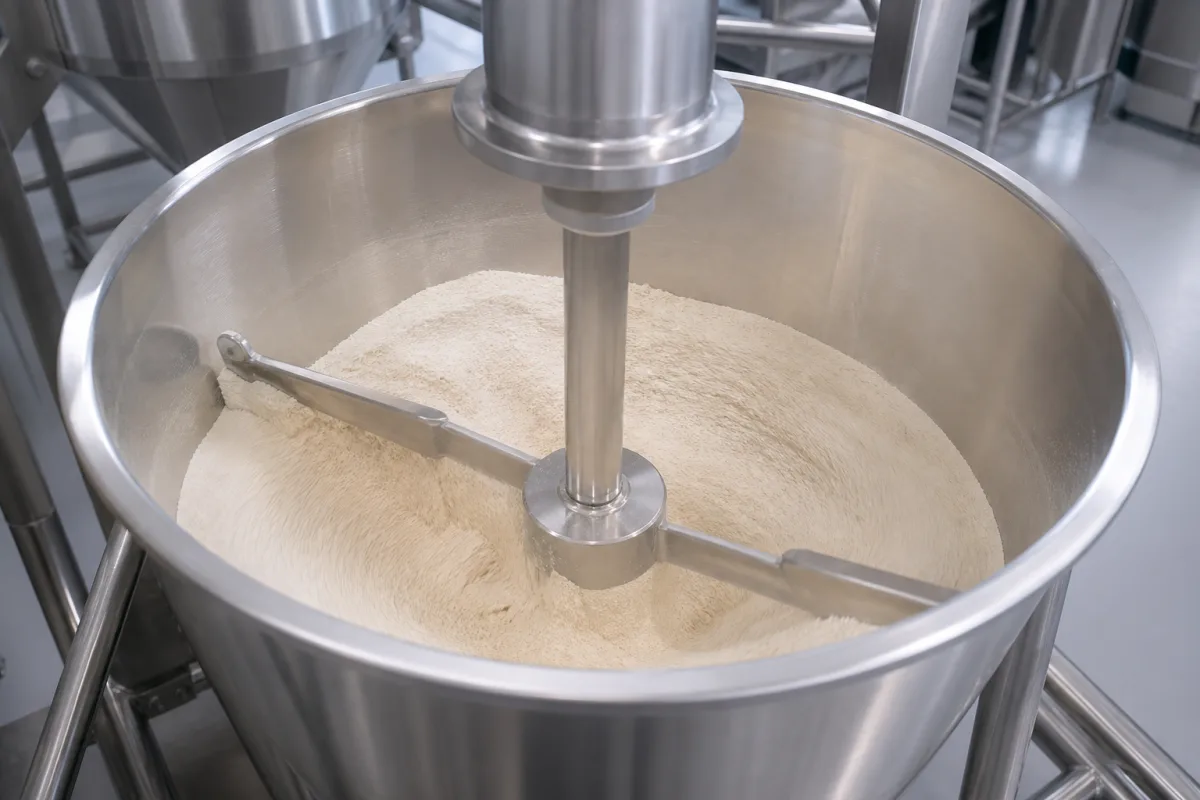
Technical details and manufacturing context for Agitator
| Parameter | Typical range | Notes & selection driver |
|---|---|---|
| Rated Power | 0.75–7.5 kW | Depends on agitator size and viscosity |
| Agitator Speed | 50–300 rpm | Adjustable for mixing intensity |
| Impeller Diameter | 200–800 mm | Matches hopper size |
| Shaft Length | 500–2000 mm | Customizable per hopper depth |
| Operating Temperature | -10–80 °C | Seals and materials rated for this range |
| Operating Pressure | 0.1–0.6 MPa | Atmospheric to low pressure |
| Ingress Protection | IP54–IP65 | Dust-tight and water-resistantIEC 60529 |
| Shaft Material | 304/316 SS | 316 for corrosive environmentsASTM A276 |
| Impeller Material | 304/316 SS | Food-grade finishASTM A276 |
| Weight | 15–120 kg | Varies with size and material |
Ranges are indicative industry figures for RFQ preparation, not a supplier commitment. Confirm every value and standard with the legal manufacturer before ordering.
| pressure: | Atmospheric to 10 bar |
| flow rate: | 0-100 m³/h |
| temperature: | -10°C to +80°C |
| slurry concentration: | Up to 70% solids by weight |
Indicative industry ranges for design and RFQ preparation. Confirm the exact figures and applicable standard with the manufacturer before specifying.
Quoted from the published standard.
A practical evidence checklist for RFQ preparation and supplier evaluation.
Compare the published product scope and source details, then include your specifications and quantity in an enquiry.
Manufacturer profiles associated with Agitator.
Explore company information and manufacturing capabilities, then discuss the scope of your project with a relevant supplier.
Ask for use case, specification boundaries, supplier type, and RFQ preparation information for this product.
The agitator mixes, blends, or stirs materials inside the hopper to prevent settling, ensure uniform distribution, and facilitate smooth material flow. It helps avoid issues like bridging, rat-holing, and segregation.
Agitators are often made of stainless steel, typically grades 304 or 316, to meet food-grade hygiene and corrosion resistance requirements. The specific grade should be confirmed with the manufacturer.
Selection depends on factors such as material properties, hopper size, required mixing intensity, and operating conditions. Key parameters include power, speed, impeller diameter, shaft length, and temperature range. Always verify these with the supplier.
Relevant standards may include. Material standards like ASTM A276 may apply. These are reference points; confirm compliance with the manufacturer.
This component is essential for the following industrial systems and equipment:
Editorial classification, named public sources where available, and source-reviewed manufacturer records.
Compare manufacturer profiles with relevant product and process capability.