Industry-Verified Manufacturing Data (2026)

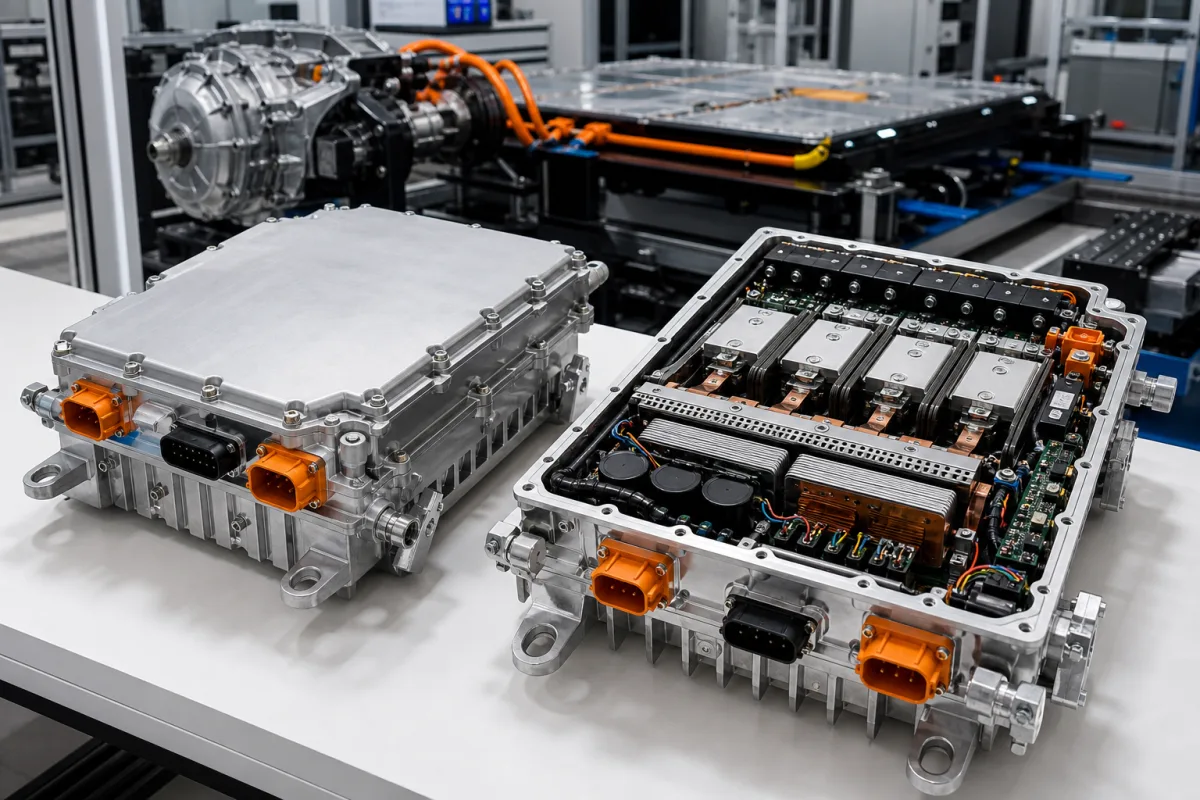
Power Electronics Module

Based on aggregated insights from multiple verified factory profiles within the CNFX directory, the standard Power Electronics Module used in the Computer, Electronic and Optical Product Manufacturing sector typically supports operational capacities ranging from standard industrial configurations to heavy-duty production requirements.

Technical Definition & Core Assembly

A canonical Power Electronics Module is characterized by the integration of Power Semiconductor Devices and Gate Driver Circuit. In industrial production environments, manufacturers listed on CNFX commonly emphasize Semiconductor substrates (Si, SiC, GaN) construction to support stable, high-cycle operation across diverse manufacturing scenarios.

A compact electronic assembly that controls and converts electrical power in industrial systems
Product Specifications

Technical details and manufacturing context for Power Electronics Module

Definition
A specialized electronic component within industrial systems that manages power flow, converts electrical energy between different forms (AC/DC, voltage levels, frequency), and provides precise control over electrical power distribution to various system elements. It serves as the interface between power sources and electrical loads, enabling efficient energy management and protection functions.
Working Principle
The Power Electronics Module operates by using semiconductor switching devices (such as IGBTs, MOSFETs, or thyristors) to rapidly switch electrical currents on and off. These controlled switching actions, governed by embedded control circuits and microprocessors, manipulate the flow of electrical energy. The module receives input power, processes it through power conversion circuits (rectifiers, inverters, converters), and delivers conditioned output power with specific voltage, current, and frequency characteristics required by downstream industrial equipment.
Common Materials
Semiconductor substrates (Si, SiC, GaN), Copper conductors, Ceramic substrates, Thermal interface materials, Encapsulation polymers
Technical Parameters
  • Rated power handling capacity of the module (kW) Standard Spec
Components / BOM
  • Power Semiconductor Devices
    Perform high-power switching operations for energy conversion
    Material: Silicon, Silicon Carbide, or Gallium Nitride substrates
  • Gate Driver Circuit
    Provides precise control signals to power semiconductor switches
    Material: Printed circuit board with integrated circuits
  • DC Link Capacitors
    Store and smooth DC bus voltage, filter switching harmonics
    Material: Metallized film or electrolytic materials
  • Heat Sink
    Dissipates thermal energy generated during power conversion
    Material: Aluminum or copper with thermal interface material
  • Current Sensors Optional
    Monitor output current for control and protection functions
    Material: Hall-effect sensors or shunt resistors
  • Protection Circuits
    Safeguard against overcurrent, overvoltage, and overtemperature conditions
    Material: Printed circuit board with discrete components
Engineering Reasoning
0-150°C ambient temperature, 85-265 VAC input voltage, 0-95% relative humidity non-condensing
Semiconductor junction temperature exceeds 175°C, dielectric breakdown at >600 V/mm, thermal cycling >5000 cycles ΔT=100°C
Design Rationale: Electromigration at current densities >10^6 A/cm², bond wire lift-off due to coefficient of thermal expansion mismatch (Si: 2.6 ppm/°C, Cu: 17 ppm/°C), gate oxide breakdown at electric fields >10 MV/cm
Risk Mitigation (FMEA)
Trigger Transient overvoltage exceeding 1.5x rated voltage for >10 μs
Mode: Insulated Gate Bipolar Transistor (IGBT) gate oxide puncture
Strategy: Metal Oxide Varistor (MOV) with clamping voltage at 1.3x nominal, snubber circuit with RC time constant τ=50 μs
Trigger Thermal interface material degradation reducing thermal conductivity from 5 W/m·K to <0.5 W/m·K
Mode: Thermal runaway with junction temperature rising at >10°C/s
Strategy: Phase change material with melting point at 60°C and latent heat of 200 kJ/kg, direct bonded copper substrate with thermal resistance <0.1 K/W

Industry Taxonomies & Aliases

Commonly used trade names and technical identifiers for Power Electronics Module.

Applied To / Applications

This component is essential for the following industrial systems and equipment:

Industrial Ecosystem & Supply Chain DNA

Complementary Systems
Downstream Applications
Specialized Tooling

Application Fit & Sizing Matrix

Operational Limits
pressure: Atmospheric to 1.5 bar
other spec: Humidity: 5-95% non-condensing, Vibration: 5g max, IP rating: IP20
temperature: -40°C to +125°C
Media Compatibility
✓ Industrial motor drives ✓ Renewable energy inverters ✓ UPS systems
Unsuitable: High-pressure washdown environments
Sizing Data Required
  • Input voltage range (V)
  • Output power requirement (kW)
  • Cooling method (air/liquid)

Reliability & Engineering Risk Analysis

Failure Mode & Root Cause
Thermal fatigue of solder joints
Cause: Cyclic temperature variations due to power cycling, leading to coefficient of thermal expansion (CTE) mismatch between components and substrate, causing solder cracking and eventual electrical open or intermittent connections.
Gate oxide breakdown in power semiconductors
Cause: Electrical overstress from voltage spikes, electrostatic discharge (ESD), or prolonged operation near maximum rated voltage, resulting in insulation failure and short circuit between gate and source/drain terminals.
Maintenance Indicators
  • Audible high-frequency buzzing or arcing sounds from the module during operation, indicating potential corona discharge or partial discharge in insulation
  • Visible discoloration, bubbling, or charring on the module casing or heatsink surface, suggesting excessive internal heating and thermal degradation
Engineering Tips
  • Implement active thermal management with temperature monitoring and controlled cooling to maintain junction temperatures below 80% of rated maximum, reducing thermal cycling stress
  • Use snubber circuits and proper filtering to suppress voltage transients and electromagnetic interference (EMI), protecting sensitive semiconductor components from electrical overstress

Compliance & Manufacturing Standards

Reference Standards
ISO 9001:2015 - Quality Management Systems IEC 60747-9:2019 - Semiconductor devices - Discrete devices - Part 9: Insulated-gate bipolar transistors (IGBTs) EN 50178:1997 - Electronic equipment for use in power installations
Manufacturing Precision
  • Thermal Interface Flatness: 0.05mm
  • Terminal Position: +/-0.15mm
Quality Inspection
  • Thermal Cycling Test (-40°C to +125°C, 1000 cycles)
  • High-Potential (Hi-Pot) Dielectric Strength Test

Factories Producing Power Electronics Module

Verified manufacturers with capability to produce this product in China

✓ 98% Supplier Capability Match Found

P Procurement Specialist from Singapore Feb 16, 2026
★★★★★
"Great transparency on the Power Electronics Module components. Essential for our Computer, Electronic and Optical Product Manufacturing supply chain."
Technical Specifications Verified
T Technical Director from Germany Feb 13, 2026
★★★★★
"The Power Electronics Module we sourced perfectly fits our Computer, Electronic and Optical Product Manufacturing production line requirements."
Technical Specifications Verified
P Project Engineer from Brazil Feb 10, 2026
★★★★★
"Found 13+ suppliers for Power Electronics Module on CNFX, but this spec remains the most cost-effective."
Technical Specifications Verified
Verification Protocol

“Feedback is collected from verified sourcing managers during RFQ (Request for Quote) and factory evaluation processes on CNFX. These reports represent historical performance data and technical audit summaries from our B2B manufacturing network.”

6 sourcing managers are analyzing this specification now. Last inquiry for Power Electronics Module from UAE (1h ago).

Supply Chain Commonly Integrated Components

Optical Spectrometer

An analytical instrument that measures the intensity of light as a function of wavelength to determine the elemental composition of materials.

Explore Specs →
Stereo Camera Array

A multi-camera system that captures synchronized images from multiple perspectives to enable 3D depth perception and pattern recognition.

Explore Specs →
Structured Light Projector

Optical device that projects precisely controlled light patterns onto surfaces for 3D scanning applications

Explore Specs →
Main Processor Board

The central computing and control unit of a 5-axis CNC controller that processes motion commands, executes algorithms, and coordinates all system operations.

Explore Specs →

Frequently Asked Questions

What are the key advantages of using SiC or GaN substrates in this power electronics module?

SiC (silicon carbide) and GaN (gallium nitride) substrates offer higher efficiency, faster switching speeds, better thermal conductivity, and higher temperature tolerance compared to traditional silicon, making them ideal for demanding industrial applications.

How does this module handle thermal management in industrial environments?

The module incorporates ceramic substrates, thermal interface materials, and integrated heat sinks to effectively dissipate heat, ensuring reliable operation and extended lifespan even in high-temperature industrial settings.

What protection features are included in this power electronics module?

Built-in protection circuits safeguard against overcurrent, overvoltage, short circuits, and thermal overload, while current sensors and DC link capacitors provide additional stability and protection for connected industrial systems.

Can I contact factories directly on CNFX?

CNFX is an open directory, not a transaction platform. Each factory profile provides direct contact information and production details to help you initiate direct inquiries with Chinese suppliers.

Get Quote for Power Electronics Module

Request technical pricing, lead times, or customized specifications for Power Electronics Module directly from verified manufacturing units.

Your business information is encrypted and only shared with verified Power Electronics Module suppliers.

Thank you! Your message has been sent. We'll respond within 1–3 business days.

Need to Manufacture Power Electronics Module?

Connect with verified factories specializing in this product category

Add Your Factory Contact Us
Previous Product
Power Electronics Board
Next Product
Power Inductors