Industry-Verified Manufacturing Data (2026)

Sensor Module

Based on aggregated insights from multiple verified factory profiles within the CNFX directory, the standard Sensor Module used in the Computer, Electronic and Optical Product Manufacturing sector typically supports operational capacities ranging from standard industrial configurations to heavy-duty production requirements.

Technical Definition & Core Assembly

A canonical Sensor Module is characterized by the integration of Infrared Source and Optical Chamber. In industrial production environments, manufacturers listed on CNFX commonly emphasize Infrared light source (LED or laser) construction to support stable, high-cycle operation across diverse manufacturing scenarios.

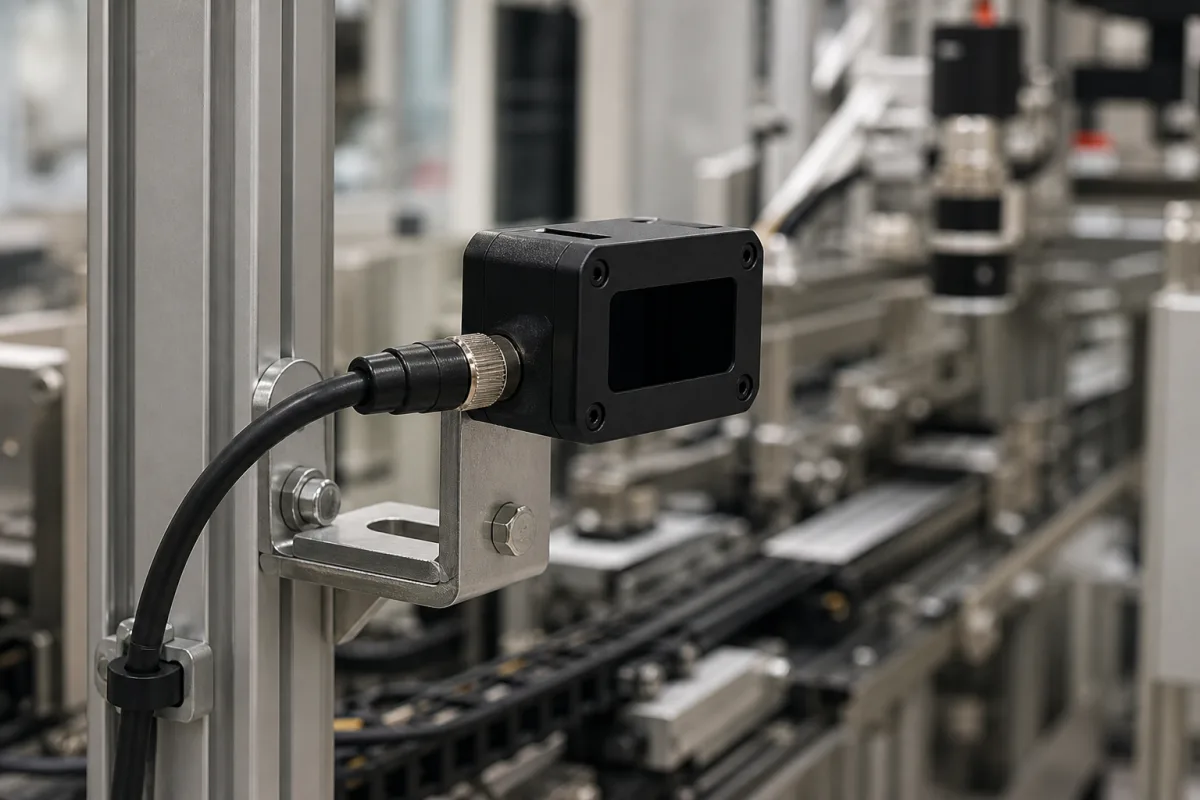
A modular electronic component designed to detect and measure CO2 concentration levels as part of a larger sensor array system.
Product Specifications

Technical details and manufacturing context for Sensor Module

Definition
The Sensor Module is a critical sub-component of the CO2 Sensor Array, responsible for the precise detection and measurement of carbon dioxide levels in various environments. It typically contains the sensing element, signal conditioning circuitry, and communication interface that allow it to function as an integrated unit within the larger array system. This modular design enables scalability, maintenance, and customization of the overall CO2 monitoring solution.
Working Principle
The Sensor Module operates using non-dispersive infrared (NDIR) technology, where an infrared light source emits specific wavelengths that are absorbed by CO2 molecules. A detector measures the intensity of the transmitted light, and the reduction in intensity correlates to CO2 concentration. The module's internal circuitry processes this signal, converts it to digital data, and transmits it to the array's central processing unit.
Common Materials
Infrared light source (LED or laser), Optical filter, Photodetector, Printed circuit board (PCB), Microcontroller, Protective housing (typically ABS or polycarbonate)
Technical Parameters
  • Measurement range for CO2 concentration detection (ppm) Standard Spec
Components / BOM
  • Infrared Source
    Emits specific wavelength infrared light that interacts with CO2 molecules
    Material: LED or laser diode with optical coating
  • Optical Chamber
    Contains the gas sample and provides controlled path length for light absorption
    Material: Stainless steel or aluminum with reflective coating
  • Photodetector
    Measures intensity of transmitted infrared light after CO2 absorption
    Material: Pyroelectric or thermopile sensor
  • Signal Processing Circuit
    Amplifies, filters, and converts analog signals to digital data
    Material: PCB with integrated circuits and passive components
  • Communication Interface
    Transmits measurement data to the CO2 Sensor Array controller
    Material: PCB with UART, I2C, or SPI interface components
Engineering Reasoning
400-5000 ppm CO2 concentration, -10°C to +60°C ambient temperature, 0-95% relative humidity non-condensing
CO2 concentration >10000 ppm causes sensor saturation and permanent calibration drift, temperature >85°C damages NDIR optical components, humidity >98% causes condensation on optical surfaces
Design Rationale: Non-dispersive infrared (NDIR) absorption spectroscopy failure due to: 1) Photodetector thermal runaway at 85°C, 2) Water vapor condensation altering infrared absorption path length at dew point, 3) CO2 molecular adsorption saturation on sensor surface at 10000 ppm
Risk Mitigation (FMEA)
Trigger Infrared source LED degradation below 50% initial intensity due to 10,000-hour operational lifetime
Mode: Signal-to-noise ratio drops below 3:1, causing measurement error >±75 ppm
Strategy: Implement dual-wavelength reference channel with 760 nm reference LED and automatic intensity compensation algorithm
Trigger Thermal expansion mismatch between aluminum housing (α=23.1×10⁻⁶/K) and silicon photodetector (α=2.6×10⁻⁶/K) at ΔT>40°C
Mode: Mechanical stress >15 MPa causes photodetector delamination and 100% signal loss
Strategy: Use Kovar alloy (α=5.2×10⁻⁶/K) interposer with silver-filled epoxy adhesive (CTE=28×10⁻⁶/K)

Industry Taxonomies & Aliases

Commonly used trade names and technical identifiers for Sensor Module.

Applied To / Applications

This component is essential for the following industrial systems and equipment:

Industrial Ecosystem & Supply Chain DNA

Complementary Systems
Downstream Applications
Specialized Tooling

Application Fit & Sizing Matrix

Operational Limits
pressure: 0 to 1 bar
flow rate: 0 to 5 m/s
temperature: -20°C to 60°C
slurry concentration: Not applicable (gas sensor)
Media Compatibility
✓ Indoor air monitoring ✓ HVAC systems ✓ Greenhouse environments
Unsuitable: High-humidity or condensing environments
Sizing Data Required
  • Required measurement range (ppm)
  • Response time requirement
  • Power supply voltage

Reliability & Engineering Risk Analysis

Failure Mode & Root Cause
Signal drift or inaccuracy
Cause: Sensor calibration degradation due to environmental factors (temperature fluctuations, humidity, vibration) or component aging (sensor element wear, electronic drift in signal conditioning circuits)
Complete sensor failure
Cause: Electrical overstress (voltage spikes, improper wiring), mechanical damage (impact, excessive vibration), or ingress of contaminants (moisture, dust, chemicals) compromising internal components
Maintenance Indicators
  • Erratic or inconsistent readings compared to known process conditions
  • Physical damage to sensor housing, connectors, or wiring (cracks, corrosion, loose connections)
Engineering Tips
  • Implement regular calibration schedules based on manufacturer recommendations and environmental severity, using traceable standards
  • Ensure proper installation with vibration isolation, environmental protection (seals, enclosures), and correct electrical practices (surge protection, shielded cabling)

Compliance & Manufacturing Standards

Reference Standards
ISO 9001:2015 Quality Management Systems IEC 60747-5-2 Semiconductor devices - Discrete devices and integrated circuits - Part 5-2: Optoelectronic devices - Essential ratings and characteristics CE marking for electromagnetic compatibility (EMC) and low voltage directives
Manufacturing Precision
  • Dimensional accuracy: +/-0.05mm for mounting interfaces
  • Electrical output stability: +/-1% of full scale range across operating temperature
Quality Inspection
  • Environmental stress testing (temperature, humidity, vibration per IEC 60068-2 series)
  • Functional accuracy verification against certified reference standards

Factories Producing Sensor Module

Verified manufacturers with capability to produce this product in China

✓ 97% Supplier Capability Match Found

S Sourcing Manager from Canada Jan 20, 2026
★★★★★
"Great transparency on the Sensor Module components. Essential for our Computer, Electronic and Optical Product Manufacturing supply chain."
Technical Specifications Verified
P Procurement Specialist from United States Jan 17, 2026
★★★★☆
"The Sensor Module we sourced perfectly fits our Computer, Electronic and Optical Product Manufacturing production line requirements. (Delivery took slightly longer than expected, but technical support was excellent.)"
Technical Specifications Verified
T Technical Director from United Arab Emirates Jan 14, 2026
★★★★★
"Found 10+ suppliers for Sensor Module on CNFX, but this spec remains the most cost-effective."
Technical Specifications Verified
Verification Protocol

“Feedback is collected from verified sourcing managers during RFQ (Request for Quote) and factory evaluation processes on CNFX. These reports represent historical performance data and technical audit summaries from our B2B manufacturing network.”

18 sourcing managers are analyzing this specification now. Last inquiry for Sensor Module from Poland (1h ago).

Supply Chain Compatible Machinery & Devices

Modular Industrial Edge Computing Device

Rugged computing platform for industrial data processing at the network edge

Explore Specs →
Industrial Smart Camera Module

Embedded vision system for industrial automation and quality inspection.

Explore Specs →
Industrial Wireless Power Transfer Module

Wireless power transfer module for industrial equipment applications

Explore Specs →
Industrial Smart Sensor Module

Modular industrial sensor with embedded processing and wireless connectivity

Explore Specs →

Frequently Asked Questions

What is the typical detection range for this CO2 sensor module?

This modular CO2 sensor typically detects concentrations from 0-5000 ppm with ±50 ppm accuracy, suitable for industrial environmental monitoring applications.

How does the infrared detection technology work in this module?

The module uses non-dispersive infrared (NDIR) technology where an infrared light source passes through an optical chamber containing the gas sample, and a photodetector measures absorption to calculate CO2 concentration.

What communication interfaces are supported for integration into larger systems?

The module typically supports I2C, SPI, UART, or analog voltage output interfaces for seamless integration into sensor arrays and industrial monitoring systems.

Can I contact factories directly on CNFX?

CNFX is an open directory, not a transaction platform. Each factory profile provides direct contact information and production details to help you initiate direct inquiries with Chinese suppliers.

Get Quote for Sensor Module

Request technical pricing, lead times, or customized specifications for Sensor Module directly from verified manufacturing units.

Your business information is encrypted and only shared with verified Sensor Module suppliers.

Thank you! Your message has been sent. We'll respond within 1–3 business days.

Need to Manufacture Sensor Module?

Connect with verified factories specializing in this product category

Add Your Factory Contact Us
Previous Product
Sensor Layer
Next Product
Sensor Modules