Moving Coil Assembly
View system integration details
This page explains how Suspension System is classified within Computer, Electronic and Optical Product Manufacturing. Technical values and manufacturer relationships are research references; confirm the current specification and supplier evidence for each order.
A mechanical system that supports and positions the moving coil within an assembly while allowing controlled movement.
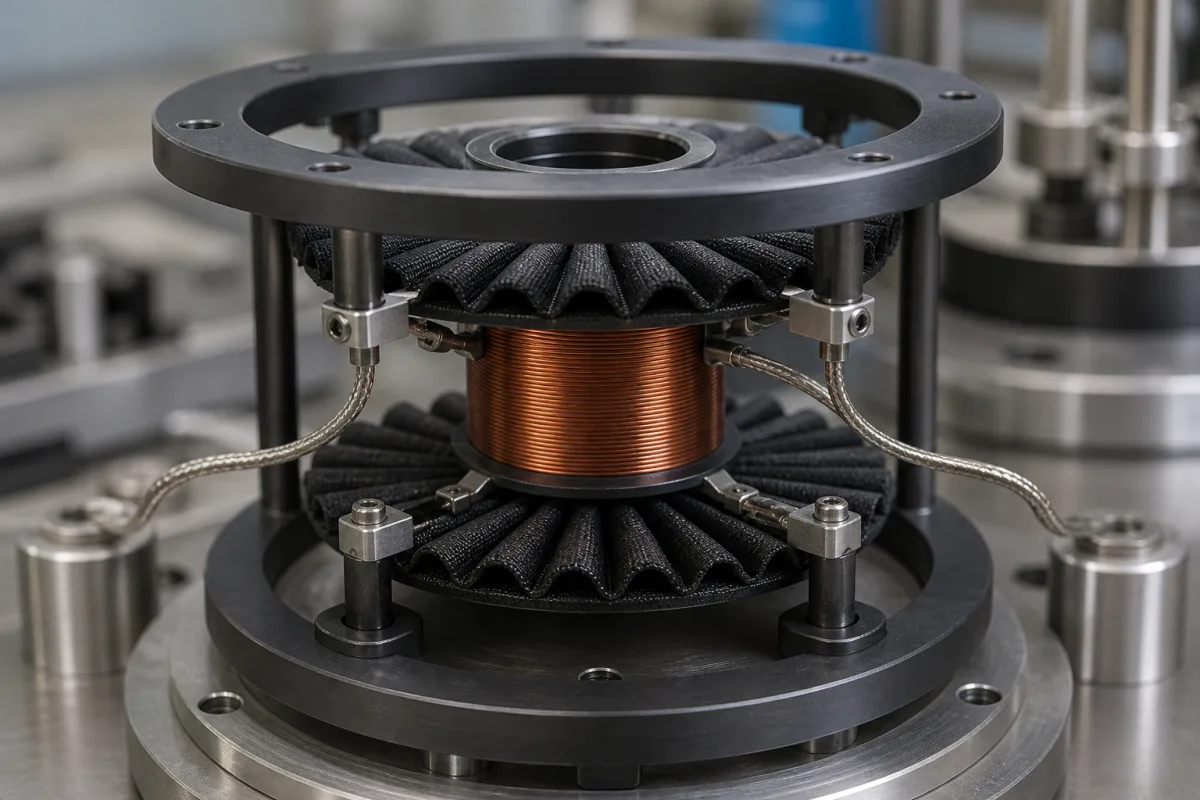
Technical details and manufacturing context for Suspension System
| Parameter | Typical range | Notes & selection driver |
|---|---|---|
| Stroke Length | 10–50 mm | Determines the range of motion for the coil. |
| Load Capacity | 5–20 N | Maximum force the suspension can support. |
| Resonant Frequency | 20–200 Hz | Avoid operating near this frequency to prevent excessive vibration. |
| Damping Coefficient | 0.1–1.0 N·s/m | Controls oscillation decay; higher values reduce overshoot. |
| Operating Temperature | -40–85 °C | Outside this range, material properties degrade. |
| Radial Stiffness | 10–100 N/mm | Resistance to lateral displacement; higher values improve centering. |
| Axial Stiffness | 5–50 N/mm | Determines the force-deflection relationship along the axis. |
| Material | Stainless steel, aluminum, rubber | Selection based on corrosion resistance and fatigue life.ASTM A240, ASTM B209, ASTM D2000 |
| Weight | 50–200 g | Affects dynamic response and ease of integration. |
| Max Lateral Displacement | ±2 mm | Exceeding this may cause coil misalignment. |
Ranges are indicative industry figures for RFQ preparation, not a supplier commitment. Confirm every value and standard with the legal manufacturer before ordering.
| pressure: | 0 to 10 bar |
| temperature: | -40°C to 150°C |
| stroke range: | ±25 mm |
| dynamic load capacity: | Up to 5000 N |
Indicative industry ranges for design and RFQ preparation. Confirm the exact figures and applicable standard with the manufacturer before specifying.
Quoted from the published standard.
A practical evidence checklist for RFQ preparation and supplier evaluation.
Compare the published product scope and source details, then include your specifications and quantity in an enquiry.
9 companies list this product among what they make. Company figures are quoted from each company's own website; every card states where the relationship came from.
Explore company information and manufacturing capabilities, then discuss the scope of your project with a relevant supplier.
Ask for use case, specification boundaries, supplier type, and RFQ preparation information for this product.
The suspension system provides structural support and maintains precise alignment of the moving coil. It allows controlled linear or rotational motion while minimizing friction and unwanted vibrations, ensuring the coil moves accurately in response to electromagnetic forces.
Common materials include spring steel, polymer composites, and aluminum alloys. Material selection is based on corrosion resistance and fatigue life, with standards such as ASTM A240, ASTM B209, and ASTM D2000 as references.
Key parameters include stroke length (10–50 mm), load capacity (5–20 N), resonant frequency (20–200 Hz), damping coefficient (0.1–1.0 N·s/m), operating temperature (-40–85 °C), radial stiffness (10–100 N/mm), axial stiffness (5–50 N/mm), weight (50–200 g), and maximum lateral displacement (±2 mm). Verify these values with the manufacturer for your application.
Monitor parameters such as damping and stiffness over time. Avoid operating near the resonant frequency to prevent excessive vibration. Ensure the operating temperature stays within the specified range. Regularly inspect for signs of fatigue or misalignment, and replace the component if performance degrades.
This component is essential for the following industrial systems and equipment:
Editorial classification, named public sources where available, and source-reviewed manufacturer records.
Compare manufacturer profiles with relevant product and process capability.