Industry-Verified Manufacturing Data (2026)

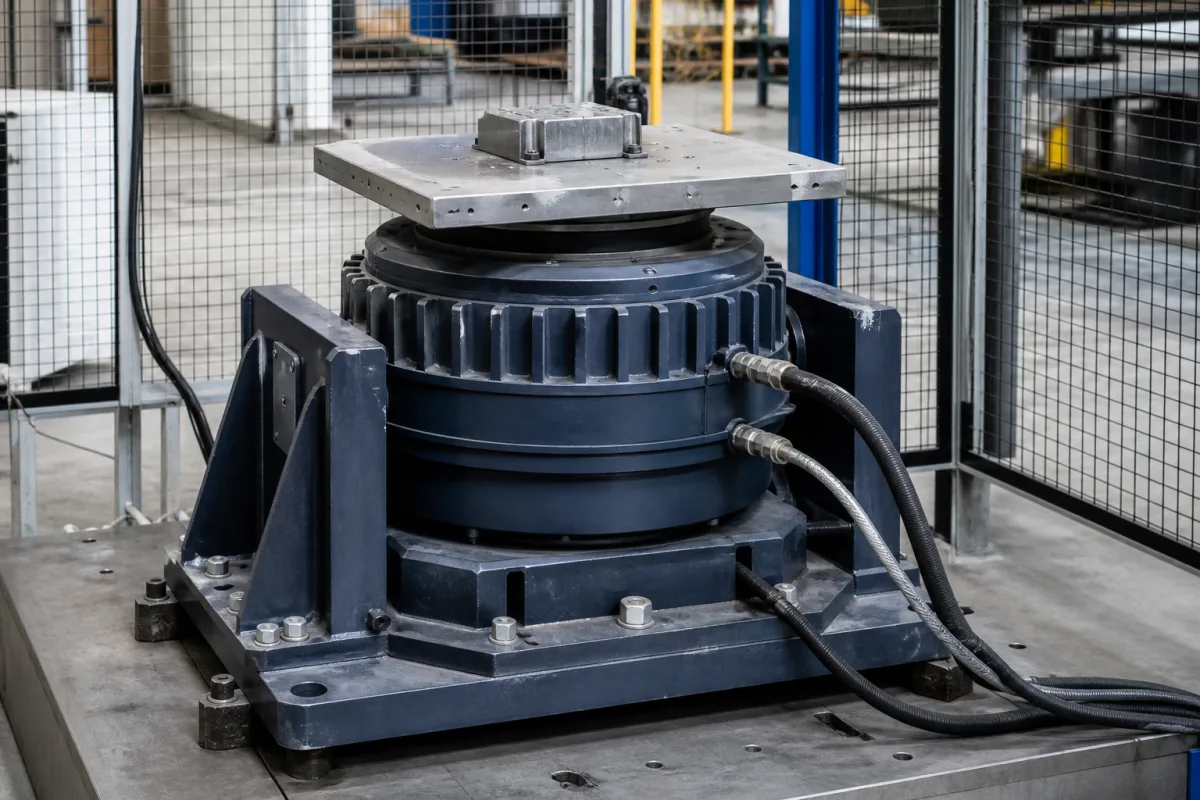
Vibration Exciter Unit

Based on aggregated insights from multiple verified factory profiles within the CNFX directory, the standard Vibration Exciter Unit used in the Machinery and Equipment Manufacturing sector typically supports operational capacities ranging from standard industrial configurations to heavy-duty production requirements.

Technical Definition & Core Assembly

A canonical Vibration Exciter Unit is characterized by the integration of Armature Assembly and Field Magnet. In industrial production environments, manufacturers listed on CNFX commonly emphasize Electromagnetic coil construction to support stable, high-cycle operation across diverse manufacturing scenarios.

A specialized component within a Quality Testing Station that generates controlled mechanical vibrations for product testing and validation.

Product Specifications

Technical details and manufacturing context for Vibration Exciter Unit

Definition
The Vibration Exciter Unit is a critical component of the Quality Testing Station, responsible for producing precise, controlled mechanical vibrations to simulate real-world operating conditions. It subjects products or components to vibration stress testing to evaluate durability, structural integrity, and performance under dynamic loading conditions, ensuring they meet quality standards and reliability requirements.
Working Principle
The unit typically uses electromagnetic or electrodynamic principles where an electrical signal is converted into mechanical motion. A coil within a magnetic field receives alternating current, causing it to oscillate and generate vibrations. The frequency, amplitude, and waveform of vibrations are precisely controlled through electronic systems to match specific testing protocols.
Common Materials
Electromagnetic coil, Permanent magnets, Aluminum alloy housing, Steel mounting fixtures
Technical Parameters
  • Maximum displacement amplitude (mm) Standard Spec
Components / BOM
  • Armature Assembly
    Core moving component that generates vibration through electromagnetic interaction
    Material: Aluminum alloy with copper windings
  • Field Magnet
    Provides static magnetic field for electromagnetic force generation
    Material: Neodymium permanent magnets
  • Suspension System
    Supports armature while allowing precise linear motion
    Material: Spring steel with rubber isolators
  • Cooling System
    Dissipates heat generated during operation to maintain performance
    Material: Aluminum fins with forced air cooling
Engineering Reasoning
5-2000 Hz frequency, 0.1-50 g acceleration, 0-100 N force
Acceleration exceeding 60 g causes permanent magnet demagnetization, force exceeding 120 N causes armature coil insulation breakdown at 180°C
Design Rationale: Lorentz force saturation in voice coil at 7.5 A current limit, eddy current heating in aluminum former exceeding 200°C Curie point for NdFeB magnets
Risk Mitigation (FMEA)
Trigger Harmonic resonance at 1750 Hz matching natural frequency of armature assembly
Mode: Armature coil insulation delamination due to 15 μm peak-to-peak displacement exceeding epoxy bond strength
Strategy: Damping ratio optimization to 0.15 using constrained layer viscoelastic material between coil and former
Trigger Permanent magnet temperature rise to 150°C from inadequate cooling airflow below 2 m/s
Mode: Magnetic flux density reduction from 1.2 T to 0.8 T due to NdFeB magnet reversible loss coefficient of -0.12%/°C
Strategy: Forced convection cooling with 4 m/s laminar airflow across magnet surface using integrated blower design

Industry Taxonomies & Aliases

Commonly used trade names and technical identifiers for Vibration Exciter Unit.

Applied To / Applications

This component is essential for the following industrial systems and equipment:

Industrial Ecosystem & Supply Chain DNA

Complementary Systems
Downstream Applications
Specialized Tooling

Application Fit & Sizing Matrix

Operational Limits
pressure: Ambient only (non-pressurized)
temperature: -20°C to +80°C
acceleration: Up to 100 g
force output: Up to 1000 N peak
vibration frequency: 5 Hz to 2000 Hz
Media Compatibility
✓ Electronics assemblies on test fixtures ✓ Automotive components in controlled environments ✓ Aerospace structural test specimens
Unsuitable: Corrosive chemical atmospheres or explosive environments
Sizing Data Required
  • Required vibration frequency range (Hz)
  • Maximum test specimen mass (kg)
  • Required acceleration/force output (g or N)

Reliability & Engineering Risk Analysis

Failure Mode & Root Cause
Bearing fatigue and overheating
Cause: Inadequate lubrication, misalignment, or excessive loading leading to premature wear and thermal degradation of bearing components.
Imbalance and resonance-induced structural fatigue
Cause: Accumulation of debris, wear on moving parts, or improper mounting causing uneven mass distribution, leading to excessive vibration and eventual cracking or loosening of structural elements.
Maintenance Indicators
  • Audible grinding, knocking, or high-pitched squealing from the unit during operation
  • Visible excessive vibration amplitude or irregular motion patterns, such as wobbling or erratic shaking, beyond normal operational parameters
Engineering Tips
  • Implement a strict lubrication schedule using manufacturer-recommended greases or oils, and monitor bearing temperatures with infrared thermography to detect early overheating.
  • Conduct regular dynamic balancing and alignment checks using vibration analysis tools, and ensure mounting surfaces are clean, flat, and torqued to specifications to prevent resonance and imbalance issues.

Compliance & Manufacturing Standards

Reference Standards
ISO 10816-1: Mechanical vibration - Evaluation of machine vibration by measurements on non-rotating parts ANSI S2.70: Guide for the Measurement and Evaluation of Vibration of Machines DIN 45669-1: Measurement of vibration immission - Part 1: Vibration meters - Requirements and tests
Manufacturing Precision
  • Shaft alignment: +/-0.05mm
  • Mounting surface flatness: 0.08mm
Quality Inspection
  • Dynamic balancing test to ISO 1940-1 Grade G6.3
  • Vibration frequency sweep test with accelerometer verification

Factories Producing Vibration Exciter Unit

Verified manufacturers with capability to produce this product in China

✓ 92% Supplier Capability Match Found

S Sourcing Manager from United States Feb 25, 2026
★★★★★
"The technical documentation for this Vibration Exciter Unit is very thorough, especially regarding technical reliability."
Technical Specifications Verified
P Procurement Specialist from United Arab Emirates Feb 22, 2026
★★★★☆
"Reliable performance in harsh Machinery and Equipment Manufacturing environments. No issues with the Vibration Exciter Unit so far. (Delivery took slightly longer than expected, but technical support was excellent.)"
Technical Specifications Verified
T Technical Director from Australia Feb 19, 2026
★★★★★
"Testing the Vibration Exciter Unit now; the technical reliability results are within 1% of the laboratory datasheet."
Technical Specifications Verified
Verification Protocol

“Feedback is collected from verified sourcing managers during RFQ (Request for Quote) and factory evaluation processes on CNFX. These reports represent historical performance data and technical audit summaries from our B2B manufacturing network.”

14 sourcing managers are analyzing this specification now. Last inquiry for Vibration Exciter Unit from India (1h ago).

Supply Chain Compatible Machinery & Devices

Heavy-Duty CNC Plasma Cutting Machine

Industrial machine for precision metal cutting using plasma arc technology

Explore Specs →
Automated Assembly Line System

Integrated production system for sequential component assembly operations

Explore Specs →
Automated Powder Coating System

Integrated industrial system for applying dry powder coatings to metal substrates.

Explore Specs →
Centrifugal Pump Impeller

Rotating component that transfers energy to fluid in centrifugal pumps.

Explore Specs →

Frequently Asked Questions

What is the primary application of this vibration exciter unit?

This vibration exciter unit is designed for quality testing stations in machinery manufacturing, generating controlled mechanical vibrations to test product durability, reliability, and performance under simulated operational conditions.

What materials ensure the durability of this vibration exciter?

The unit features an aluminum alloy housing for lightweight strength, steel mounting fixtures for secure installation, and electromagnetic coils with permanent magnets for reliable vibration generation in industrial environments.

How does the cooling system enhance performance?

The integrated cooling system prevents overheating during extended testing cycles, maintaining consistent vibration output and protecting electromagnetic components from thermal damage, ensuring accurate and repeatable test results.

Can I contact factories directly on CNFX?

CNFX is an open directory, not a transaction platform. Each factory profile provides direct contact information and production details to help you initiate direct inquiries with Chinese suppliers.

Get Quote for Vibration Exciter Unit

Request technical pricing, lead times, or customized specifications for Vibration Exciter Unit directly from verified manufacturing units.

Your business information is encrypted and only shared with verified Vibration Exciter Unit suppliers.

Thank you! Your message has been sent. We'll respond within 1–3 business days.

Need to Manufacture Vibration Exciter Unit?

Connect with verified factories specializing in this product category

Add Your Factory Contact Us
Previous Product
Vibration Drive (e.g., Solenoid or ERM Motor)
Next Product
Vibration isolation mount