Industry-Verified Manufacturing Data (2026)

Current Sensing Circuit

Based on aggregated insights from multiple verified factory profiles within the CNFX directory, the standard Current Sensing Circuit used in the Electrical Equipment Manufacturing sector typically supports operational capacities ranging from standard industrial configurations to heavy-duty production requirements.

Technical Definition & Core Assembly

A canonical Current Sensing Circuit is characterized by the integration of Shunt Resistor and Instrumentation Amplifier. In industrial production environments, manufacturers listed on CNFX commonly emphasize Shunt Resistor (e.g., Manganin, Constantan) construction to support stable, high-cycle operation across diverse manufacturing scenarios.

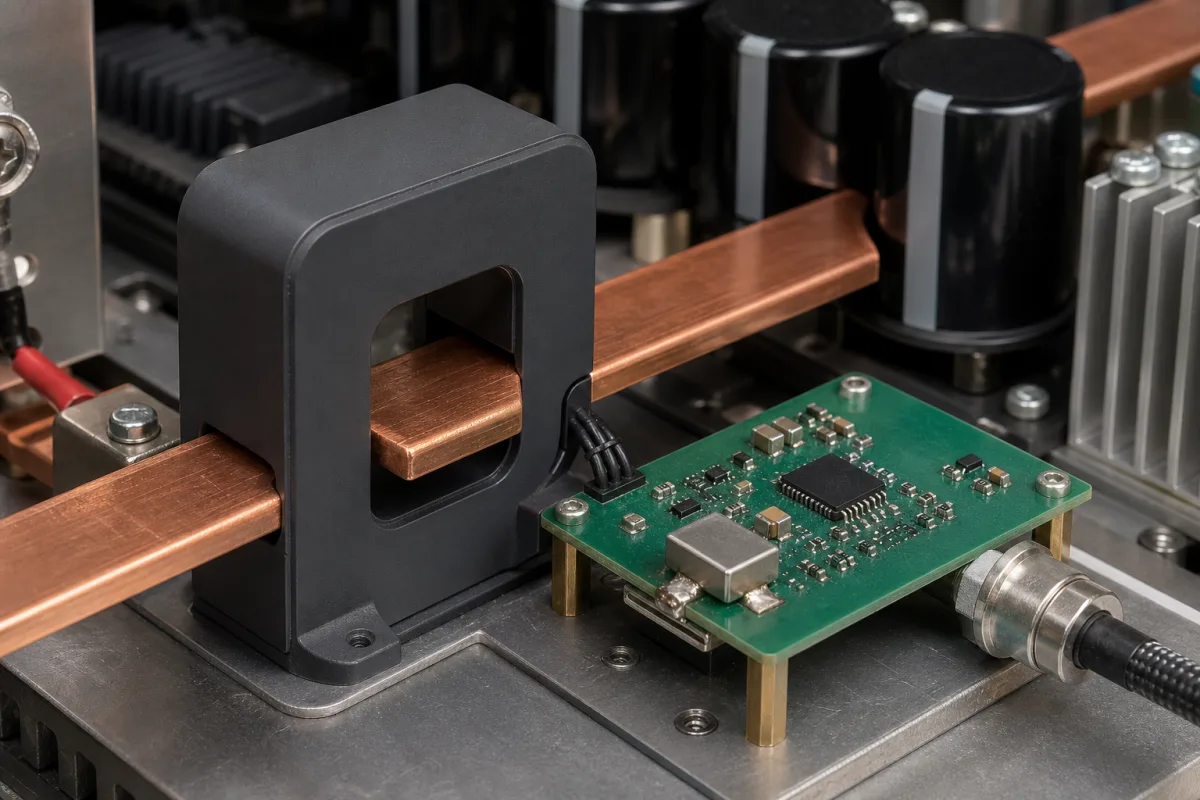
A circuit that measures and monitors the electrical current flowing through a system.
Product Specifications

Technical details and manufacturing context for Current Sensing Circuit

Definition
A critical component within a Programmable Power Supply that continuously measures the output current, providing real-time feedback to the control system for regulation, protection, and monitoring functions.
Working Principle
Typically operates by measuring the voltage drop across a low-value, high-precision shunt resistor placed in series with the load. This small analog voltage signal is then amplified, conditioned, and converted (often via an analog-to-digital converter) into a digital signal readable by the power supply's microcontroller for processing and control.
Common Materials
Shunt Resistor (e.g., Manganin, Constantan), Operational Amplifier IC, Printed Circuit Board (PCB), Copper Traces
Technical Parameters
  • Current Measurement Range (A) Per Request
Components / BOM
  • Shunt Resistor
    Creates a small, precise voltage drop proportional to the load current.
    Material: Manganin alloy
  • Instrumentation Amplifier
    Amplifies the small differential voltage from the shunt resistor while rejecting common-mode noise.
    Material: Semiconductor (Silicon)
  • Analog-to-Digital Converter (ADC)
    Converts the amplified analog voltage signal into a digital value for the microcontroller.
    Material: Semiconductor (Silicon)
Engineering Reasoning
0-100 A DC, 0-70 A AC RMS at 50-60 Hz
Current exceeding 120 A continuous or 150 A transient >10 ms, temperature >125°C junction
Design Rationale: Joule heating (P=I²R) exceeding semiconductor thermal capacity, magnetic core saturation at >1.2 T flux density
Risk Mitigation (FMEA)
Trigger Inductive load switching generating 500 V L di/dt voltage spikes
Mode: Hall-effect sensor IC dielectric breakdown at >100 V/μm
Strategy: TVS diode clamping at 60 V with 1 ns response, RC snubber with 10 Ω, 100 nF
Trigger Shunt resistor thermal runaway due to 2 mΩ resistance at 50 A continuous
Mode: Copper trace delamination at 260°C solder reflow temperature
Strategy: 4-layer PCB with 2 oz copper, thermal vias to ground plane, derating to 80% of 150°C rating

Industry Taxonomies & Aliases

Commonly used trade names and technical identifiers for Current Sensing Circuit.

Applied To / Applications

This component is essential for the following industrial systems and equipment:

Industrial Ecosystem & Supply Chain DNA

Complementary Systems
Downstream Applications
Specialized Tooling

Application Fit & Sizing Matrix

Operational Limits
pressure: Not applicable (electronic circuit, no pressure rating)
other spec: Current range: 0-100A (typical), Accuracy: ±1-5%, Bandwidth: DC-100kHz
temperature: -40°C to +125°C (operational range for typical ICs)
Media Compatibility
✓ Copper conductors ✓ Aluminum busbars ✓ PCB traces
Unsuitable: High-voltage environments (>600V) without proper isolation
Sizing Data Required
  • Maximum current to be measured
  • Required accuracy and bandwidth
  • Power supply voltage and isolation requirements

Reliability & Engineering Risk Analysis

Failure Mode & Root Cause
Sensor Drift/Calibration Loss
Cause: Thermal cycling, component aging (especially in resistors and semiconductors), or contamination altering electrical characteristics over time, leading to inaccurate current readings.
Circuit Overload/Damage
Cause: Transient voltage spikes (e.g., from inductive loads or lightning), excessive current beyond rated capacity, or improper installation causing overheating, insulation breakdown, or component failure (like burnt traces or blown fuses).
Maintenance Indicators
  • Erratic or fluctuating readings on connected displays/controllers without corresponding load changes.
  • Audible buzzing, humming, or popping from the circuit enclosure, or visible signs like discoloration, burning smells, or smoke.
Engineering Tips
  • Implement regular calibration checks using a certified reference standard, especially after temperature extremes or electrical disturbances, to detect and correct drift early.
  • Install surge protection devices (e.g., TVS diodes or varistors) and ensure proper grounding/shielding to suppress voltage transients, and verify load currents stay within the sensor's specified range during operation.

Compliance & Manufacturing Standards

Reference Standards
ISO 9001:2015 - Quality Management Systems IEC 61010-1:2010 - Safety Requirements for Electrical Equipment for Measurement, Control, and Laboratory Use CE Marking - Compliance with EU Directives (e.g., EMC Directive 2014/30/EU)
Manufacturing Precision
  • Resistor Tolerance: +/-1% or +/-0.5% for precision sensing
  • Current Measurement Accuracy: +/-0.2% of full scale range
Quality Inspection
  • Electrical Performance Test (e.g., linearity, offset, gain verification)
  • Environmental Stress Screening (e.g., temperature cycling, humidity testing)

Factories Producing Current Sensing Circuit

Verified manufacturers with capability to produce this product in China

✓ 97% Supplier Capability Match Found

S Sourcing Manager from Canada Jan 28, 2026
★★★★★
"Standard OEM quality for Electrical Equipment Manufacturing applications. The Current Sensing Circuit arrived with full certification."
Technical Specifications Verified
P Procurement Specialist from United States Jan 25, 2026
★★★★☆
"Great transparency on the Current Sensing Circuit components. Essential for our Electrical Equipment Manufacturing supply chain. (Delivery took slightly longer than expected, but technical support was excellent.)"
Technical Specifications Verified
T Technical Director from United Arab Emirates Jan 22, 2026
★★★★★
"The Current Sensing Circuit we sourced perfectly fits our Electrical Equipment Manufacturing production line requirements."
Technical Specifications Verified
Verification Protocol

“Feedback is collected from verified sourcing managers during RFQ (Request for Quote) and factory evaluation processes on CNFX. These reports represent historical performance data and technical audit summaries from our B2B manufacturing network.”

10 sourcing managers are analyzing this specification now. Last inquiry for Current Sensing Circuit from Germany (1h ago).

Supply Chain Compatible Machinery & Devices

Circuit Breaker Arc Chute

Electrical component that extinguishes arcs in circuit breakers

Explore Specs →
Medium Voltage Switchgear Assembly Line

Automated production system for assembling medium voltage electrical switchgear.

Explore Specs →
Motor Terminal Block

Electrical connection interface for motor windings

Explore Specs →
PLC Control System

A digital industrial computer control system that monitors inputs, makes decisions based on a custom program, and controls outputs to automate industrial processes.

Explore Specs →

Frequently Asked Questions

What are the key components needed for a current sensing circuit?

Essential components include a shunt resistor (typically Manganin or Constantan), operational amplifier IC, printed circuit board with copper traces, analog-to-digital converter, and instrumentation amplifier for accurate current measurement.

How does a shunt resistor work in current sensing applications?

A shunt resistor creates a small voltage drop proportional to the current flowing through it. This voltage is amplified by operational amplifiers and converted to digital signals for monitoring and control in electrical systems.

What are the advantages of using current sensing circuits in electrical equipment manufacturing?

Current sensing circuits provide real-time monitoring of electrical loads, enable overload protection, improve energy efficiency, facilitate predictive maintenance, and ensure safe operation of electrical equipment.

Can I contact factories directly on CNFX?

CNFX is an open directory, not a transaction platform. Each factory profile provides direct contact information and production details to help you initiate direct inquiries with Chinese suppliers.

Get Quote for Current Sensing Circuit

Request technical pricing, lead times, or customized specifications for Current Sensing Circuit directly from verified manufacturing units.

Your business information is encrypted and only shared with verified Current Sensing Circuit suppliers.

Thank you! Your message has been sent. We'll respond within 1–3 business days.

Need to Manufacture Current Sensing Circuit?

Connect with verified factories specializing in this product category

Add Your Factory Contact Us
Previous Product
Curing Oven
Next Product
Current Sensor