Industry-Verified Manufacturing Data (2026)

Current Sensor

Based on aggregated insights from multiple verified factory profiles within the CNFX directory, the standard Current Sensor used in the Electrical Equipment Manufacturing sector typically supports operational capacities ranging from standard industrial configurations to heavy-duty production requirements.

Technical Definition & Core Assembly

A canonical Current Sensor is characterized by the integration of Magnetic Core and Sensing Element. In industrial production environments, manufacturers listed on CNFX commonly emphasize Ferrite Core construction to support stable, high-cycle operation across diverse manufacturing scenarios.

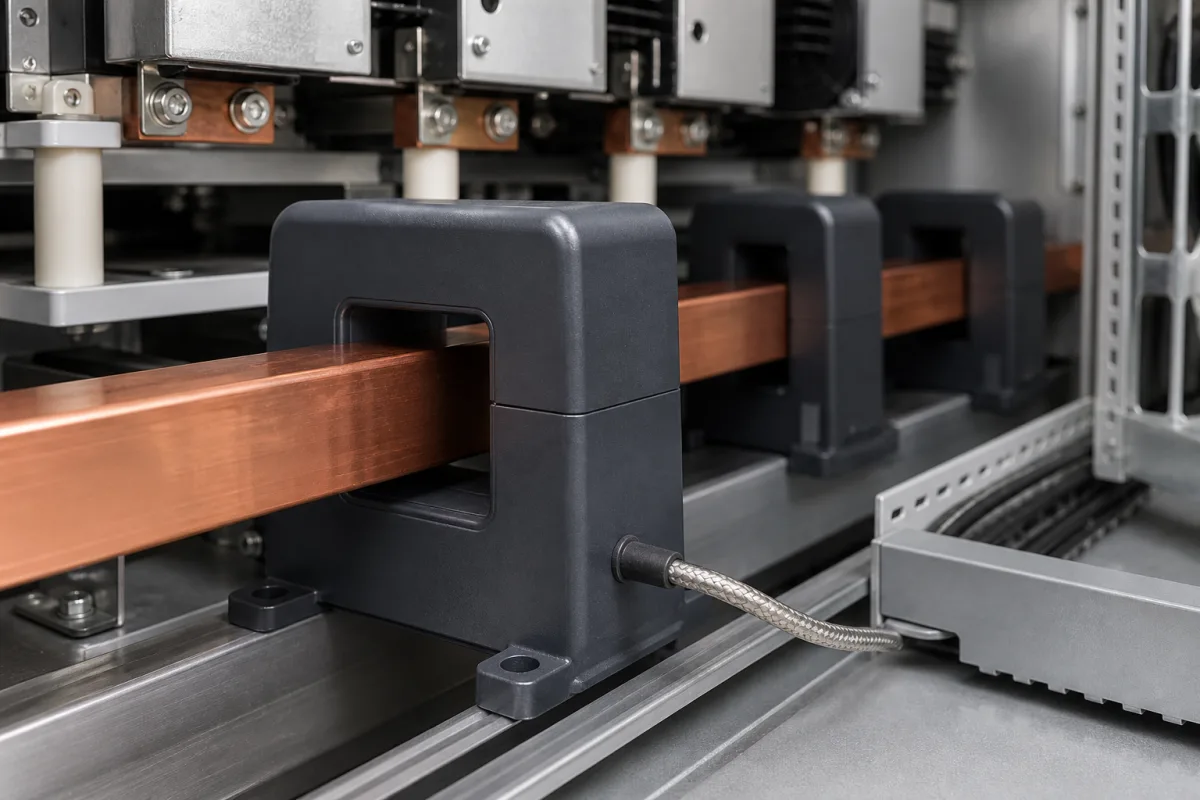
A device that measures electric current in a circuit and converts it into a proportional output signal.
Product Specifications

Technical details and manufacturing context for Current Sensor

Definition
As part of the Smart Monitoring Module, the current sensor continuously measures electrical current flow in connected equipment, providing real-time data for monitoring, control, and protection functions within industrial automation systems.
Working Principle
Operates by detecting the magnetic field generated by current flow using Hall effect, Rogowski coil, or current transformer technology, then converting this measurement into an analog or digital signal proportional to the current magnitude.
Common Materials
Ferrite Core, Copper Wire, Hall Effect Sensor IC, PCB Substrate
Technical Parameters
  • Current measurement range and accuracy specifications (A) Standard Spec
Components / BOM
  • Magnetic Core
    Concentrates magnetic field from current-carrying conductor for measurement
    Material: Ferrite
  • Sensing Element
    Detects magnetic field and converts it to electrical signal
    Material: Hall Effect Sensor
  • Signal Conditioning Circuit
    Processes raw sensor signal into standardized output
    Material: Electronic Components on PCB
Engineering Reasoning
0-100 A DC, -50 to +85°C ambient temperature
150 A continuous current, 125°C internal junction temperature, 1000 V isolation breakdown voltage
Design Rationale: Joule heating exceeding 2.5 W thermal dissipation capacity, Hall effect sensor saturation at 0.3 T magnetic flux density, dielectric breakdown at 20 kV/mm electric field strength
Risk Mitigation (FMEA)
Trigger Transient overcurrent exceeding 200 A for 10 ms
Mode: Hall effect sensor magnetic core saturation causing 15% measurement error
Strategy: Ferrite core with 0.5 T saturation flux density and 100 kHz bandwidth current limiting circuit
Trigger Thermal cycling between -40°C and 125°C at 100 cycles/hour
Mode: Solder joint fatigue cracking increasing contact resistance by 50 mΩ
Strategy: SnAgCu solder with 25 MPa shear strength and 0.2 mm PCB standoff for stress relief

Industry Taxonomies & Aliases

Commonly used trade names and technical identifiers for Current Sensor.

Applied To / Applications

This component is essential for the following industrial systems and equipment:

Industrial Ecosystem & Supply Chain DNA

Complementary Systems
Downstream Applications
Specialized Tooling

Application Fit & Sizing Matrix

Operational Limits
pressure: Atmospheric to 2 bar
other spec: Current Range: 0-100A, Accuracy: ±1%
temperature: -40°C to +85°C
Media Compatibility
✓ Copper conductors ✓ Aluminum busbars ✓ Insulated cables
Unsuitable: High-voltage arc flash environments
Sizing Data Required
  • Maximum current to be measured
  • Conductor diameter/size
  • Required output signal type (e.g., 4-20mA, 0-5V)

Reliability & Engineering Risk Analysis

Failure Mode & Root Cause
Signal drift/inaccuracy
Cause: Sensor element degradation due to prolonged exposure to harsh environments (temperature extremes, chemical corrosion, vibration), leading to calibration loss or material fatigue.
Electrical connection failure
Cause: Corrosion, moisture ingress, or mechanical stress at wiring terminals/connectors, resulting in intermittent signals, open circuits, or short circuits.
Maintenance Indicators
  • Erratic or inconsistent readings compared to known process conditions
  • Physical damage to sensor housing, cable insulation, or visible corrosion at connection points
Engineering Tips
  • Implement regular calibration checks and environmental protection (e.g., sealed enclosures, vibration dampening) based on operating conditions.
  • Use proper cable management, strain relief, and corrosion-resistant materials for installations, and perform periodic connection integrity inspections.

Compliance & Manufacturing Standards

Reference Standards
ISO 9001:2015 (Quality Management Systems) IEC 61010-1:2010 (Safety requirements for electrical equipment for measurement, control, and laboratory use) CE Marking (EU conformity for health, safety, and environmental protection)
Manufacturing Precision
  • Current measurement accuracy: +/-0.5% of full scale
  • Temperature coefficient: +/-0.02%/°C over operating range
Quality Inspection
  • Calibration verification against NIST-traceable standards
  • Insulation resistance test (e.g., 1000V DC, >100MΩ)

Factories Producing Current Sensor

Verified manufacturers with capability to produce this product in China

✓ 98% Supplier Capability Match Found

T Technical Director from Singapore Jan 14, 2026
★★★★★
"The technical documentation for this Current Sensor is very thorough, especially regarding technical reliability."
Technical Specifications Verified
P Project Engineer from Germany Jan 11, 2026
★★★★☆
"Reliable performance in harsh Electrical Equipment Manufacturing environments. No issues with the Current Sensor so far. (Delivery took slightly longer than expected, but technical support was excellent.)"
Technical Specifications Verified
S Sourcing Manager from Brazil Jan 08, 2026
★★★★★
"Testing the Current Sensor now; the technical reliability results are within 1% of the laboratory datasheet."
Technical Specifications Verified
Verification Protocol

“Feedback is collected from verified sourcing managers during RFQ (Request for Quote) and factory evaluation processes on CNFX. These reports represent historical performance data and technical audit summaries from our B2B manufacturing network.”

10 sourcing managers are analyzing this specification now. Last inquiry for Current Sensor from Vietnam (36m ago).

Supply Chain Compatible Machinery & Devices

Circuit Breaker Trip Unit

Protective control module for electrical circuit breakers

Explore Specs →
Circuit Breaker Arc Chute

Electrical component that extinguishes arcs in circuit breakers

Explore Specs →
Medium Voltage Switchgear Assembly Line

Automated production system for assembling medium voltage electrical switchgear.

Explore Specs →
Motor Terminal Block

Electrical connection interface for motor windings

Explore Specs →

Frequently Asked Questions

How does a Hall Effect current sensor work in electrical equipment?

A Hall Effect current sensor uses a magnetic core (typically ferrite) to concentrate the magnetic field generated by current flow. The Hall Effect IC detects this field and produces a proportional voltage output, which is then conditioned by the circuit for accurate measurement without direct electrical contact.

What are the advantages of using ferrite core materials in current sensors?

Ferrite cores provide high magnetic permeability with low electrical conductivity, minimizing eddy current losses and ensuring accurate current measurement. They offer excellent temperature stability, cost-effectiveness, and are ideal for high-frequency applications in electrical equipment manufacturing.

How do I select the right current sensor for my electrical manufacturing application?

Consider your current range, accuracy requirements, response time, and environmental conditions. For industrial applications, look for sensors with robust signal conditioning circuits, appropriate isolation ratings, and compatibility with your monitoring systems. Our sensors offer various output options and mounting configurations for seamless integration.

Can I contact factories directly on CNFX?

CNFX is an open directory, not a transaction platform. Each factory profile provides direct contact information and production details to help you initiate direct inquiries with Chinese suppliers.

Get Quote for Current Sensor

Request technical pricing, lead times, or customized specifications for Current Sensor directly from verified manufacturing units.

Your business information is encrypted and only shared with verified Current Sensor suppliers.

Thank you! Your message has been sent. We'll respond within 1–3 business days.

Need to Manufacture Current Sensor?

Connect with verified factories specializing in this product category

Add Your Factory Contact Us
Previous Product
Current Sensing Circuit
Next Product
Current Sensor (CT)