Industry-Verified Manufacturing Data (2026)

Rectifier

Based on aggregated insights from multiple verified factory profiles within the CNFX directory, the standard Rectifier used in the Electrical Equipment Manufacturing sector typically supports operational capacities ranging from standard industrial configurations to heavy-duty production requirements.

Technical Definition & Core Assembly

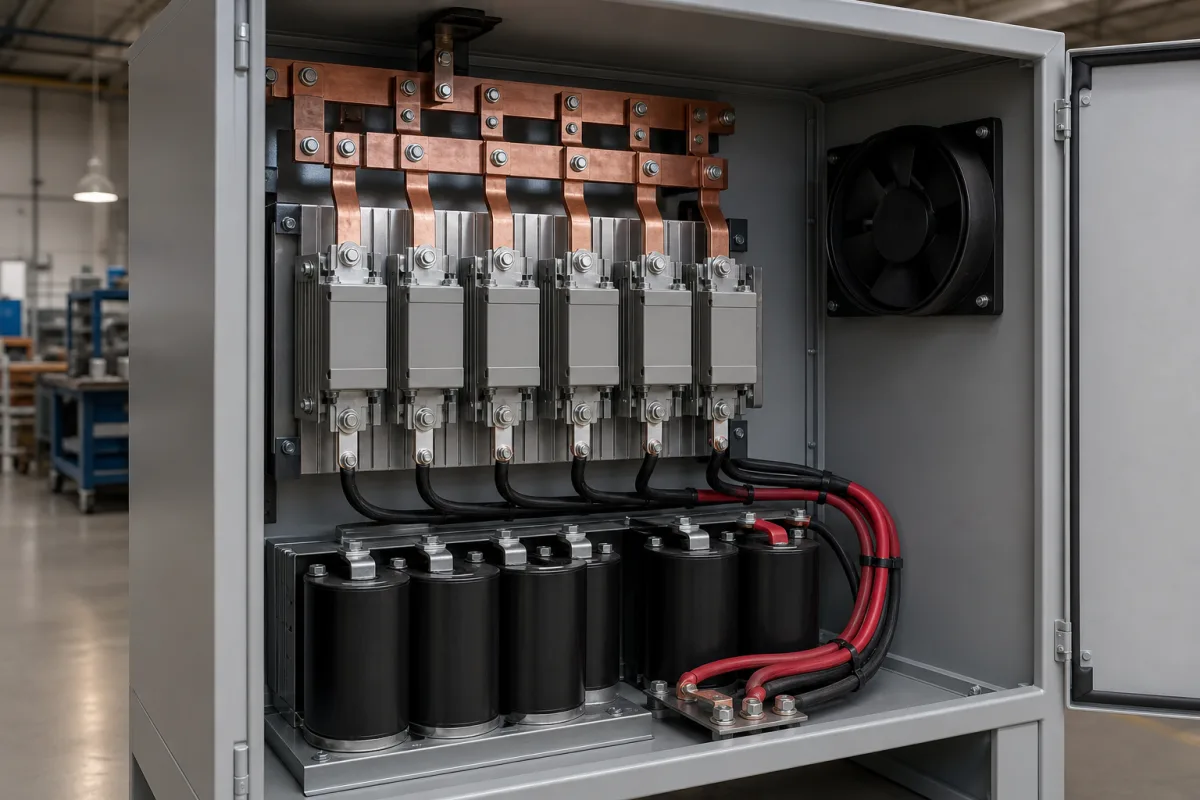
A canonical Rectifier is characterized by the integration of Diode Bridge and Filter Capacitor. In industrial production environments, manufacturers listed on CNFX commonly emphasize Silicon semiconductor construction to support stable, high-cycle operation across diverse manufacturing scenarios.

Electrical component that converts alternating current (AC) to direct current (DC)
Product Specifications

Technical details and manufacturing context for Rectifier

Definition
A rectifier is an essential component within motor drive systems that converts incoming alternating current (AC) power to direct current (DC) power, which is then used by the inverter section to control motor speed and torque. It ensures stable DC bus voltage for proper motor drive operation.
Working Principle
Rectifiers utilize semiconductor diodes or thyristors arranged in specific configurations (such as bridge rectifiers) to allow current flow in only one direction, effectively converting the bidirectional AC waveform into a unidirectional DC output. In motor drives, they often include filtering capacitors to smooth the DC output.
Common Materials
Silicon semiconductor, Copper conductors, Aluminum heat sink
Technical Parameters
  • Maximum current rating (A) Standard Spec
Components / BOM
  • Diode Bridge
    Converts AC to pulsating DC through unidirectional conduction
    Material: Silicon semiconductor
  • Filter Capacitor
    Smooths the pulsating DC output to reduce ripple voltage
    Material: Aluminum electrolytic
  • Heat Sink
    Dissipates heat generated by semiconductor components
    Material: Aluminum alloy
Engineering Reasoning
Input AC: 85-265 V, 47-63 Hz; Output DC: 5-48 V; Temperature: -40°C to +85°C ambient
Junction temperature exceeds 150°C for silicon diodes or 175°C for Schottky diodes; Reverse voltage exceeds PIV rating by 20%; Ripple current exceeds 1.5x rated RMS value
Design Rationale: Thermal runaway due to positive temperature coefficient of reverse leakage current; Avalanche breakdown at reverse bias exceeding critical electric field strength (3×10^5 V/cm for silicon)
Risk Mitigation (FMEA)
Trigger Input voltage transient exceeding 1.5x rated peak inverse voltage
Mode: Catastrophic diode junction breakdown with short-circuit failure
Strategy: TVS diodes with clamping voltage at 1.3x PIV rating; RC snubber networks with τ=10 μs
Trigger Continuous operation at 90% of maximum junction temperature rating
Mode: Thermal fatigue cracking of solder joints and bond wires
Strategy: Forced air cooling maintaining ΔT<40°C above ambient; Thermal interface materials with conductivity >3 W/m·K

Industry Taxonomies & Aliases

Commonly used trade names and technical identifiers for Rectifier.

Applied To / Applications

This component is essential for the following industrial systems and equipment:

Industrial Ecosystem & Supply Chain DNA

Complementary Systems
Downstream Applications
Specialized Tooling

Application Fit & Sizing Matrix

Operational Limits
current: Output current: 1A to 1000A depending on model
voltage: Input: 85-265V AC, Output: 5-48V DC (typical ranges)
efficiency: 85-95% typical, derating above 40°C ambient
temperature: -40°C to +85°C (operating), -55°C to +125°C (storage)
Media Compatibility
✓ Clean dry air environments ✓ Industrial control cabinets ✓ Telecommunications equipment rooms
Unsuitable: High humidity, corrosive, or explosive atmospheres without proper enclosure
Sizing Data Required
  • Required DC output voltage (V)
  • Maximum DC output current (A)
  • Input AC voltage range and frequency (V, Hz)

Reliability & Engineering Risk Analysis

Failure Mode & Root Cause
Diode thermal runaway
Cause: Excessive current or voltage spikes causing overheating, often due to poor cooling, overload conditions, or voltage transients from the power supply.
Capacitor degradation
Cause: Electrolytic capacitor drying out or swelling over time due to high operating temperatures, voltage stress, or aging, leading to reduced filtering efficiency and increased ripple voltage.
Maintenance Indicators
  • Audible humming or buzzing from the rectifier unit, indicating loose components, arcing, or transformer issues.
  • Visible discoloration, bulging, or leaking from capacitors or diodes on the circuit board, signaling overheating or component failure.
Engineering Tips
  • Ensure adequate ventilation and cooling; regularly clean heat sinks and fans to prevent overheating, which accelerates diode and capacitor degradation.
  • Implement surge protection and voltage regulation on the input power supply to minimize electrical stress and transients that can damage rectifier components.

Compliance & Manufacturing Standards

Reference Standards
IEC 60747-1: Semiconductor devices - General UL 508: Industrial Control Equipment EN 61000-6-2: Electromagnetic compatibility (EMC) - Generic standards - Immunity for industrial environments
Manufacturing Precision
  • Forward voltage drop: +/-5% at rated current
  • Reverse leakage current: <10 μA at maximum reverse voltage
Quality Inspection
  • Thermal cycling test (-40°C to +125°C, 1000 cycles)
  • High-potential (hipot) insulation test at 1500V AC for 1 minute

Factories Producing Rectifier

Verified manufacturers with capability to produce this product in China

✓ 93% Supplier Capability Match Found

T Technical Director from Germany Jan 26, 2026
★★★★★
"The technical documentation for this Rectifier is very thorough, especially regarding technical reliability."
Technical Specifications Verified
P Project Engineer from Brazil Jan 23, 2026
★★★★☆
"Reliable performance in harsh Electrical Equipment Manufacturing environments. No issues with the Rectifier so far. (Delivery took slightly longer than expected, but technical support was excellent.)"
Technical Specifications Verified
S Sourcing Manager from Canada Jan 20, 2026
★★★★★
"Testing the Rectifier now; the technical reliability results are within 1% of the laboratory datasheet."
Technical Specifications Verified
Verification Protocol

“Feedback is collected from verified sourcing managers during RFQ (Request for Quote) and factory evaluation processes on CNFX. These reports represent historical performance data and technical audit summaries from our B2B manufacturing network.”

13 sourcing managers are analyzing this specification now. Last inquiry for Rectifier from India (1h ago).

Supply Chain Compatible Machinery & Devices

Circuit Breaker Trip Unit

Protective control module for electrical circuit breakers

Explore Specs →
Circuit Breaker Arc Chute

Electrical component that extinguishes arcs in circuit breakers

Explore Specs →
Medium Voltage Switchgear Assembly Line

Automated production system for assembling medium voltage electrical switchgear.

Explore Specs →
Motor Terminal Block

Electrical connection interface for motor windings

Explore Specs →

Frequently Asked Questions

What is the primary function of a rectifier in electrical equipment manufacturing?

A rectifier converts alternating current (AC) to direct current (DC), providing stable DC power essential for various electrical devices and systems in industrial applications.

Why are silicon semiconductors used in rectifiers?

Silicon semiconductors offer high efficiency, reliability, and thermal stability, making them ideal for diode bridges that handle AC to DC conversion with minimal power loss.

How does the heat sink improve rectifier performance?

The aluminum heat sink dissipates heat generated during operation, preventing overheating and ensuring consistent performance, longevity, and safety of the rectifier.

Can I contact factories directly on CNFX?

CNFX is an open directory, not a transaction platform. Each factory profile provides direct contact information and production details to help you initiate direct inquiries with Chinese suppliers.

Get Quote for Rectifier

Request technical pricing, lead times, or customized specifications for Rectifier directly from verified manufacturing units.

Your business information is encrypted and only shared with verified Rectifier suppliers.

Thank you! Your message has been sent. We'll respond within 1–3 business days.

Need to Manufacture Rectifier?

Connect with verified factories specializing in this product category

Add Your Factory Contact Us
Previous Product
Rechargeable Battery
Next Product
Rectifier / Output Stage