Main Circuit Breaker
View system integration details
This page explains how Trip Unit is classified within Electrical Equipment Manufacturing. Technical values and manufacturer relationships are research references; confirm the current specification and supplier evidence for each order.
Protective component within a main circuit breaker that detects electrical faults and initiates disconnection.
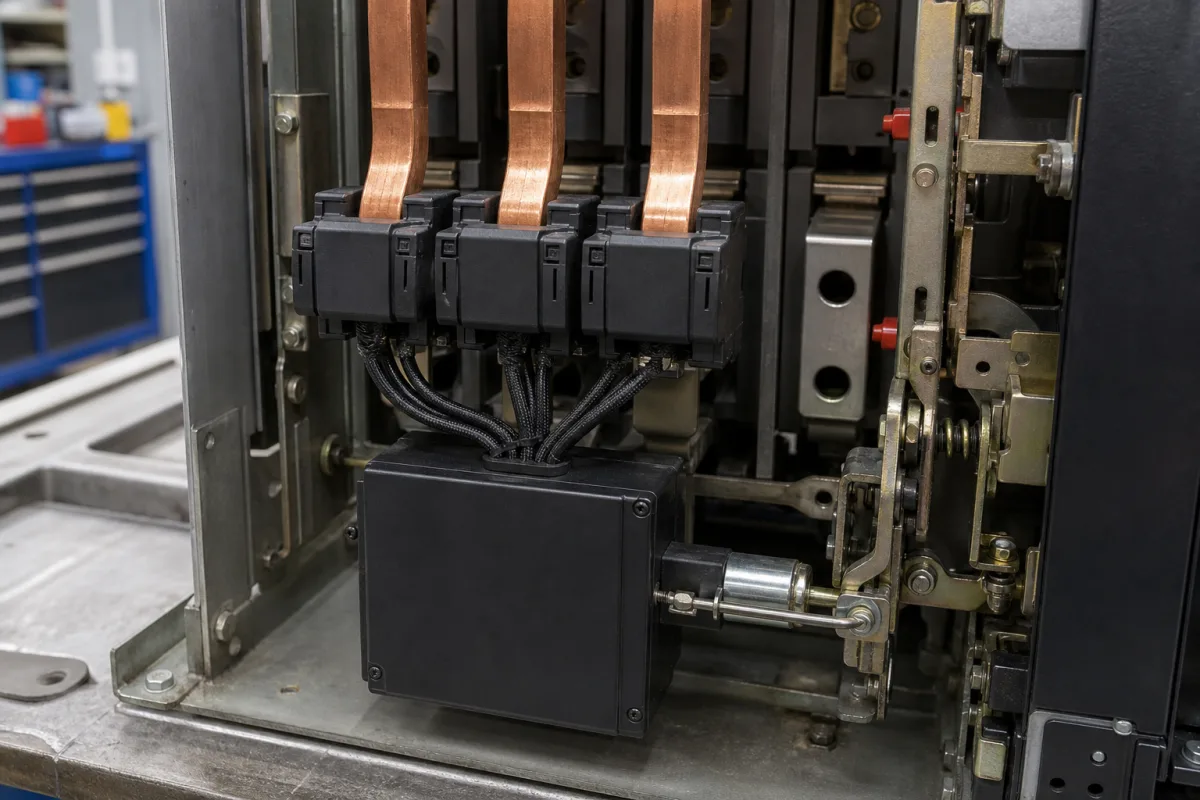
Technical details and manufacturing context for Trip Unit
| Parameter | Typical range | Notes & selection driver |
|---|---|---|
| Rated Current | 16–630 A | Continuous current rating; must match breaker frame size.IEC 60947-2 |
| Rated Voltage | 690 V AC | Maximum operating voltage for the trip unit.IEC 60947-2 |
| Breaking Capacity | 25–100 kA | Maximum short-circuit current the unit can interrupt.IEC 60947-2 |
| Trip Accuracy | ±5 % | Tolerance on long-time and short-time trip thresholds.IEC 60947-2 |
| Operating Temperature | -40–85 °C | Ambient temperature range for reliable operation.IEC 60947-2 |
| Humidity | 5–95 % RH | Non-condensing; condensation may cause false trips.IEC 60068-2-78 |
| Ingress Protection | IP20–IP54 | Higher rating for dusty or wet environments.IEC 60529 |
| Insulation Voltage | 1000 V | Rated insulation voltage for the unit.IEC 60947-2 |
| Power Consumption | 5–15 W | Power drawn by the trip unit electronics. |
| Weight | 0.5–2.5 kg | Depends on frame size and features. |
| Dimensions (H×W×D) | 100–200×50–150×50–100 mm | Varies with frame size; check compatibility. |
Ranges are indicative industry figures for RFQ preparation, not a supplier commitment. Confirm every value and standard with the legal manufacturer before ordering.
This component is essential for the following industrial systems and equipment:
| voltage: | Up to 690V AC |
| humidity: | ≤95% non-condensing |
| frequency: | 50/60 Hz ±10% |
| temperature: | -20°C to +70°C |
| current range: | 50A to 6300A |
Indicative industry ranges for design and RFQ preparation. Confirm the exact figures and applicable standard with the manufacturer before specifying.
Quoted from the published standard.
Manufacturer profiles associated with Trip Unit.
Manufacturer listings support early research and capability understanding. They are not certification, ranking, or transaction guarantees.
A practical evidence checklist for RFQ preparation and supplier evaluation.
CNFX does not score or rank suppliers. Buyers must verify all claims and documents with the legal manufacturer before ordering.
A trip unit monitors electrical current and detects faults like overloads, short circuits, and ground faults. When a fault exceeds set thresholds, it triggers the breaker to open contacts, interrupting the circuit to protect equipment and prevent hazards.
According to reference data, rated current ranges from 16 to 630 A, and rated voltage is up to 690 V AC, per IEC 60947-2. These values must be confirmed for the specific model.
The trip unit uses sensors and electronic circuitry to measure current and compare it to protection curves. Trip accuracy is ±5% for long-time and short-time thresholds, as per IEC 60947-2.
It operates in temperatures from -40 to 85 °C and humidity from 5 to 95% RH (non-condensing). Ingress protection ranges from IP20 to IP54, depending on the enclosure. Verify with the manufacturer for specific conditions.
Editorial classification, named public sources where available, and source-reviewed manufacturer records.
Ask for use case, specification boundaries, supplier type, and RFQ preparation information for this product.
Compare manufacturer profiles with relevant product and process capability.