Voltage Control Unit
View system integration details
This page explains how Voltage Feedback Sensor is classified within Electrical Equipment Manufacturing. Technical values and manufacturer relationships are research references; confirm the current specification and supplier evidence for each order.
A sensor that measures and provides feedback on voltage levels within a control system.
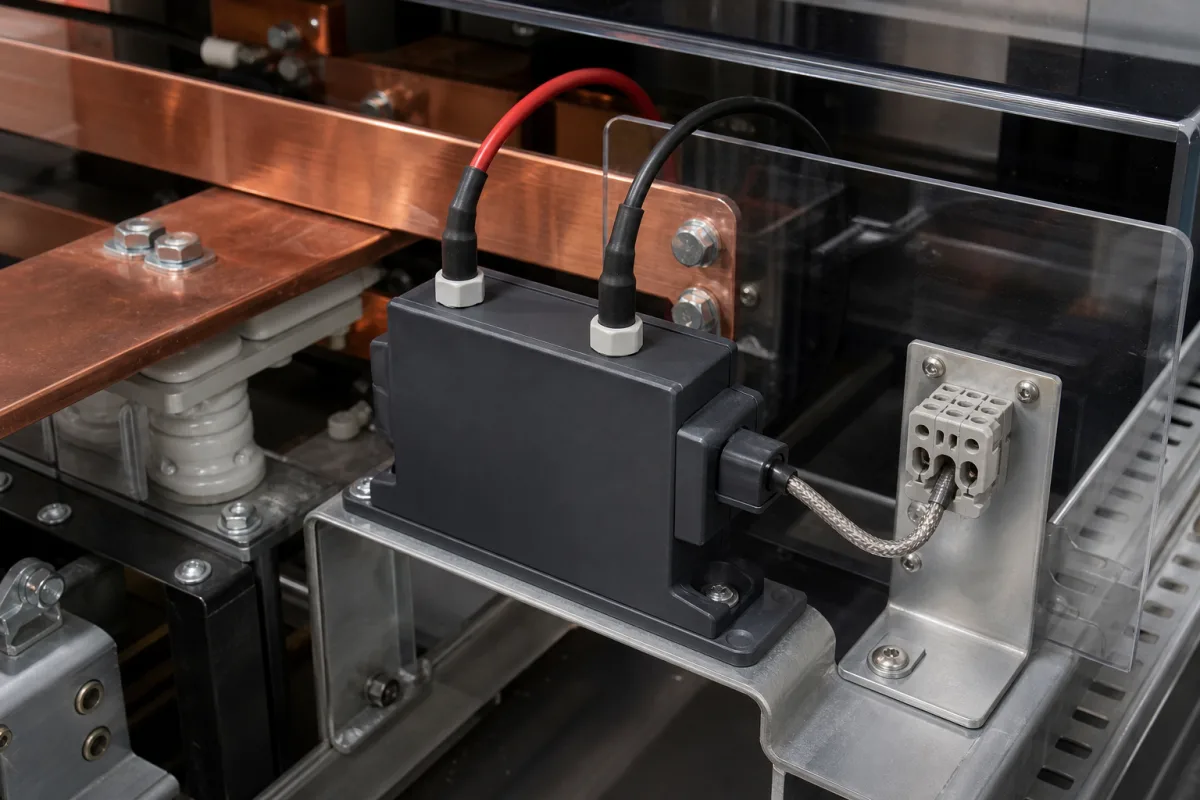
Technical details and manufacturing context for Voltage Feedback Sensor
| Parameter | Typical range | Notes & selection driver |
|---|---|---|
| Input Voltage Range | 9–36 V DC | Wide range for various control systems |
| Output Signal | 0–10 V DC | Linear proportional to input voltage |
| Accuracy | ±0.5 % FS | Full scale accuracy |
| Response Time | ≤10 ms | Fast response for real-time feedback |
| Operating Temperature | -40–85 °C | Industrial temperature range |
| Storage Temperature | -40–105 °C | Extended storage capability |
| Insulation Resistance | ≥100 MΩ | At 500 V DCIEC 60255-5 |
| Dielectric Strength | 2.5 kV | For 1 minuteIEC 60255-5 |
| Protection Rating | IP54–IP65 | Dust and water resistantIEC 60529 |
| Housing Material | PC/ABS | Flame retardantUL 94 V-0 |
| Weight | ≤200 g | Lightweight for easy mounting |
| Dimensions (L×W×H) | 80×40×25 mm | Compact footprint |
Ranges are indicative industry figures for RFQ preparation, not a supplier commitment. Confirm every value and standard with the legal manufacturer before ordering.
| accuracy: | ±0.5% of reading |
| pressure: | 0 to 10 bar |
| temperature: | -40°C to +85°C |
| voltage range: | 0 to 1000 VDC |
Indicative industry ranges for design and RFQ preparation. Confirm the exact figures and applicable standard with the manufacturer before specifying.
Quoted from the published standard.
A practical evidence checklist for RFQ preparation and supplier evaluation.
Compare the published product scope and source details, then include your specifications and quantity in an enquiry.
Manufacturer profiles associated with Voltage Feedback Sensor.
Explore company information and manufacturing capabilities, then discuss the scope of your project with a relevant supplier.
Ask for use case, specification boundaries, supplier type, and RFQ preparation information for this product.
The input voltage range is 9–36 V DC, as listed in the specifications. This range is suitable for various control systems, but you should verify the exact range for your specific model with the manufacturer.
The sensor provides an output signal of 0–10 V DC, which is linearly proportional to the input voltage. This analog signal can be used by control circuitry for monitoring and feedback.
The accuracy is ±0.5% of full scale. This means the measured voltage can deviate by up to ±0.5% from the actual value, which is suitable for many industrial control applications.
The insulation resistance and dielectric strength are tested according to IEC 60255-5. The insulation resistance is ≥100 MΩ at 500 V DC, and the dielectric strength is 2.5 kV for 1 minute. These are reference values; always confirm compliance with the manufacturer.
This component is essential for the following industrial systems and equipment:
Editorial classification, named public sources where available, and source-reviewed manufacturer records.
Compare manufacturer profiles with relevant product and process capability.