Industry-Verified Manufacturing Data (2026)

Anodizing Tank Module

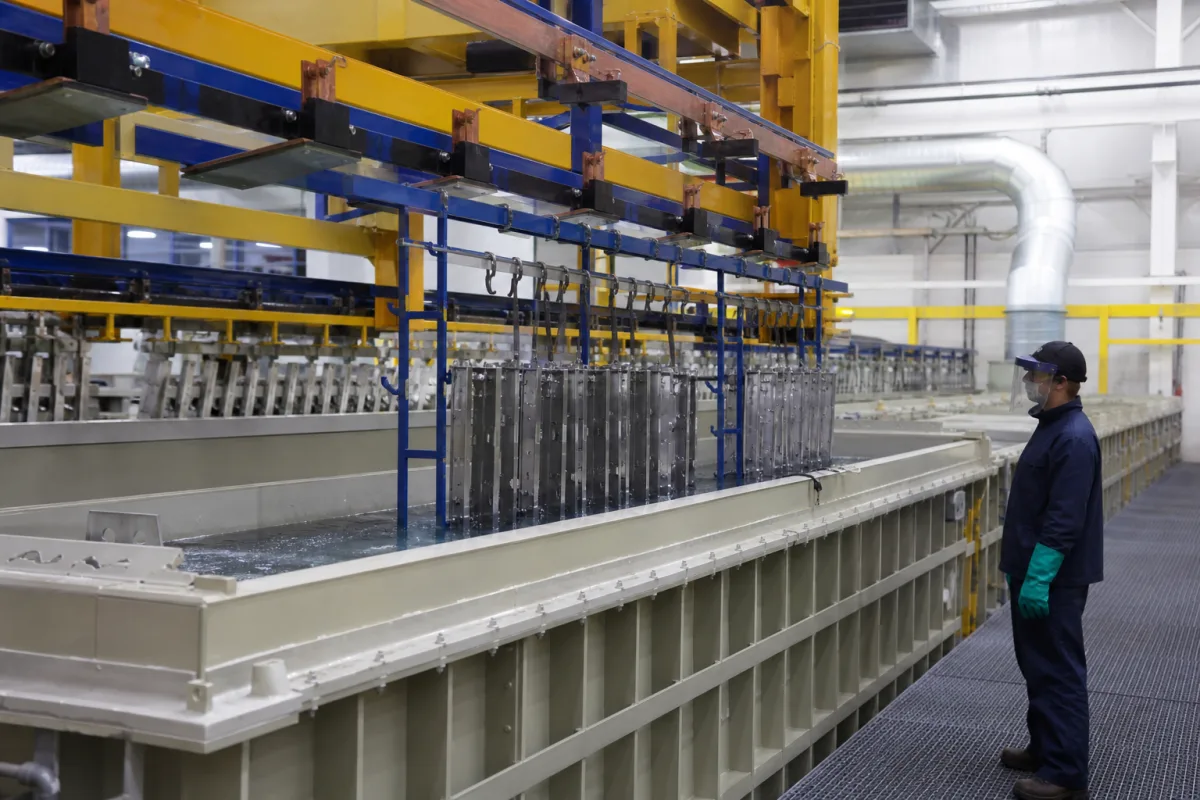
Based on aggregated insights from multiple verified factory profiles within the CNFX directory, the standard Anodizing Tank Module used in the Fabricated Metal Product Manufacturing sector typically supports operational capacities ranging from standard industrial configurations to heavy-duty production requirements.

Technical Definition & Core Assembly

A canonical Anodizing Tank Module is characterized by the integration of Tank Body and Cathode Rail System. In industrial production environments, manufacturers listed on CNFX commonly emphasize Polypropylene (PP) construction to support stable, high-cycle operation across diverse manufacturing scenarios.

A modular tank unit designed for the electrochemical anodizing process of aluminum profiles, containing electrolyte solution and electrodes.

Product Specifications

Technical details and manufacturing context for Anodizing Tank Module

Definition
The Anodizing Tank Module is a critical component within the Aluminum Profile Anodizing Production Line. It serves as the primary reaction vessel where aluminum profiles undergo the electrochemical anodizing process. The module houses the electrolyte solution (typically sulfuric acid or other acid-based solutions), contains the cathode system, and provides the controlled environment necessary for forming a durable, corrosion-resistant oxide layer on the aluminum surface. It is engineered for chemical resistance, temperature stability, and integration with power supply and filtration systems.
Working Principle
The module operates on the principle of electrolysis. Aluminum profiles act as the anode and are immersed in the electrolyte solution within the tank. When direct current is applied, oxygen ions from the electrolyte combine with aluminum atoms at the surface, forming a controlled, porous aluminum oxide layer. The tank maintains consistent electrolyte composition, temperature, and current density to ensure uniform coating thickness and quality.
Common Materials
Polypropylene (PP), Stainless Steel 316L, PVC, Fiberglass Reinforced Plastic (FRP)
Technical Parameters
  • Typical internal dimensions (L x W x H) range from 2000x1000x1500mm to 6000x2000x2500mm, depending on profile size and production capacity. (mm) Per Request
Components / BOM
  • Tank Body
    Primary container holding the electrolyte solution, constructed from chemically resistant material.
    Material: Polypropylene (PP) or FRP
  • Cathode Rail System
    Conductive rails or bars that hold the cathode plates and distribute electrical current.
    Material: Titanium or Stainless Steel 316L
  • Heating/Cooling Coils
    Maintains precise electrolyte temperature within the required operating range.
    Material: Titanium or PTFE-coated Steel
  • Agitation System
    Ensures uniform electrolyte concentration and temperature by circulating the solution.
    Material: PP or PVDF
Engineering Reasoning
0.8-1.5 A/dm² current density, 15-25°C electrolyte temperature, 12-20 V DC voltage
Electrolyte pH below 0.8 or above 2.2, current density exceeding 2.0 A/dm², temperature above 40°C
Design Rationale: Electrolyte acid dissociation constant (Ka) disruption at pH extremes causing uneven oxide layer formation; Joule heating exceeding 500 W/m²·K heat transfer capacity at high current densities
Risk Mitigation (FMEA)
Trigger Sulfuric acid concentration dropping below 150 g/L
Mode: Incomplete anodic oxide layer formation (porosity > 15%)
Strategy: Automated titrator with peristaltic pump maintaining 180-200 g/L H₂SO₄ concentration
Trigger Cathode-to-anode distance exceeding 150 mm
Mode: Voltage requirement exceeding 25 V for target current density
Strategy: Fixed electrode mounting with 100±5 mm spacing and laser alignment verification

Industry Taxonomies & Aliases

Commonly used trade names and technical identifiers for Anodizing Tank Module.

Industrial Ecosystem & Supply Chain DNA

Complementary Systems
Downstream Applications
Specialized Tooling

Application Fit & Sizing Matrix

Operational Limits
pressure: Atmospheric to 0.5 bar gauge
flow rate: 0-5 L/min per module
temperature: 15-25°C (optimal), 10-30°C (operational)
slurry concentration: Up to 15% solids by weight
Media Compatibility
✓ Sulfuric acid electrolyte (10-20% concentration) ✓ Chromic acid anodizing solutions ✓ Phosphoric acid based electrolytes
Unsuitable: Hydrofluoric acid or fluoride-containing environments
Sizing Data Required
  • Maximum aluminum profile dimensions (LxWxH)
  • Required anodizing thickness specification
  • Production throughput (kg/hour or profiles/hour)

Reliability & Engineering Risk Analysis

Failure Mode & Root Cause
Corrosion and pitting
Cause: Exposure to acidic anodizing solutions (e.g., sulfuric acid) and stray electrical currents causing localized material degradation, especially at welds or seams.
Seal and gasket failure
Cause: Chemical attack from electrolytes and thermal cycling leading to hardening, cracking, or swelling of elastomeric components, resulting in leaks.
Maintenance Indicators
  • Visible leaks or electrolyte seepage around tank seams, fittings, or gaskets
  • Unusual bubbling, foaming, or discoloration of the anodizing solution indicating contamination or chemical imbalance
Engineering Tips
  • Implement routine non-destructive testing (e.g., ultrasonic thickness gauging) to monitor tank wall integrity and schedule proactive lining or replacement before failure occurs.
  • Use chemically resistant materials (e.g., polypropylene liners, PTFE gaskets) and ensure proper electrical isolation to prevent galvanic corrosion and extend component life.

Compliance & Manufacturing Standards

Reference Standards
ISO 7599:2018 (Anodizing of aluminium and its alloys) ASTM B580-79(2019) (Anodic Oxide Coatings on Aluminium) DIN 17611:1984 (Anodized aluminium; technical delivery conditions)
Manufacturing Precision
  • Coating thickness: +/- 5 μm
  • Surface flatness: 0.2 mm/m
Quality Inspection
  • Coating thickness measurement (Eddy current or magnetic induction)
  • Salt spray corrosion test (ASTM B117)

Factories Producing Anodizing Tank Module

Verified manufacturers with capability to produce this product in China

✓ 98% Supplier Capability Match Found

S Sourcing Manager from Singapore Jan 28, 2026
★★★★★
"Found 52+ suppliers for Anodizing Tank Module on CNFX, but this spec remains the most cost-effective."
Technical Specifications Verified
P Procurement Specialist from Germany Jan 25, 2026
★★★★☆
"The technical documentation for this Anodizing Tank Module is very thorough, especially regarding technical reliability. (Delivery took slightly longer than expected, but technical support was excellent.)"
Technical Specifications Verified
T Technical Director from Brazil Jan 22, 2026
★★★★★
"Reliable performance in harsh Fabricated Metal Product Manufacturing environments. No issues with the Anodizing Tank Module so far."
Technical Specifications Verified
Verification Protocol

“Feedback is collected from verified sourcing managers during RFQ (Request for Quote) and factory evaluation processes on CNFX. These reports represent historical performance data and technical audit summaries from our B2B manufacturing network.”

11 sourcing managers are analyzing this specification now. Last inquiry for Anodizing Tank Module from Germany (1h ago).

Supply Chain Compatible Machinery & Devices

Metal Plate Rolling Machine

Industrial machine for bending metal plates into cylindrical or conical shapes

Explore Specs →
Hydraulic Cylinder Piston Rod

Precision-machined rod that transmits force in hydraulic cylinders.

Explore Specs →
Metal Plate Bending Machine

Industrial machine for bending metal plates into angular shapes

Explore Specs →
Industrial Tube Bending Machine

CNC-controlled machine for precision bending of metal tubes and pipes

Explore Specs →

Frequently Asked Questions

What materials are used in the anodizing tank module construction?

The tank is constructed from corrosion-resistant Polypropylene (PP) tank body with Stainless Steel 316L cathode rails, PVC components, and Fiberglass Reinforced Plastic (FRP) structural elements for durability in harsh chemical environments.

What components are included in the anodizing tank module?

Each module includes a complete tank body, agitation system for electrolyte circulation, cathode rail system for aluminum profile suspension, and integrated heating/cooling coils for precise temperature control during the anodizing process.

How does this modular design benefit metal fabrication operations?

The modular design allows for easy expansion, maintenance, and customization. Individual components can be serviced or replaced without shutting down the entire anodizing line, minimizing production downtime in metal fabrication facilities.

Can I contact factories directly on CNFX?

CNFX is an open directory, not a transaction platform. Each factory profile provides direct contact information and production details to help you initiate direct inquiries with Chinese suppliers.

Get Quote for Anodizing Tank Module

Request technical pricing, lead times, or customized specifications for Anodizing Tank Module directly from verified manufacturing units.

Your business information is encrypted and only shared with verified Anodizing Tank Module suppliers.

Thank you! Your message has been sent. We'll respond within 1–3 business days.

Need to Manufacture Anodizing Tank Module?

Connect with verified factories specializing in this product category

Add Your Factory Contact Us
Previous Product
Aluminum Shell
Next Product
Automated Metal Fabrication Cell System