Industry-Verified Manufacturing Data (2026)

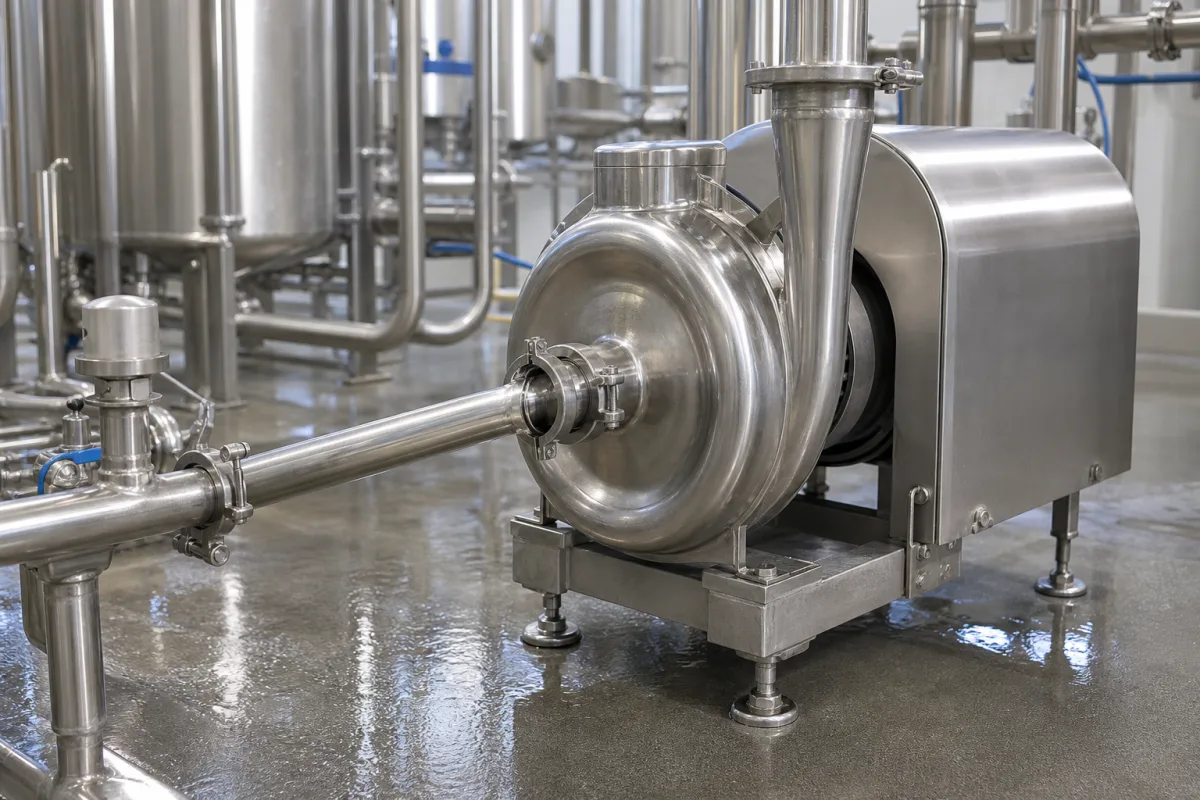
CIP Pump

Based on aggregated insights from multiple verified factory profiles within the CNFX directory, the standard CIP Pump used in the Food Manufacturing sector typically supports operational capacities ranging from standard industrial configurations to heavy-duty production requirements.

Technical Definition & Core Assembly

A canonical CIP Pump is characterized by the integration of Impeller and Casing. In industrial production environments, manufacturers listed on CNFX commonly emphasize Stainless Steel (AISI 316L) construction to support stable, high-cycle operation across diverse manufacturing scenarios.

A specialized pump designed to circulate cleaning solutions through a Cleaning-in-Place (CIP) system without disassembling equipment.
Product Specifications

Technical details and manufacturing context for CIP Pump

Definition
The CIP Pump is a critical component within a Cleaning-in-Place (CIP) System, responsible for generating the necessary flow and pressure to circulate cleaning, rinsing, and sanitizing solutions through process pipelines, tanks, and equipment. It enables thorough internal cleaning without the need for manual disassembly, ensuring hygiene and operational efficiency in sanitary processing environments.
Working Principle
The pump operates by creating a pressure differential, typically using a centrifugal or positive displacement mechanism, to draw cleaning fluids from a supply tank and force them through the CIP circuit at controlled flow rates and pressures. It must maintain consistent performance to ensure adequate solution contact with all internal surfaces for effective cleaning.
Common Materials
Stainless Steel (AISI 316L)
Technical Parameters
  • Pump connection size (e.g., inlet/outlet flange diameter) (mm) Per Request
Components / BOM
  • Impeller
    Rotates to impart kinetic energy to the fluid, creating flow
    Material: Stainless Steel
  • Casing
    Houses the impeller and directs fluid flow, containing pressure
    Material: Stainless Steel
  • Shaft Seal
    Prevents leakage between the rotating shaft and stationary casing
    Material: Ceramic/Carbon (mechanical seal)
Engineering Reasoning
2.5-6.0 bar (36-87 psi) at 15-60°C fluid temperature
Cavitation occurs at NPSHa < 3.2 m H₂O (NPSHr + 0.5 m safety margin), mechanical seal fails at shaft deflection > 0.05 mm
Design Rationale: Vapor pressure collapse at NPSHa < NPSHr causes cavitation bubbles imploding on impeller surfaces (Bernoulli principle), exceeding 316L stainless steel yield strength of 290 MPa at stress concentrations
Risk Mitigation (FMEA)
Trigger Insufficient NPSHa due to filter clogging (ΔP > 1.5 bar)
Mode: Cavitation erosion on impeller vanes reducing efficiency by >15%
Strategy: Install NPSH monitoring with automatic bypass at 3.5 m H₂O threshold
Trigger Caustic solution concentration >4% NaOH at >70°C
Mode: Intergranular corrosion of 316L welds leading to pitting >0.3 mm/year
Strategy: Specify 316L with <0.03% carbon content and post-weld annealing at 1050°C

Industry Taxonomies & Aliases

Commonly used trade names and technical identifiers for CIP Pump.

Applied To / Applications

This component is essential for the following industrial systems and equipment:

Industrial Ecosystem & Supply Chain DNA

Complementary Systems
Downstream Applications
Specialized Tooling

Application Fit & Sizing Matrix

Operational Limits
pressure: Up to 10 bar (145 psi) maximum operating pressure
flow rate: 5 to 200 m³/h (22 to 880 GPM)
temperature: 0°C to 120°C (32°F to 248°F)
slurry concentration: Up to 15% solids by weight
Media Compatibility
✓ Caustic soda solutions (NaOH) ✓ Acidic cleaning solutions (nitric/phosphoric acid blends) ✓ Hot water sanitization cycles
Unsuitable: Abrasive slurries with hard particles exceeding 500 microns
Sizing Data Required
  • Required flow rate (m³/h or GPM)
  • System pressure drop (bar or psi)
  • Cleaning solution viscosity and temperature

Reliability & Engineering Risk Analysis

Failure Mode & Root Cause
Cavitation
Cause: Insufficient Net Positive Suction Head (NPSH) due to improper system design, clogged inlet filters, or excessive pump speed causing vapor bubble formation and implosion damage to impeller and casing.
Mechanical seal failure
Cause: Dry running, thermal stress from CIP solution temperature cycling, chemical attack from cleaning agents, or misalignment causing seal face wear, leakage, and catastrophic failure.
Maintenance Indicators
  • Unusual high-frequency vibration or knocking sounds indicating cavitation or bearing wear
  • Visible leakage around seal area or abnormal temperature rise at pump housing
Engineering Tips
  • Ensure proper NPSH margin by maintaining adequate inlet pressure and preventing air ingress through regular strainer cleaning and system deaeration
  • Implement seal flush plans with compatible fluids, monitor seal performance via condition monitoring, and avoid dry running through proper interlock controls

Compliance & Manufacturing Standards

Reference Standards
ISO 2858:2012 (End-suction centrifugal pumps) ANSI/ASME B73.1:2012 (Specification for horizontal end-suction centrifugal pumps) CE Marking (EU Machinery Directive 2006/42/EC)
Manufacturing Precision
  • Impeller Diameter: +/-0.5mm
  • Shaft Runout: 0.05mm maximum
Quality Inspection
  • Hydrostatic Pressure Test (1.5x design pressure)
  • Material Verification (PMI - Positive Material Identification)

Factories Producing CIP Pump

Verified manufacturers with capability to produce this product in China

✓ 92% Supplier Capability Match Found

S Sourcing Manager from United States Jan 04, 2026
★★★★★
"Found 46+ suppliers for CIP Pump on CNFX, but this spec remains the most cost-effective."
Technical Specifications Verified
P Procurement Specialist from United Arab Emirates Jan 01, 2026
★★★★☆
"The technical documentation for this CIP Pump is very thorough, especially regarding technical reliability. (Delivery took slightly longer than expected, but technical support was excellent.)"
Technical Specifications Verified
T Technical Director from Australia Dec 29, 2025
★★★★★
"Reliable performance in harsh Food Manufacturing environments. No issues with the CIP Pump so far."
Technical Specifications Verified
Verification Protocol

“Feedback is collected from verified sourcing managers during RFQ (Request for Quote) and factory evaluation processes on CNFX. These reports represent historical performance data and technical audit summaries from our B2B manufacturing network.”

19 sourcing managers are analyzing this specification now. Last inquiry for CIP Pump from Vietnam (1h ago).

Supply Chain Compatible Machinery & Devices

Automated Food Moisture Analyzer

Automated system for precise moisture content measurement in food products

Explore Specs →
Automated Food Color Consistency Analyzer

Automated inline system for real-time color measurement and consistency control in food processing.

Explore Specs →
Control Panel

A centralized interface for monitoring and controlling industrial equipment and processes

Explore Specs →
Industrial Vacuum Tumbler

Industrial machine for massaging and marinating meat under vacuum to enhance texture and flavor.

Explore Specs →

Frequently Asked Questions

Why is AISI 316L stainless steel used for this CIP pump?

AISI 316L stainless steel offers superior corrosion resistance against cleaning chemicals and food acids, meets food safety standards, and ensures durability in sanitary food manufacturing environments.

How does this pump integrate with existing CIP systems?

The pump is designed for seamless integration with standard CIP systems, featuring compatible connections and flow rates to circulate cleaning solutions through pipelines and equipment without disassembly.

What maintenance is required for the shaft seal in food manufacturing applications?

Regular inspection for wear and leakage is recommended. The shaft seal should be checked during routine CIP system maintenance to prevent contamination and ensure optimal pump performance.

Can I contact factories directly on CNFX?

CNFX is an open directory, not a transaction platform. Each factory profile provides direct contact information and production details to help you initiate direct inquiries with Chinese suppliers.

Get Quote for CIP Pump

Request technical pricing, lead times, or customized specifications for CIP Pump directly from verified manufacturing units.

Your business information is encrypted and only shared with verified CIP Pump suppliers.

Thank you! Your message has been sent. We'll respond within 1–3 business days.

Need to Manufacture CIP Pump?

Connect with verified factories specializing in this product category

Add Your Factory Contact Us
Previous Product
CIP (Clean-in-Place) System
Next Product
CIP Return Pump