Editorial Technical Reference

Integrated Hot Metal Desulfurization and Slag Treatment System

This page explains how Integrated Hot Metal Desulfurization and Slag Treatment System is classified within Iron and Steel Basic Production. Technical values and manufacturer relationships are research references; confirm the current specification and supplier evidence for each order.

Technical Definition & Core Assembly

Integrated system for removing sulfur from hot metal and processing resulting slag

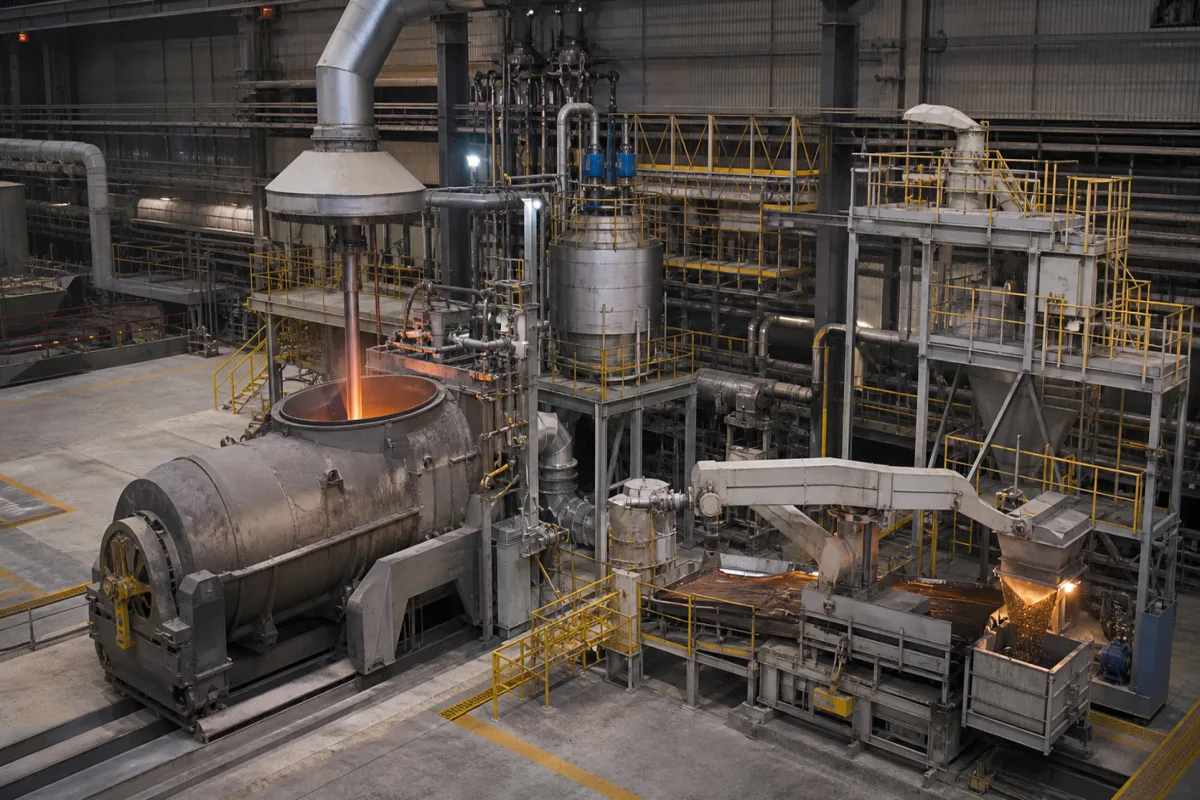
Representative product image. Confirm appearance and specifications with the manufacturer.

Product Specifications

Technical details and manufacturing context for Integrated Hot Metal Desulfurization and Slag Treatment System

Definition
This integrated industrial system combines hot metal desulfurization with comprehensive slag treatment in a coordinated production line. It removes sulfur impurities from molten iron using injection or mechanical stirring methods to meet stringent steel quality requirements. The system simultaneously processes the resulting desulfurization slag through cooling, crushing, and separation stages to recover valuable materials and minimize waste. This integrated approach optimizes material flow, reduces energy consumption, and improves overall steel production efficiency while ensuring environmental compliance. The system is designed for iron and steel basic production facilities, typically integrated into a steelmaking plant. It comprises refractory-lined steel vessels, high-temperature alloy components, and ceramic injection lances. Key parameters include a processing capacity of 100–300 tons per hour, desulfurization efficiency of at least 95%, agent consumption of 3–8 kg per ton of metal, operating temperature range of 1200–1500 °C, slag processing rate of 20–50 tons per hour, power consumption of 150–250 kWh per ton, operating pressure of 1.0–1.6 MPa, control accuracy of ±0.5%, material grade ASTM A516 Gr.70 for pressure vessel parts, total weight of 80–120 tons, footprint of 200–400 m², and noise level ≤85 dB(A) at 1 m (per ISO 11202). These values are reference ranges and must be verified for the specific model and application. The system operates by injecting or mechanically stirring desulfurizing agents (typically calcium-based) into the hot metal, forming sulfur-rich slag that is then separated, cooled, and processed for material recovery. For procurement, verify model-specific performance, standards compliance, and installation requirements with the legal manufacturer or supplier. The system is not a standalone product but a coordinated line; ensure compatibility with existing plant infrastructure. Maintenance signals include reduced desulfurization efficiency, increased agent consumption, or abnormal noise. Failure boundaries include operating outside specified temperature or pressure ranges, which may compromise performance. Always confirm that the equipment meets applicable local regulations and standards.
Working Principle
Hot metal is treated with desulfurizing agents (typically calcium-based) through injection lances or mechanical stirrers, forming sulfur-rich slag that is then separated, cooled, and processed for material recovery. The process begins with the hot metal being transferred to a treatment vessel, where the desulfurizing agent is injected or stirred in. The agent reacts with sulfur to form a slag that floats on the surface. The slag is then skimmed off and directed to a slag treatment unit, where it undergoes cooling, crushing, and separation to recover metallic iron and other valuable components. The treated metal proceeds to the next steelmaking stage. The system integrates these steps to optimize material flow and energy use.
Common Materials
Refractory-lined steel vessels, High-temperature alloy components, Ceramic injection lances
Technical Parameters
ParameterTypical rangeNotes & selection driver
Processing CapacityRequired100–300 tons/hourMaximum hot metal throughput
Desulfurization EfficiencyRequired≥95 %Sulfur removal rate from initial content
Agent ConsumptionRequired3–8 kg/tonDesulfurizing agent usage per ton of metal
Temperature RangeRequired1200–1500 °COperating temperature for hot metal treatment
Slag Processing RateRequired20–50 tons/hourMaximum slag handling capacity
Power Consumption150–250 kWh/tonEnergy usage per ton of processed metal
Control Accuracy±0.5 %For agent feed rate and temperature control
Material GradeASTM A516 Gr.70For pressure vessel partsASTM A516
Weight80–120 tTotal system weight, excluding installation
Footprint200–400 Including reactor, slag treatment, and control room
Noise Level≤85 dB(A)At 1 m distance from equipmentISO 11202

Ranges are indicative industry figures for RFQ preparation, not a supplier commitment. Confirm every value and standard with the legal manufacturer before ordering.

Components / BOM
  • Desulfurization Reactor
    Primary vessel for hot metal treatment with desulfurizing agents
    Material: Refractory-lined steel shell
  • Agent Injection System
    Delivers desulfurizing agents into molten metal via lances
    Material: High-temperature alloy with ceramic tips
  • Slag Separation Unit
    Mechanically separates desulfurization slag from treated metal
    Material: Heat-resistant steel construction
  • Slag Cooling Conveyor
    Transports and cools hot slag for further processing
    Material: Water-cooled steel belts
  • Slag Crushing System Optional
    Reduces cooled slag to specified particle sizes
    Material: High-chrome alloy crushing elements
  • Dust Collection System Optional
    Captures particulate emissions during processing
    Material: Fabric filter bags with steel housing

Industry Taxonomies & Aliases

Commonly used trade names and technical identifiers for Integrated Hot Metal Desulfurization and Slag Treatment System.

Industrial Ecosystem & Supply Chain Structure

Complementary Systems
Downstream Applications
Specialized Tooling

Application Fit & Sizing Matrix

Operational Limits
pressure: Atmospheric to 2 bar (slag treatment section)
flow rate: 50-500 tons/hour (hot metal throughput)
temperature: 1300-1500°C (hot metal processing range)
slurry concentration: 30-70% solids (slag slurry processing)
Media Compatibility
✓ Hot metal (molten iron) ✓ Calcium carbide-based desulfurization agents ✓ Basic slag formers (lime, dolomite)
Unsuitable: Chlorine-containing environments (risk of chloride corrosion)
Sizing Data Required
  • Hot metal sulfur content (initial ppm)
  • Required final sulfur specification (target ppm)
  • Plant throughput capacity (tons/hour)

Reliability & Engineering Risk Analysis

Failure Mode & Root Cause
Refractory lining degradation
Cause: Thermal cycling and chemical attack from molten metal and slag, leading to spalling and erosion
Lance clogging and erosion
Cause: Accumulation of solidified metal/slag deposits and abrasive particle impingement during injection
Maintenance Indicators
  • Unusual vibration or noise from injection equipment indicating mechanical wear or blockage
  • Visible refractory spalling or hot spots on vessel exterior signaling lining failure
Engineering Tips
  • Implement predictive maintenance using thermal imaging to monitor refractory condition and schedule repairs before failure
  • Optimize desulfurization agent injection parameters (rate, pressure, particle size) to minimize lance wear and improve mixing efficiency

Indicative industry ranges for design and RFQ preparation. Confirm the exact figures and applicable standard with the manufacturer before specifying.

Compliance & Manufacturing Standards

Applicable Standards
Machinery Directive 2006/42/EC

Quoted from the published standard.

Manufacturing Precision
  • Ladle Lining Thickness: +/-5mm
  • Nozzle Alignment: +/-0.5 degrees
Quality Inspection
  • Refractory lining thickness survey
  • Nozzle alignment check before commissioning

Manufacturers of Integrated Hot Metal Desulfurization and Slag Treatment System

Manufacturer profiles associated with Integrated Hot Metal Desulfurization and Slag Treatment System.

Sourcing Integrated Hot Metal Desulfurization and Slag Treatment System from China?
Tell us your specification and target quantity — we will match it against manufacturer records and come back with the factories that fit.
Request manufacturers We manufacture this

Manufacturer listings support early research and capability understanding. They are not certification, ranking, or transaction guarantees.

Technical documentation
Request current drawings, revision history, and a signed specification sheet.
Manufacturing capability
Verify equipment lists, process limits, capacity, and representative production evidence.
Inspection readiness
Confirm test methods, calibrated equipment, sampling plans, and traceable reports.
Supplier transparency
Check the legal entity, factory address, ownership, certifications, and direct contacts.

CNFX does not score or rank suppliers. Buyers must verify all claims and documents with the legal manufacturer before ordering.

Frequently Asked Questions

What is the typical processing capacity of this system?

The reference range for maximum hot metal throughput is 100–300 tons per hour. However, the actual capacity depends on the specific model and configuration. Verify with the manufacturer for your application.

What desulfurization efficiency can be expected?

The system is designed to achieve a sulfur removal rate of at least 95% from the initial content. Actual performance may vary based on hot metal composition, temperature, and agent quality. Confirm with the supplier.

What standards are relevant for this equipment?

The noise level is referenced to ISO 11202, and material grade for pressure vessel parts to ASTM A516. These are verification references, not proof of certification. Always check compliance with applicable regulations.

How should I verify the system's suitability for my plant?

Review the listed parameters (capacity, efficiency, consumption, temperature, pressure, etc.) against your process requirements. Contact the legal manufacturer or supplier to confirm model-specific values, installation requirements, and any additional standards.

Data Basis

Editorial classification, named public sources where available, and source-reviewed manufacturer records.

Preliminary Technical Classification
This page supports structured research, RFQ preparation, and supplier evaluation. It does not replace buyer-led supplier qualification, standards review, or technical approval.
Buyer enquiry

Request manufacturing insight for Integrated Hot Metal Desulfurization and Slag Treatment System

Ask for use case, specification boundaries, supplier type, and RFQ preparation information for this product.

Where it goes
Straight to the CNFX editorial desk, and to the manufacturer if this product is linked to a claimed profile. Nothing is broadcast to a supplier list.
Your details stay here
We do not sell or rent enquiry data, and we do not add you to a mailing list. Used only to answer this request.
No commission, no middleman
CNFX is a directory. We take no cut of any order and never negotiate on a supplier's behalf.
What we don't claim
A listing is not an endorsement. Qualify every supplier and verify every figure yourself before ordering.

Your business information is used only to process this request.

Thank you! Your message has been sent. We'll respond within 1–3 business days.
Sorry, we couldn't send your message. Please try again, or email us at contact@cnfx.com.

Need to Manufacture Integrated Hot Metal Desulfurization and Slag Treatment System?

Compare manufacturer profiles with relevant product and process capability.

Previous Product
Integrated Direct Reduction Iron and Electric Arc Furnace Steelmaking System
Next Product
Integrated Steelmaking and Continuous Casting System
Get QuotesChat