This page explains how Integrated Steelmaking and Continuous Casting System is classified within Iron and Steel Basic Production. Technical values and manufacturer relationships are research references; confirm the current specification and supplier evidence for each order.
Coordinated industrial system for converting molten steel into semi-finished slabs or billets.
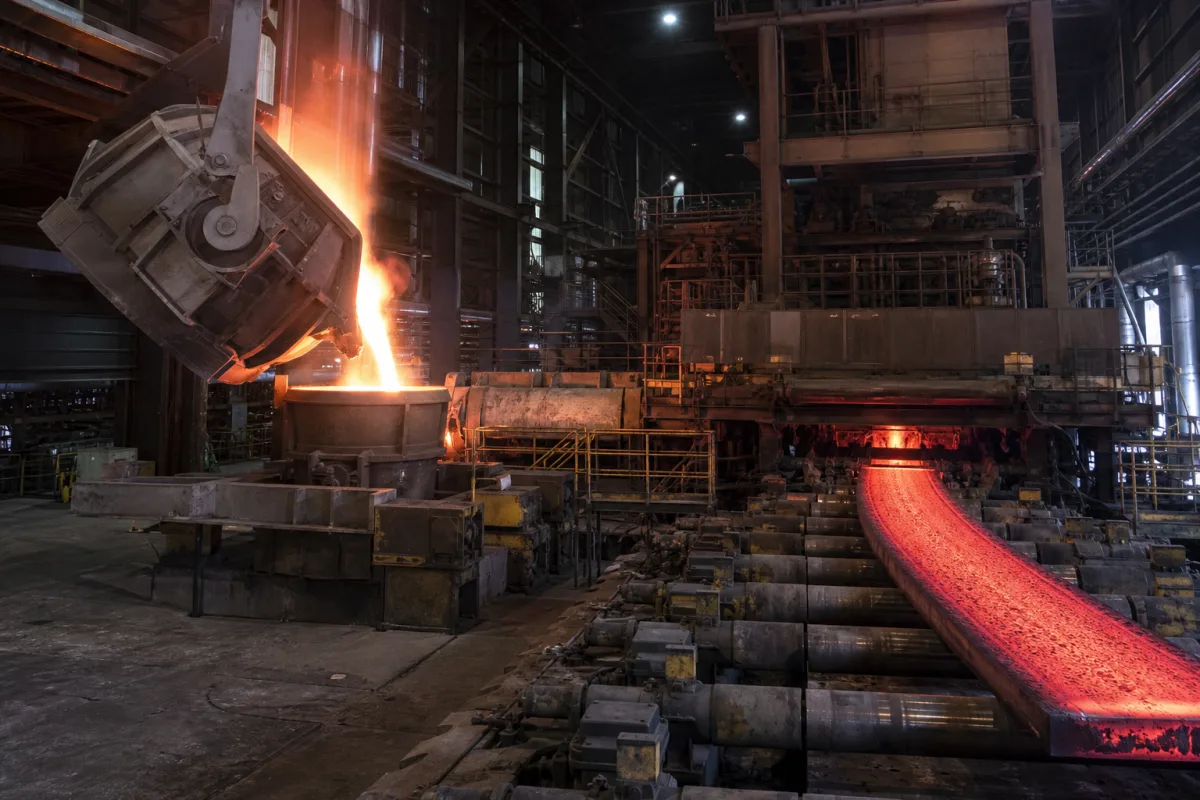
Technical details and manufacturing context for Integrated Steelmaking and Continuous Casting System
| Parameter | Typical range | Notes & selection driver |
|---|---|---|
| Casting SpeedRequired | 0.8–1.8 m/min | Maximum withdrawal speed of solidified strand |
| Metallurgical LengthRequired | 20–40 m | Distance from meniscus to complete solidification point |
| Section SizeRequired | 150×150–300×400 mm | Cross-sectional dimensions of cast product |
| Annual CapacityRequired | 0.5–2.0 tons/year | Maximum production output under continuous operation |
| Cooling Water FlowRequired | 100–300 m³/h | Total secondary cooling water circulation rate |
| Power Consumption | 30–60 kWh/ton | Specific energy consumption per ton of cast product |
| Operating Temperature | 1550–1600 °C | Steel temperature at tundish |
| Tundish Capacity | 20–60 t | Ensures continuous casting during ladle change |
| Mold Oscillation Frequency | 50–200 min⁻¹ | Affects surface quality and breakout risk |
| Casting Radius | 6–12 m | Larger radius reduces bending strain |
| Number of Strands | 1–8 | More strands increase productivity but complexity |
| Control System Accuracy | ±0.5 % | For mold level and casting speed control |
| Hydraulic System Pressure | 10–20 MPa | For mold oscillation and segment adjustmentISO 4413 |
| Machine Weight | 500–2000 t | Includes all mechanical and structural components |
Ranges are indicative industry figures for RFQ preparation, not a supplier commitment. Confirm every value and standard with the legal manufacturer before ordering.
Commonly used trade names and technical identifiers for Integrated Steelmaking and Continuous Casting System.
| pressure: | Atmospheric to 1.5 bar (ladle/tundish pressure control) |
| flow rate: | 1-8 tons/min (continuous casting throughput) |
| temperature: | 1500-1650°C (molten steel processing range) |
| casting speed: | 0.5-2.5 m/min (strand withdrawal rate) |
| ladle capacity: | 80-400 tons (typical steel batch sizes) |
| slurry concentration: | N/A (handles molten metal, not slurry) |
Indicative industry ranges for design and RFQ preparation. Confirm the exact figures and applicable standard with the manufacturer before specifying.
Quoted from the published standard.
Manufacturer profiles associated with Integrated Steelmaking and Continuous Casting System.
Manufacturer listings support early research and capability understanding. They are not certification, ranking, or transaction guarantees.
A practical evidence checklist for RFQ preparation and supplier evaluation.
CNFX does not score or rank suppliers. Buyers must verify all claims and documents with the legal manufacturer before ordering.
The casting speed typically ranges from 0.8 to 1.8 meters per minute, but the exact value depends on the specific machine configuration and product requirements. Always verify with the manufacturer.
The metallurgical length is the distance from the meniscus to the point where complete solidification occurs, typically 20 to 40 meters. It determines the machine length and cooling requirements. Verify the design for your application.
The system can cast sections ranging from 150×150 mm to 300×400 mm, depending on the mold and machine design. Confirm the exact range with the supplier.
The annual capacity is typically between 0.5 and 2.0 million tons, depending on the number of strands, casting speed, and operating hours. Verify with the manufacturer for your specific setup.
Editorial classification, named public sources where available, and source-reviewed manufacturer records.
Ask for use case, specification boundaries, supplier type, and RFQ preparation information for this product.
Compare manufacturer profiles with relevant product and process capability.