Industry-Verified Manufacturing Data (2026)

Desulfurization Reactor

Based on aggregated insights from multiple verified factory profiles within the CNFX directory, the standard Desulfurization Reactor used in the Basic Metal Manufacturing sector typically supports operational capacities ranging from standard industrial configurations to heavy-duty production requirements.

Technical Definition & Core Assembly

A canonical Desulfurization Reactor is characterized by the integration of Refractory Lining and Injection Lance/System. In industrial production environments, manufacturers listed on CNFX commonly emphasize Refractory Lining (e.g., Alumina, Magnesia-Carbon) construction to support stable, high-cycle operation across diverse manufacturing scenarios.

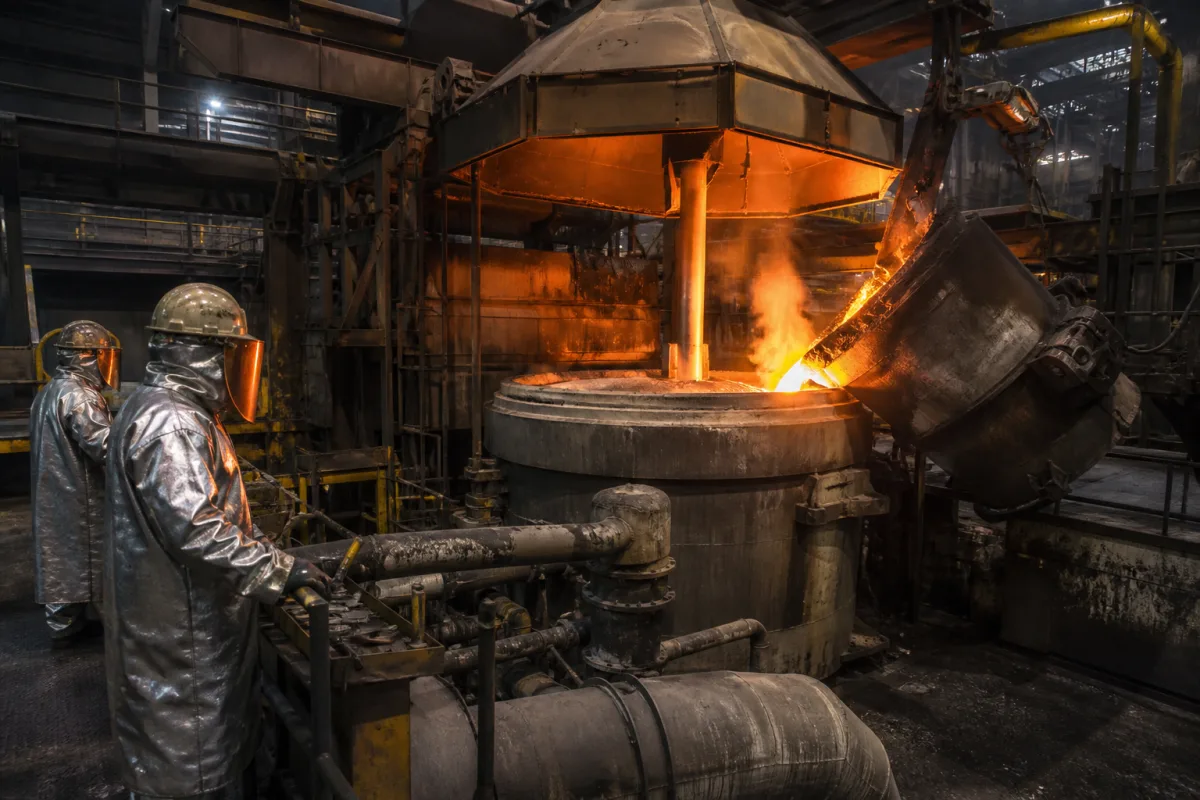
A specialized vessel within the integrated system where hot metal undergoes chemical treatment to remove sulfur impurities through reagent injection and agitation.

Product Specifications

Technical details and manufacturing context for Desulfurization Reactor

Definition
The Desulfurization Reactor is a critical component of the Integrated Hot Metal Desulfurization and Slag Treatment System. It is a refractory-lined vessel designed to receive molten iron (hot metal) from the blast furnace. Within this reactor, desulfurizing agents (typically lime-based powders or magnesium) are injected into the molten metal bath. Through mechanical stirring (e.g., via a lance or impeller) or gas bubbling, the reagents are thoroughly mixed with the metal, promoting chemical reactions that convert dissolved sulfur into stable slag compounds. The resulting low-sulfur metal is then tapped for further processing, while the sulfur-rich slag is separated for treatment. Its design prioritizes high-temperature durability, efficient mixing, and controlled reaction kinetics to achieve precise sulfur removal targets.
Working Principle
Operates on the principle of chemical reaction and mass transfer. Desulfurizing reagents are injected into a bath of molten iron. Mechanical agitation (stirring) or inert gas purging creates turbulence, increasing the surface area contact between the reagent particles and the molten metal. This facilitates the reaction where sulfur (S) in the iron combines with the reagent (e.g., CaO or Mg) to form solid or gaseous compounds (e.g., CaS, MgS). These reaction products are then removed into a separate slag phase or off-gas stream, thereby reducing the sulfur content of the metal.
Common Materials
Refractory Lining (e.g., Alumina, Magnesia-Carbon), Steel Shell (Pressure Vessel Grade), Stirring Mechanism (Lance/Impeller - High-Temp Alloy)
Technical Parameters
  • Nominal capacity or batch size of hot metal processed per cycle. (tonnes) Per Request
Components / BOM
  • Refractory Lining
    Provides thermal insulation and chemical resistance against molten iron and basic slag, protecting the steel shell.
    Material: Alumina, Magnesia, or Carbon-Composite Refractories
  • Injection Lance/System
    Delivers desulfurizing reagent powder deep into the molten metal bath at a controlled rate.
    Material: High-Temperature Alloy Steel (e.g., with ceramic tip)
  • Stirring Mechanism (Impeller or Gas Purging)
    Creates turbulence in the metal bath to ensure efficient mixing and contact between reagent and metal.
    Material: Refractory-Coated Steel or High-Temp Alloy
  • Tapping/Tilting Mechanism
    Allows for controlled discharge of desulfurized metal and slag after the treatment cycle.
    Material: Heavy-Duty Steel with Hydraulic Actuators
Engineering Reasoning
2.5-4.0 MPa at 1450-1550°C
5.2 MPa internal pressure at 1620°C
Design Rationale: Creep rupture due to sustained thermal stress exceeding 250 MPa yield strength of 316L stainless steel at elevated temperatures
Risk Mitigation (FMEA)
Trigger Lime injection rate exceeding 12 kg/tonne hot metal
Mode: Refractory lining spalling from CaO-SiO₂-Al₂O₃ phase transformation at >1600°C
Strategy: Mass flow controller with 0.5% accuracy and PID loop maintaining 8-10 kg/tonne injection rate
Trigger Agitator shaft vibration amplitude >0.8 mm RMS at 1200 RPM
Mode: Mechanical seal failure leading to argon gas leakage >15 L/min
Strategy: Dual-plane dynamic balancing to ISO 1940 G2.5 standard with real-time vibration monitoring

Industry Taxonomies & Aliases

Commonly used trade names and technical identifiers for Desulfurization Reactor.

Industrial Ecosystem & Supply Chain DNA

Complementary Systems
Downstream Applications
Specialized Tooling

Application Fit & Sizing Matrix

Operational Limits
pressure: 2-15 bar
flow rate: 50-500 m³/h
temperature: 150-350°C
slurry concentration: 10-40% solids by weight
Media Compatibility
✓ Hot metal desulfurization with calcium carbide ✓ Iron/steel processing with magnesium-based reagents ✓ Petroleum refining with amine solutions
Unsuitable: Chloride-rich environments (risk of stress corrosion cracking)
Sizing Data Required
  • Required sulfur removal efficiency (%)
  • Hot metal throughput (tons/hour)
  • Available reagent injection system capacity (kg/min)

Reliability & Engineering Risk Analysis

Failure Mode & Root Cause
Catalyst bed channeling
Cause: Uneven flow distribution due to improper loading, particle degradation, or support grid failure, leading to bypassing and reduced desulfurization efficiency.
High-temperature hydrogen attack (HTHA)
Cause: Exposure to hydrogen at elevated temperatures (typically above 400°F/204°C) causing decarburization and micro-fissuring in carbon/low-alloy steel components.
Maintenance Indicators
  • Sudden increase in reactor pressure drop indicating potential bed plugging or catalyst degradation
  • Abnormal temperature profile across catalyst beds suggesting flow maldistribution or hot spots
Engineering Tips
  • Implement proper catalyst loading procedures with density testing and use of loading socks to prevent segregation and ensure uniform bed packing
  • Install and regularly calibrate hydrogen probes in critical zones to monitor H₂ partial pressure and temperature conditions for HTHA prevention

Compliance & Manufacturing Standards

Reference Standards
ISO 9001:2015 - Quality Management Systems ASME BPVC Section VIII - Pressure Vessels EN 13445 - Unfired Pressure Vessels
Manufacturing Precision
  • Wall Thickness: +/- 2.5% of nominal thickness
  • Nozzle Alignment: +/- 1.5° from perpendicular
Quality Inspection
  • Ultrasonic Testing (UT) for weld integrity
  • Hydrostatic Pressure Test at 1.5x design pressure

Factories Producing Desulfurization Reactor

Verified manufacturers with capability to produce this product in China

✓ 93% Supplier Capability Match Found

T Technical Director from Germany Feb 03, 2026
★★★★★
"Standard OEM quality for Basic Metal Manufacturing applications. The Desulfurization Reactor arrived with full certification."
Technical Specifications Verified
P Project Engineer from Brazil Jan 31, 2026
★★★★☆
"Great transparency on the Desulfurization Reactor components. Essential for our Basic Metal Manufacturing supply chain. (Delivery took slightly longer than expected, but technical support was excellent.)"
Technical Specifications Verified
S Sourcing Manager from Canada Jan 28, 2026
★★★★★
"The Desulfurization Reactor we sourced perfectly fits our Basic Metal Manufacturing production line requirements."
Technical Specifications Verified
Verification Protocol

“Feedback is collected from verified sourcing managers during RFQ (Request for Quote) and factory evaluation processes on CNFX. These reports represent historical performance data and technical audit summaries from our B2B manufacturing network.”

19 sourcing managers are analyzing this specification now. Last inquiry for Desulfurization Reactor from Vietnam (40m ago).

Supply Chain Compatible Machinery & Devices

Vacuum Induction Melting Furnace

Industrial furnace for melting metals under vacuum using electromagnetic induction

Explore Specs →
Electroslag Remelting Furnace

Secondary refining furnace for high-quality metal ingots

Explore Specs →
Molten Metal Flow Control Valve

Precision valve for regulating molten metal flow in casting and pouring operations.

Explore Specs →
Molten Metal Temperature Measurement System

Automated system for continuous temperature monitoring of molten metals during processing.

Explore Specs →

Frequently Asked Questions

What is the primary function of a desulfurization reactor in basic metal manufacturing?

The desulfurization reactor removes sulfur impurities from hot metal through chemical treatment using injected reagents and mechanical agitation, improving metal quality and preventing brittleness.

What materials are used in constructing a desulfurization reactor?

Key materials include a refractory lining (alumina or magnesia-carbon) for thermal resistance, a pressure vessel grade steel shell for structural integrity, and high-temperature alloy components for the stirring mechanism.

How does the stirring mechanism work in a desulfurization reactor?

The stirring mechanism, typically an impeller or gas purging lance, agitates the molten metal to ensure thorough mixing of desulfurization reagents, maximizing sulfur removal efficiency and reaction kinetics.

Can I contact factories directly on CNFX?

CNFX is an open directory, not a transaction platform. Each factory profile provides direct contact information and production details to help you initiate direct inquiries with Chinese suppliers.

Get Quote for Desulfurization Reactor

Request technical pricing, lead times, or customized specifications for Desulfurization Reactor directly from verified manufacturing units.

Your business information is encrypted and only shared with verified Desulfurization Reactor suppliers.

Thank you! Your message has been sent. We'll respond within 1–3 business days.

Need to Manufacture Desulfurization Reactor?

Connect with verified factories specializing in this product category

Add Your Factory Contact Us
Previous Product
Descaling Header/Manifold
Next Product
Direct Reduction Shaft Furnace