Air Bearing System
View system integration details
This page explains how Bearing Pad/Orifice Plate is classified within Machinery and Equipment Manufacturing. Technical values and manufacturer relationships are research references; confirm the current specification and supplier evidence for each order.
A precision component in air bearing systems that provides support and controls airflow through orifices.
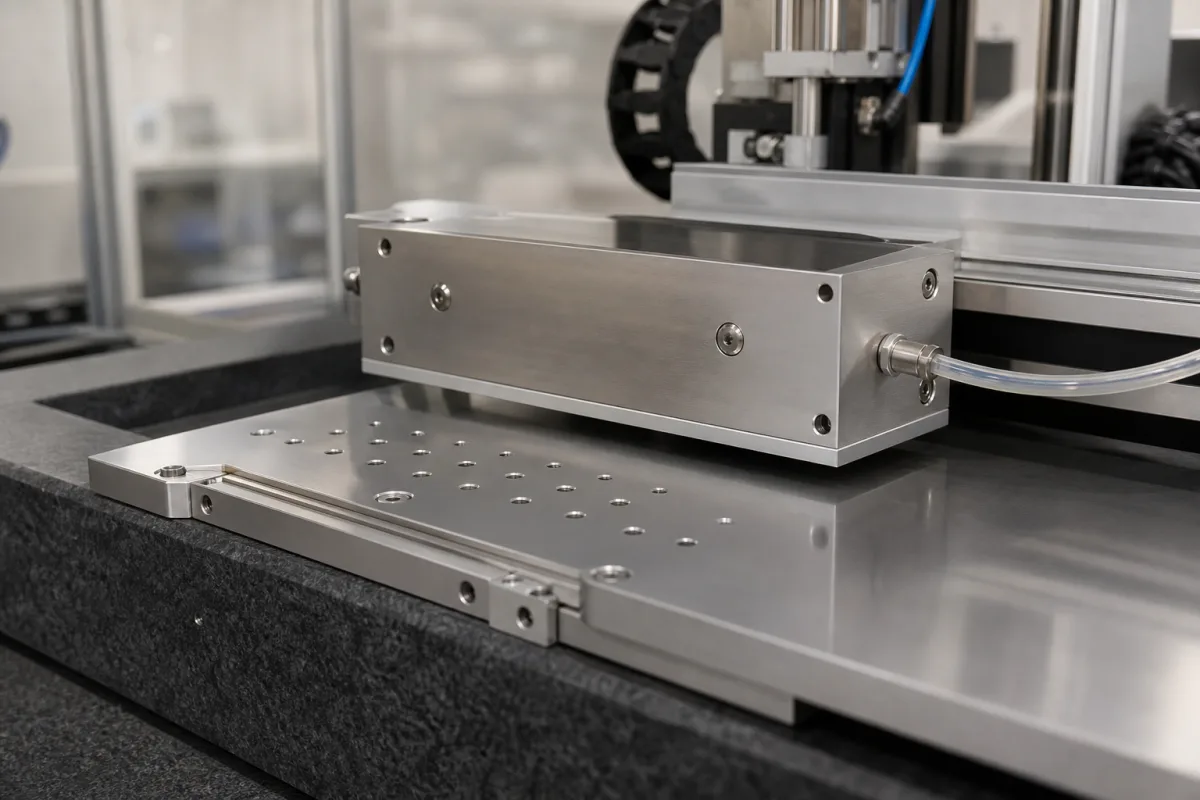
Technical details and manufacturing context for Bearing Pad/Orifice Plate
| Parameter | Typical range | Notes & selection driver |
|---|---|---|
| Orifice Diameter | 0.2–1.0 mm | Determines flow rate and damping |
| Flatness | 0.005 mm | Critical for air film uniformityISO 1101 |
| Surface Roughness | Ra 0.2–0.4 μm | Affects friction and wearISO 4287 |
| Material Hardness | 55–62 HRC | Ensures wear resistanceISO 6508 |
| Operating Temperature | -40–85 °C | Seal integrity outside range |
| Air Consumption | 0.5–2.0 L/min | At rated pressure |
| Load Capacity | 500–2000 N | Per pad at 0.6 MPa supply |
| Thickness | 5–15 mm | Affects stiffness and mounting |
| Outer Diameter | 20–80 mm | Standard sizes; custom available |
| Weight | 0.05–0.5 kg | Depends on size and material |
Ranges are indicative industry figures for RFQ preparation, not a supplier commitment. Confirm every value and standard with the legal manufacturer before ordering.
Commonly used trade names and technical identifiers for Bearing Pad/Orifice Plate.
This component is essential for the following industrial systems and equipment:
| pressure: | Up to 10 bar (145 psi) |
| flow rate: | 0.1 to 100 L/min (air) |
| temperature: | -40°C to 150°C |
| slurry concentration: | Not applicable - clean media only |
Indicative industry ranges for design and RFQ preparation. Confirm the exact figures and applicable standard with the manufacturer before specifying.
Quoted from the published standard.
1 company lists this product among what they make. Company figures are quoted from each company's own website; every card states where the relationship came from.
Manufacturer listings support early research and capability understanding. They are not certification, ranking, or transaction guarantees.
A practical evidence checklist for RFQ preparation and supplier evaluation.
CNFX does not score or rank suppliers. Buyers must verify all claims and documents with the legal manufacturer before ordering.
The component is available in stainless steel, aluminum alloy, and ceramic. The choice depends on application requirements such as load, stiffness, and environmental compatibility. Always confirm material suitability with the manufacturer.
The reference operating pressure range is 1.0–1.6 MPa. Verify the exact range for your specific model.
Orifice diameter (0.2–1.0 mm) determines the airflow rate and damping characteristics. Larger orifices allow higher flow but may reduce damping. Selection depends on the desired stiffness and load capacity.
Regularly inspect for wear, contamination, or damage. Monitor air consumption and load capacity. If performance degrades, check the air supply and pad surface. Replace if flatness or roughness exceeds specifications.
Editorial classification, named public sources where available, and source-reviewed manufacturer records.
Ask for use case, specification boundaries, supplier type, and RFQ preparation information for this product.
Compare manufacturer profiles with relevant product and process capability.