Industry-Verified Manufacturing Data (2026)

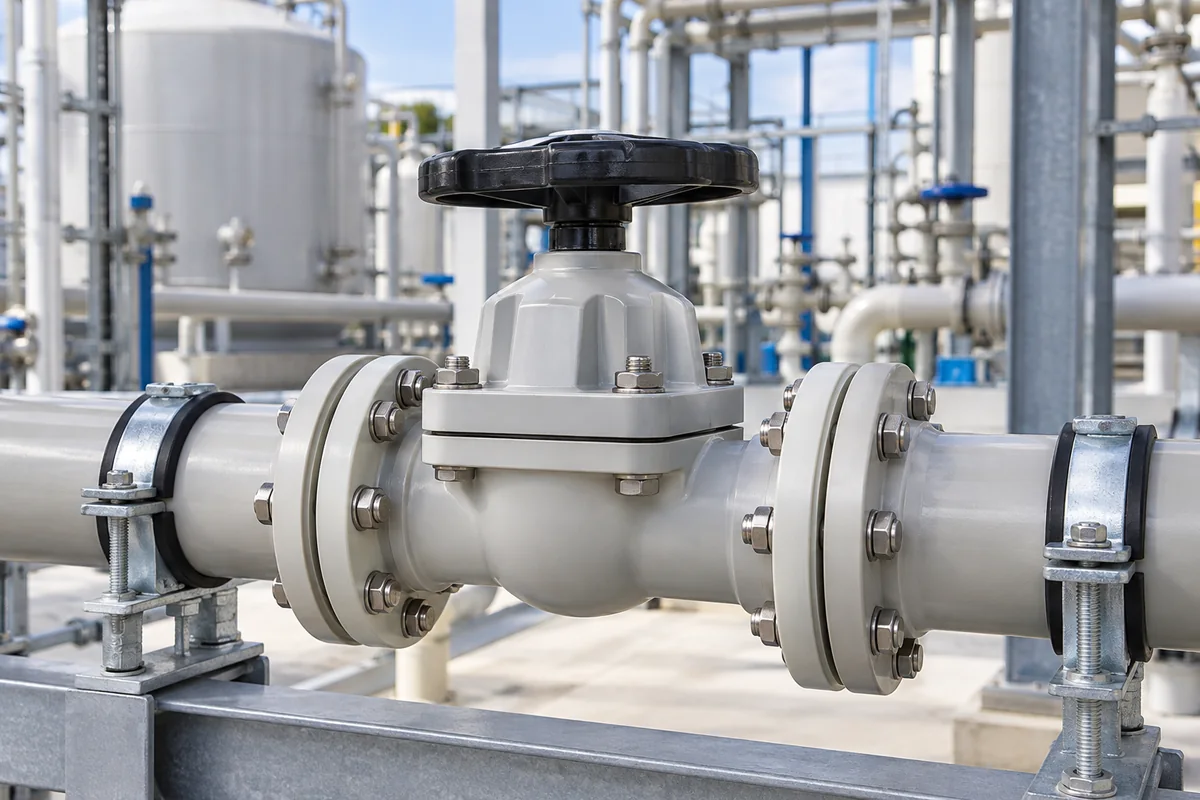
Diaphragm Valve

Based on aggregated insights from multiple verified factory profiles within the CNFX directory, the standard Diaphragm Valve used in the Machinery and Equipment Manufacturing sector typically supports operational capacities ranging from standard industrial configurations to heavy-duty production requirements.

Technical Definition & Core Assembly

A canonical Diaphragm Valve is characterized by the integration of Diaphragm and Valve Body. In industrial production environments, manufacturers listed on CNFX commonly emphasize EPDM rubber construction to support stable, high-cycle operation across diverse manufacturing scenarios.

A valve that uses a flexible diaphragm to control fluid flow by isolating the valve body from the operating mechanism.
Product Specifications

Technical details and manufacturing context for Diaphragm Valve

Definition
In a Pulse-Jet Cleaning System, the diaphragm valve serves as a critical control component that regulates the release of compressed air pulses to clean filter elements. It precisely controls the timing and duration of air blasts that dislodge dust from filter bags or cartridges.
Working Principle
When actuated, the diaphragm flexes to open or close the valve port. In pulse-jet systems, a solenoid or pilot valve typically controls the diaphragm, allowing rapid opening to release compressed air pulses and quick closing to conserve air.
Common Materials
EPDM rubber, Nitrile rubber, PTFE, Stainless steel
Technical Parameters
  • Port size (typically 1/2" to 2" NPT or metric equivalents) (mm) Per Request
Components / BOM
  • Diaphragm
    Flexible membrane that seals against valve seat to control flow
    Material: EPDM rubber or PTFE
  • Valve Body
    Houses internal components and provides fluid connections
    Material: Aluminum or stainless steel
  • Solenoid Coil
    Electromagnetic actuator that controls valve operation
    Material: Copper wire with insulation
  • Valve Seat
    Sealing surface against which diaphragm closes
    Material: Stainless steel or plastic
Engineering Reasoning
0-25 bar differential pressure, -20°C to 150°C fluid temperature
Diaphragm material yield strength exceeded at 35 bar differential pressure or 180°C continuous operation
Design Rationale: Diaphragm material fatigue due to cyclic flexural stress exceeding 10⁶ cycles at maximum rated pressure, compounded by chemical degradation from fluid exposure at elevated temperatures
Risk Mitigation (FMEA)
Trigger Abrasive particle accumulation at diaphragm sealing surface
Mode: Progressive leakage through diaphragm seat due to material erosion
Strategy: Install 40-micron upstream filtration with differential pressure monitoring and automatic backflush at 0.5 bar ΔP
Trigger Diaphragm material crystallization from prolonged exposure to 80°C hydrocarbon fluids
Mode: Sudden diaphragm rupture during actuation due to embrittlement
Strategy: Implement material compatibility matrix validation with fluid temperature monitoring and automatic shutdown at 75°C

Industry Taxonomies & Aliases

Commonly used trade names and technical identifiers for Diaphragm Valve.

Applied To / Applications

This component is essential for the following industrial systems and equipment:

Industrial Ecosystem & Supply Chain DNA

Complementary Systems
Downstream Applications
Specialized Tooling

Application Fit & Sizing Matrix

Operational Limits
pressure: Up to 16 bar (standard), up to 25 bar (high-pressure designs)
flow rate: Cv values typically 0.1 to 50 (depends on valve size)
temperature: -20°C to 150°C (varies with diaphragm material)
slurry concentration: Suitable for slurries up to 40% solids by weight (depends on particle size and abrasiveness)
Media Compatibility
✓ Pharmaceutical process fluids ✓ Corrosive chemicals (with PTFE/EPDM diaphragms) ✓ Food-grade applications (sanitary designs)
Unsuitable: High-temperature steam applications (>150°C)
Sizing Data Required
  • Required flow rate (Cv/Kv calculation)
  • Process pressure and temperature
  • Fluid characteristics (viscosity, solids content, corrosiveness)

Reliability & Engineering Risk Analysis

Failure Mode & Root Cause
Diaphragm fatigue cracking
Cause: Cyclic flexing from repeated actuation exceeding the elastomer's fatigue life, often accelerated by overpressure, temperature extremes, or chemical incompatibility.
Seat wear or erosion
Cause: Abrasive particles in the fluid stream, cavitation from high-pressure drops, or chemical attack degrading the seating surface, leading to leakage.
Maintenance Indicators
  • Visible external leakage around the valve body or bonnet area
  • Audible hissing or gurgling during operation indicating internal leakage past the seat
Engineering Tips
  • Implement a preventive diaphragm replacement schedule based on cycle count and fluid compatibility, rather than waiting for failure.
  • Install upstream filtration for abrasive services and ensure operating pressure drops remain within the valve's cavitation limits to protect the seat and diaphragm.

Compliance & Manufacturing Standards

Reference Standards
ISO 5208:2015 (Industrial valves - Pressure testing of valves) ANSI/FCI 70-2 (Control valve seat leakage) DIN 3202-1 (Diaphragm valves - General requirements)
Manufacturing Precision
  • Bore diameter: +/-0.05mm
  • Diaphragm thickness: +/-0.1mm
Quality Inspection
  • Hydrostatic pressure test (to verify leak-tightness)
  • Dimensional inspection (critical mating surfaces)

Factories Producing Diaphragm Valve

Verified manufacturers with capability to produce this product in China

✓ 97% Supplier Capability Match Found

T Technical Director from Canada Feb 03, 2026
★★★★★
"Standard OEM quality for Machinery and Equipment Manufacturing applications. The Diaphragm Valve arrived with full certification."
Technical Specifications Verified
P Project Engineer from United States Jan 31, 2026
★★★★☆
"Great transparency on the Diaphragm Valve components. Essential for our Machinery and Equipment Manufacturing supply chain. (Delivery took slightly longer than expected, but technical support was excellent.)"
Technical Specifications Verified
S Sourcing Manager from United Arab Emirates Jan 28, 2026
★★★★★
"The Diaphragm Valve we sourced perfectly fits our Machinery and Equipment Manufacturing production line requirements."
Technical Specifications Verified
Verification Protocol

“Feedback is collected from verified sourcing managers during RFQ (Request for Quote) and factory evaluation processes on CNFX. These reports represent historical performance data and technical audit summaries from our B2B manufacturing network.”

6 sourcing managers are analyzing this specification now. Last inquiry for Diaphragm Valve from Vietnam (1h ago).

Supply Chain Compatible Machinery & Devices

Automated Assembly Line System

Integrated production system for sequential component assembly operations

Explore Specs →
Automated Powder Coating System

Integrated industrial system for applying dry powder coatings to metal substrates.

Explore Specs →
Centrifugal Pump Impeller

Rotating component that transfers energy to fluid in centrifugal pumps.

Explore Specs →
High-Precision CNC Laser Cutting Machine

Computer-controlled industrial machine using focused laser beams to cut sheet metal with micron-level accuracy.

Explore Specs →

Frequently Asked Questions

What are the main advantages of using a diaphragm valve in machinery manufacturing?

Diaphragm valves provide excellent isolation between the fluid and operating mechanism, preventing contamination and reducing maintenance. They offer reliable shut-off, handle slurries and viscous fluids well, and are available in corrosion-resistant materials like stainless steel and PTFE for industrial applications.

How do I choose between EPDM, Nitrile, PTFE, or stainless steel for the diaphragm material?

Select EPDM for water and mild chemicals, Nitrile for oils and fuels, PTFE for aggressive chemicals and high temperatures, and stainless steel for extreme durability and sanitary applications. Consider fluid compatibility, temperature range, pressure, and industry regulations.

What maintenance is required for diaphragm valves in industrial equipment?

Regularly inspect the diaphragm for wear, cracks, or degradation, and replace it as part of preventive maintenance. Check the valve seat and body for corrosion or buildup, ensure the solenoid coil functions properly, and follow the manufacturer's lubrication and cleaning guidelines based on your operating conditions.

Can I contact factories directly on CNFX?

CNFX is an open directory, not a transaction platform. Each factory profile provides direct contact information and production details to help you initiate direct inquiries with Chinese suppliers.

Get Quote for Diaphragm Valve

Request technical pricing, lead times, or customized specifications for Diaphragm Valve directly from verified manufacturing units.

Your business information is encrypted and only shared with verified Diaphragm Valve suppliers.

Thank you! Your message has been sent. We'll respond within 1–3 business days.

Need to Manufacture Diaphragm Valve?

Connect with verified factories specializing in this product category

Add Your Factory Contact Us
Previous Product
Diaphragm Pump
Next Product
Die Body/Housing