Industry-Verified Manufacturing Data (2026)

Pulse-Jet Cleaning System

Based on aggregated insights from multiple verified factory profiles within the CNFX directory, the standard Pulse-Jet Cleaning System used in the Machinery and Equipment Manufacturing sector typically supports operational capacities ranging from standard industrial configurations to heavy-duty production requirements.

Technical Definition & Core Assembly

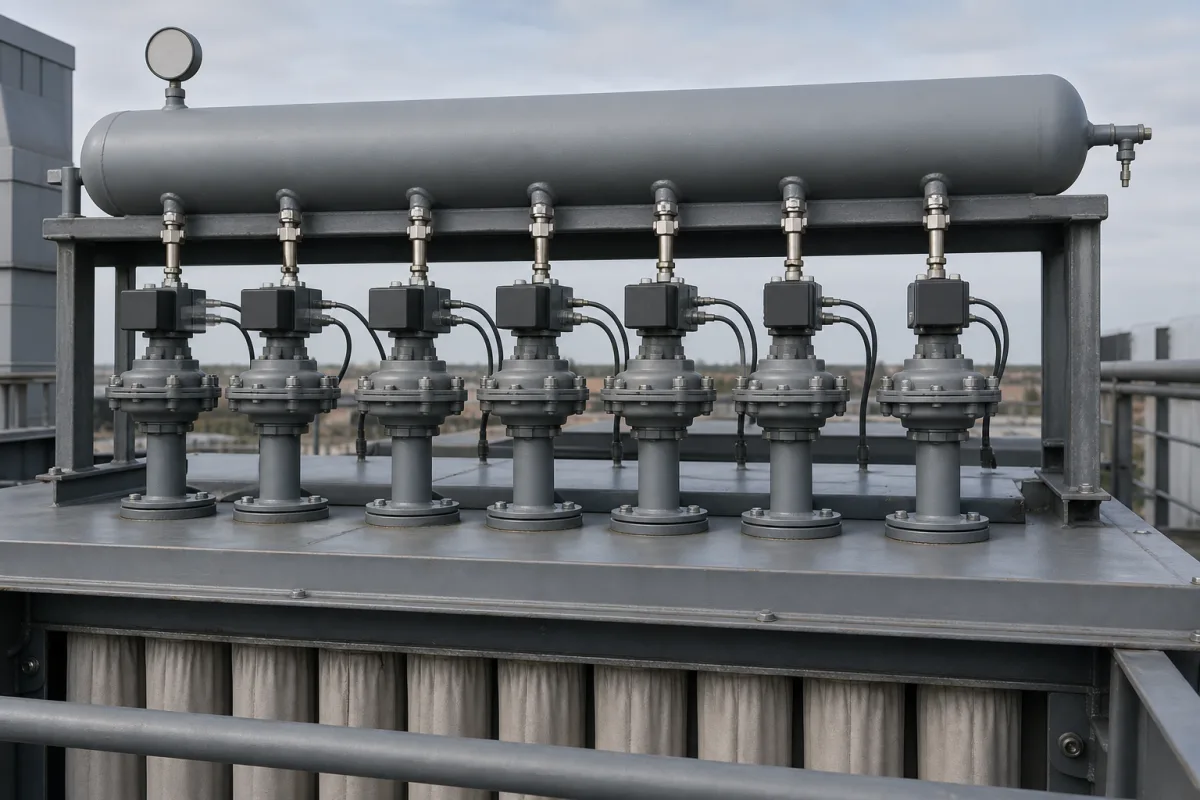
A canonical Pulse-Jet Cleaning System is characterized by the integration of Solenoid Valve and Blow Pipe. In industrial production environments, manufacturers listed on CNFX commonly emphasize Carbon steel construction to support stable, high-cycle operation across diverse manufacturing scenarios.

A cleaning mechanism that uses compressed air pulses to dislodge dust from filter media in dust collectors.
Product Specifications

Technical details and manufacturing context for Pulse-Jet Cleaning System

Definition
A critical component within industrial dust collection units that periodically cleans filter bags or cartridges using short, high-pressure bursts of compressed air. This system maintains optimal airflow and filtration efficiency by preventing dust buildup on filter surfaces, ensuring continuous operation of the dust collection system.
Working Principle
Compressed air is stored in a reservoir and released through solenoid valves in controlled pulses. These pulses travel through blow pipes and nozzles, creating reverse airflow that flexes filter media and dislodges accumulated dust into collection hoppers below.
Common Materials
Carbon steel, Stainless steel, Solenoid valves, Rubber diaphragms
Technical Parameters
  • Nozzle diameter and blow pipe configuration (mm) Per Request
Components / BOM
  • Solenoid Valve
    Controls compressed air release for cleaning pulses
    Material: Brass/stainless steel
  • Blow Pipe
    Distributes compressed air pulses to multiple nozzles
    Material: Carbon steel
  • Nozzle
    Directs compressed air pulses onto filter media
    Material: Stainless steel
  • Diaphragm Valve
    Regulates air flow and pressure in pulse system
    Material: Rubber with metal housing
Engineering Reasoning
4.0-8.0 bar (58-116 psi) at 20°C ambient
Solenoid valve coil burnout at 12.0 bar (174 psi) differential pressure or diaphragm rupture at 10.5 bar (152 psi) backpressure
Design Rationale: Diaphragm material (typically nitrile rubber or PTFE) exceeds elastic deformation limit at 10.5 bar, causing plastic deformation and rupture; solenoid coil insulation breakdown occurs at 12.0 bar due to electromagnetic force exceeding coil winding tensile strength of 400 MPa
Risk Mitigation (FMEA)
Trigger Moisture ingress in compressed air line reaching dew point of -40°C at 7 bar
Mode: Ice formation in solenoid valve orifice causing complete airflow blockage
Strategy: Install desiccant dryer maintaining -40°C pressure dew point with automatic regeneration cycle every 4 hours
Trigger Solenoid valve continuous energization exceeding 25% duty cycle at 24VDC
Mode: Coil temperature rise to 155°C causing Class F insulation breakdown
Strategy: Implement pulse-width modulation controller limiting energization to 100ms pulses with 3-second minimum off-time

Industry Taxonomies & Aliases

Commonly used trade names and technical identifiers for Pulse-Jet Cleaning System.

Applied To / Applications

This component is essential for the following industrial systems and equipment:

Industrial Ecosystem & Supply Chain DNA

Complementary Systems
Downstream Applications
Specialized Tooling

Application Fit & Sizing Matrix

Operational Limits
pressure: 0.4 to 0.8 MPa (4 to 8 bar)
flow rate: Dependent on filter area and dust loading
temperature: -20°C to 120°C
slurry concentration: Not applicable - dry dust systems only
Media Compatibility
✓ Polyester needle felt filter media ✓ PTFE membrane filter media ✓ Ceramic filter elements
Unsuitable: High moisture or wet particulate environments
Sizing Data Required
  • Filter media surface area (m²)
  • Dust loading rate (kg/h)
  • Required cleaning frequency (pulses/hour)

Reliability & Engineering Risk Analysis

Failure Mode & Root Cause
Solenoid valve failure
Cause: Contaminant buildup (dust, moisture) leading to valve sticking or coil burnout, often due to inadequate filtration of compressed air supply or harsh environmental conditions.
Diaphragm rupture in pulse valves
Cause: Fatigue from excessive cycling frequency, overpressure events, or chemical degradation from incompatible compressed air quality (oil, moisture).
Maintenance Indicators
  • Audible: Irregular or weak 'popping' sounds during cleaning cycles indicating insufficient pressure or valve malfunction.
  • Visual: Persistent dust emission from filter bags after cleaning pulses, signaling ineffective cleaning or bag damage.
Engineering Tips
  • Implement a compressed air quality management program with proper filtration (coalescing, desiccant) and regular draining to prevent valve and diaphragm degradation.
  • Optimize pulse timing and duration using pressure transducers and PLC controls to minimize unnecessary cycling while maintaining adequate filter differential pressure.

Compliance & Manufacturing Standards

Reference Standards
ISO 8573-1:2010 (Compressed air purity classes and contaminants) ANSI/ASME B31.3:2022 (Process piping design and construction) DIN EN 13445-3:2021 (Unfired pressure vessels - Design)
Manufacturing Precision
  • Filter bag seam alignment: +/- 1.5mm
  • Nozzle orifice diameter: +/- 0.05mm
Quality Inspection
  • Pneumatic pressure decay test (leak detection)
  • Particle emission test (post-cleaning air quality verification)

Factories Producing Pulse-Jet Cleaning System

Verified manufacturers with capability to produce this product in China

✓ 96% Supplier Capability Match Found

P Procurement Specialist from Australia Feb 12, 2026
★★★★★
"Found 27+ suppliers for Pulse-Jet Cleaning System on CNFX, but this spec remains the most cost-effective."
Technical Specifications Verified
T Technical Director from Singapore Feb 09, 2026
★★★★★
"The technical documentation for this Pulse-Jet Cleaning System is very thorough, especially regarding technical reliability."
Technical Specifications Verified
P Project Engineer from Germany Feb 06, 2026
★★★★★
"Reliable performance in harsh Machinery and Equipment Manufacturing environments. No issues with the Pulse-Jet Cleaning System so far."
Technical Specifications Verified
Verification Protocol

“Feedback is collected from verified sourcing managers during RFQ (Request for Quote) and factory evaluation processes on CNFX. These reports represent historical performance data and technical audit summaries from our B2B manufacturing network.”

11 sourcing managers are analyzing this specification now. Last inquiry for Pulse-Jet Cleaning System from Turkey (25m ago).

Supply Chain Compatible Machinery & Devices

Automated Assembly Line System

Integrated production system for sequential component assembly operations

Explore Specs →
Automated Powder Coating System

Integrated industrial system for applying dry powder coatings to metal substrates.

Explore Specs →
Centrifugal Pump Impeller

Rotating component that transfers energy to fluid in centrifugal pumps.

Explore Specs →
High-Precision CNC Laser Cutting Machine

Computer-controlled industrial machine using focused laser beams to cut sheet metal with micron-level accuracy.

Explore Specs →

Frequently Asked Questions

How does a pulse-jet cleaning system work in dust collectors?

The system uses short, high-pressure bursts of compressed air through nozzles to create reverse airflow, dislodging dust from filter media surfaces to maintain optimal filtration efficiency.

What materials are used in pulse-jet cleaning systems?

Our systems are constructed with durable carbon steel or corrosion-resistant stainless steel, featuring high-quality solenoid valves and flexible rubber diaphragms for reliable operation.

What maintenance does a pulse-jet cleaning system require?

Regular inspection of diaphragm valves and solenoid valves, checking nozzle alignment, and monitoring compressed air pressure are recommended to ensure consistent cleaning performance.

Can I contact factories directly on CNFX?

CNFX is an open directory, not a transaction platform. Each factory profile provides direct contact information and production details to help you initiate direct inquiries with Chinese suppliers.

Get Quote for Pulse-Jet Cleaning System

Request technical pricing, lead times, or customized specifications for Pulse-Jet Cleaning System directly from verified manufacturing units.

Your business information is encrypted and only shared with verified Pulse-Jet Cleaning System suppliers.

Thank you! Your message has been sent. We'll respond within 1–3 business days.

Need to Manufacture Pulse-Jet Cleaning System?

Connect with verified factories specializing in this product category

Add Your Factory Contact Us
Previous Product
Pulse-Jet Cleaning Nozzle
Next Product
Pump