Automatic Tool-Changer
View system integration details
This page explains how Drive Motor & Actuators is classified within Machinery and Equipment Manufacturing. Technical values and manufacturer relationships are research references; confirm the current specification and supplier evidence for each order.
Electromechanical components that provide motion and force for positioning and operating tools within an automatic tool-changing system.
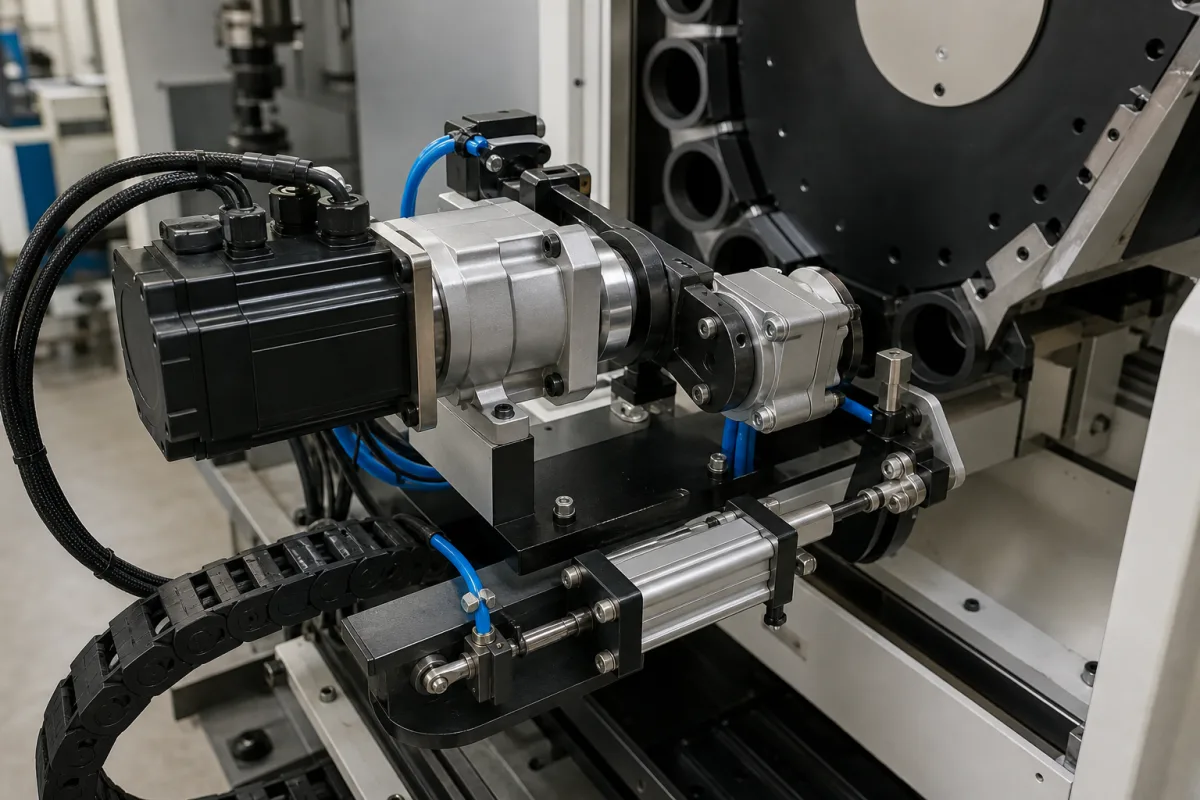
Technical details and manufacturing context for Drive Motor & Actuators
What to specify in your RFQ
These are the quantities to specify to the manufacturer when sizing or requesting a quote. The manufacturer's own documentation governs the exact figures and applicable standard.
This component is essential for the following industrial systems and equipment:
| pressure: | 0 to 10 bar |
| other spec: | Max continuous torque: 50 Nm, Max speed: 3000 RPM, IP rating: IP65 |
| temperature: | -20°C to +80°C |
Indicative industry ranges for design and RFQ preparation. Confirm the exact figures and applicable standard with the manufacturer before specifying.
Quoted from the published standard.
Manufacturer profiles associated with Drive Motor & Actuators.
Manufacturer listings support early research and capability understanding. They are not certification, ranking, or transaction guarantees.
A practical evidence checklist for RFQ preparation and supplier evaluation.
CNFX does not score or rank suppliers. Buyers must verify all claims and documents with the legal manufacturer before ordering.
They provide the precise motion and force required to select, retrieve, insert, and clamp tools during an automatic tool change, directly affecting the speed and reliability of the cycle.
Servo or stepper motors are commonly used, as they convert electrical energy into controlled rotational motion that can be precisely regulated for positioning.
The stroke length (for linear actuators) or rotation angle (for rotary actuators) defines the range of motion for tool handling. This must be matched to the specific ATC design.
Always check the exact specifications, such as stroke, torque, and mounting dimensions, with the legal manufacturer or supplier, as the values provided are reference ranges only.
Editorial classification, named public sources where available, and source-reviewed manufacturer records.
Ask for use case, specification boundaries, supplier type, and RFQ preparation information for this product.
Compare manufacturer profiles with relevant product and process capability.