Industry-Verified Manufacturing Data (2026)

Filter

Based on aggregated insights from multiple verified factory profiles within the CNFX directory, the standard Filter used in the Machinery and Equipment Manufacturing sector typically supports operational capacities ranging from standard industrial configurations to heavy-duty production requirements.

Technical Definition & Core Assembly

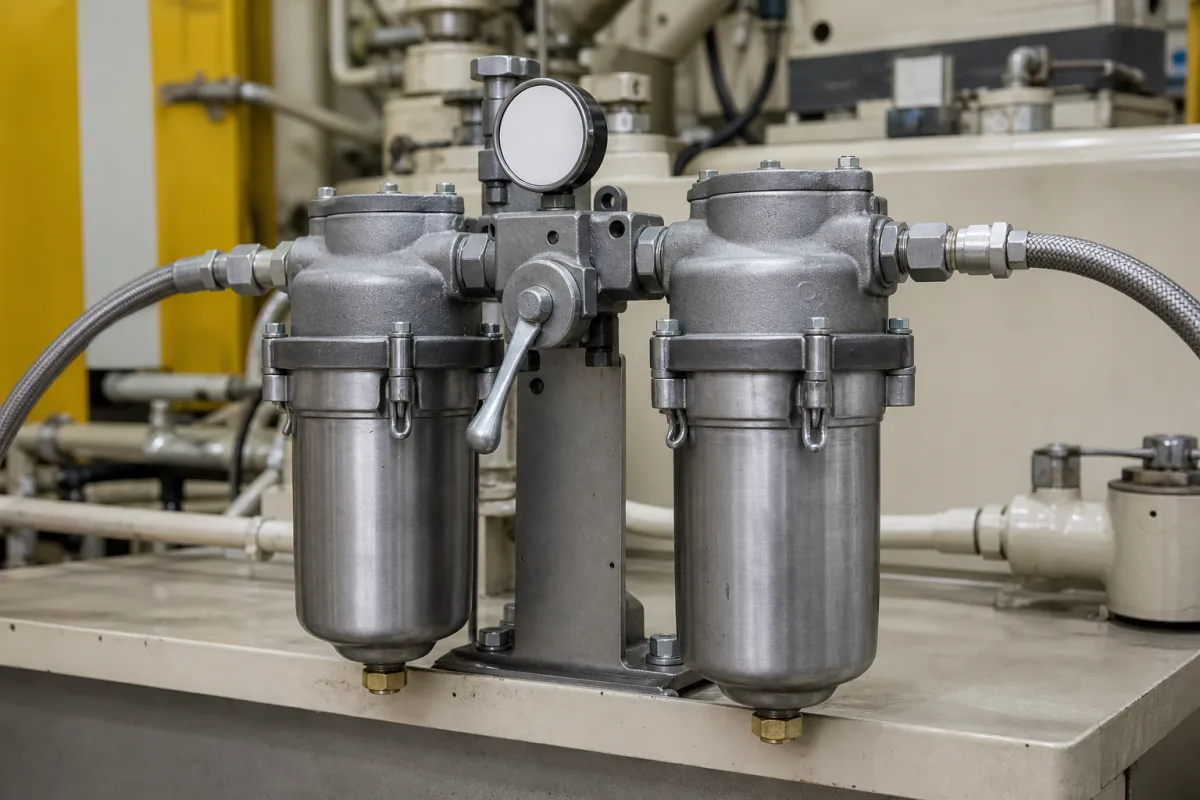
A canonical Filter is characterized by the integration of Filter Element and Housing. In industrial production environments, manufacturers listed on CNFX commonly emphasize Filter media (paper, synthetic fiber, metal mesh) construction to support stable, high-cycle operation across diverse manufacturing scenarios.

A device that removes contaminants from lubricating oil in a lubrication system.
Product Specifications

Technical details and manufacturing context for Filter

Definition
A critical component within lubrication systems that physically separates and removes particulate contaminants, debris, and sometimes water from the lubricating fluid to maintain oil cleanliness, protect downstream components from wear, and ensure optimal system performance and longevity.
Working Principle
Operates by passing lubricating oil through a porous filter medium (e.g., paper, mesh, or synthetic material). Contaminants larger than the filter's pore size are trapped on the medium's surface or within its depth, while clean oil flows through. Some filters may incorporate mechanisms for water separation or adsorption of chemical contaminants.
Common Materials
Filter media (paper, synthetic fiber, metal mesh), Steel housing, Seals (rubber, elastomer)
Technical Parameters
  • Filtration rating (e.g., nominal or absolute micron rating) indicating the size of particles the filter can remove. (µm) Per Request
Components / BOM
  • Filter Element
    The porous medium that physically traps contaminants from the oil.
    Material: Filter media (paper, synthetic, metal)
  • Housing
    The outer shell that contains the filter element and directs oil flow.
    Material: Steel or aluminum
  • Bypass Valve
    A safety valve that opens to allow oil flow if the filter becomes clogged, preventing system damage from oil starvation.
    Material: Steel, spring
  • Seals/Gaskets
    Ensure a leak-proof connection between the filter and the lubrication system.
    Material: Rubber, elastomer
Engineering Reasoning
0.5-10 bar differential pressure
15 bar differential pressure or 125°C fluid temperature
Design Rationale: Filter media rupture due to excessive differential pressure exceeding tensile strength of cellulose fibers (35 MPa) or thermal degradation of synthetic media polymers above glass transition temperature
Risk Mitigation (FMEA)
Trigger Particulate loading exceeding 5 g/L concentration
Mode: Filter bypass valve activation at 1.2 bar differential pressure
Strategy: Install 10 μm pre-filter with differential pressure transducer and automated cleaning cycle at 0.8 bar threshold
Trigger Water contamination reaching 500 ppm saturation point
Mode: Cellulose media hydrolysis and structural collapse
Strategy: Integrate centrifugal water separator with 0.3% efficiency rating and capacitive moisture sensor triggering at 300 ppm

Industry Taxonomies & Aliases

Commonly used trade names and technical identifiers for Filter.

Applied To / Applications

This component is essential for the following industrial systems and equipment:

Industrial Ecosystem & Supply Chain DNA

Complementary Systems
Downstream Applications
Specialized Tooling

Application Fit & Sizing Matrix

Operational Limits
pressure: Up to 10 bar (150 psi)
flow rate: 1 to 100 L/min
temperature: -20°C to 120°C
slurry concentration: Up to 5% solids by weight
Media Compatibility
✓ Mineral-based lubricating oils ✓ Synthetic lubricants (PAO, PAG) ✓ Hydraulic fluids (ISO VG 32-68)
Unsuitable: Highly acidic or corrosive chemical environments
Sizing Data Required
  • Required flow rate (L/min)
  • Contaminant particle size to be removed (microns)
  • System operating pressure (bar)

Reliability & Engineering Risk Analysis

Failure Mode & Root Cause
Clogging/Blockage
Cause: Accumulation of particulate matter, scale, or debris exceeding filter media capacity, often due to inadequate pre-filtration, high contaminant loading, or infrequent maintenance intervals.
Media Degradation/Breakthrough
Cause: Physical or chemical deterioration of filter media (e.g., tearing, swelling, chemical attack) leading to loss of filtration efficiency, typically from incompatible fluids, excessive pressure differentials, or aging beyond service life.
Maintenance Indicators
  • Sustained high pressure drop across the filter exceeding manufacturer's specified limit, indicating severe restriction.
  • Visible contaminant bypass in downstream fluid or audible flow turbulence suggesting media failure.
Engineering Tips
  • Implement condition-based monitoring using differential pressure transmitters to trigger maintenance only when needed, avoiding premature replacements or extended clogging risks.
  • Select filter media compatibility based on full fluid chemical analysis and operating temperature ranges, and ensure proper pre-filtration to reduce loading on primary filters.

Compliance & Manufacturing Standards

Reference Standards
ISO 16889:2022 (Hydraulic fluid power - Filters - Multi-pass method for evaluating filtration performance) ANSI/ASHRAE 52.2-2017 (Method of Testing General Ventilation Air-Cleaning Devices for Removal Efficiency by Particle Size) DIN EN 1822-1:2019 (High efficiency air filters (EPA, HEPA and ULPA) - Part 1: Classification, performance testing, marking)
Manufacturing Precision
  • Filter media pore size: +/-5% of nominal rating
  • Frame squareness: +/-0.5° from perpendicular
Quality Inspection
  • Pressure drop test at rated flow
  • Particle counting efficiency test

Factories Producing Filter

Verified manufacturers with capability to produce this product in China

✓ 94% Supplier Capability Match Found

P Project Engineer from United Arab Emirates Jan 01, 2026
★★★★★
"Found 29+ suppliers for Filter on CNFX, but this spec remains the most cost-effective."
Technical Specifications Verified
S Sourcing Manager from Australia Dec 29, 2025
★★★★★
"The technical documentation for this Filter is very thorough, especially regarding technical reliability."
Technical Specifications Verified
P Procurement Specialist from Singapore Dec 26, 2025
★★★★★
"Reliable performance in harsh Machinery and Equipment Manufacturing environments. No issues with the Filter so far."
Technical Specifications Verified
Verification Protocol

“Feedback is collected from verified sourcing managers during RFQ (Request for Quote) and factory evaluation processes on CNFX. These reports represent historical performance data and technical audit summaries from our B2B manufacturing network.”

10 sourcing managers are analyzing this specification now. Last inquiry for Filter from Thailand (37m ago).

Supply Chain Compatible Machinery & Devices

Automated Assembly Line System

Integrated production system for sequential component assembly operations

Explore Specs →
Automated Powder Coating System

Integrated industrial system for applying dry powder coatings to metal substrates.

Explore Specs →
Centrifugal Pump Impeller

Rotating component that transfers energy to fluid in centrifugal pumps.

Explore Specs →
High-Precision CNC Laser Cutting Machine

Computer-controlled industrial machine using focused laser beams to cut sheet metal with micron-level accuracy.

Explore Specs →

Frequently Asked Questions

What types of filter media are available for industrial oil filters?

Our industrial oil filters use paper, synthetic fiber, or metal mesh media to remove contaminants from lubricating oil in machinery systems, with each type offering different filtration efficiency and durability.

How does the bypass valve work in an industrial oil filter?

The bypass valve opens when the filter element becomes clogged, allowing oil to continue flowing through the system to prevent equipment damage while indicating the need for filter replacement.

What materials are used in the construction of industrial oil filter housings?

Our filter housings are constructed from durable steel with rubber or elastomer seals and gaskets to ensure leak-proof operation and withstand high-pressure conditions in industrial machinery applications.

Can I contact factories directly on CNFX?

CNFX is an open directory, not a transaction platform. Each factory profile provides direct contact information and production details to help you initiate direct inquiries with Chinese suppliers.

Get Quote for Filter

Request technical pricing, lead times, or customized specifications for Filter directly from verified manufacturing units.

Your business information is encrypted and only shared with verified Filter suppliers.

Thank you! Your message has been sent. We'll respond within 1–3 business days.

Need to Manufacture Filter?

Connect with verified factories specializing in this product category

Add Your Factory Contact Us
Previous Product
Filling Valve Assembly
Next Product
Filter Assembly