Industry-Verified Manufacturing Data (2026)

Filters

Based on aggregated insights from multiple verified factory profiles within the CNFX directory, the standard Filters used in the Machinery and Equipment Manufacturing sector typically supports operational capacities ranging from standard industrial configurations to heavy-duty production requirements.

Technical Definition & Core Assembly

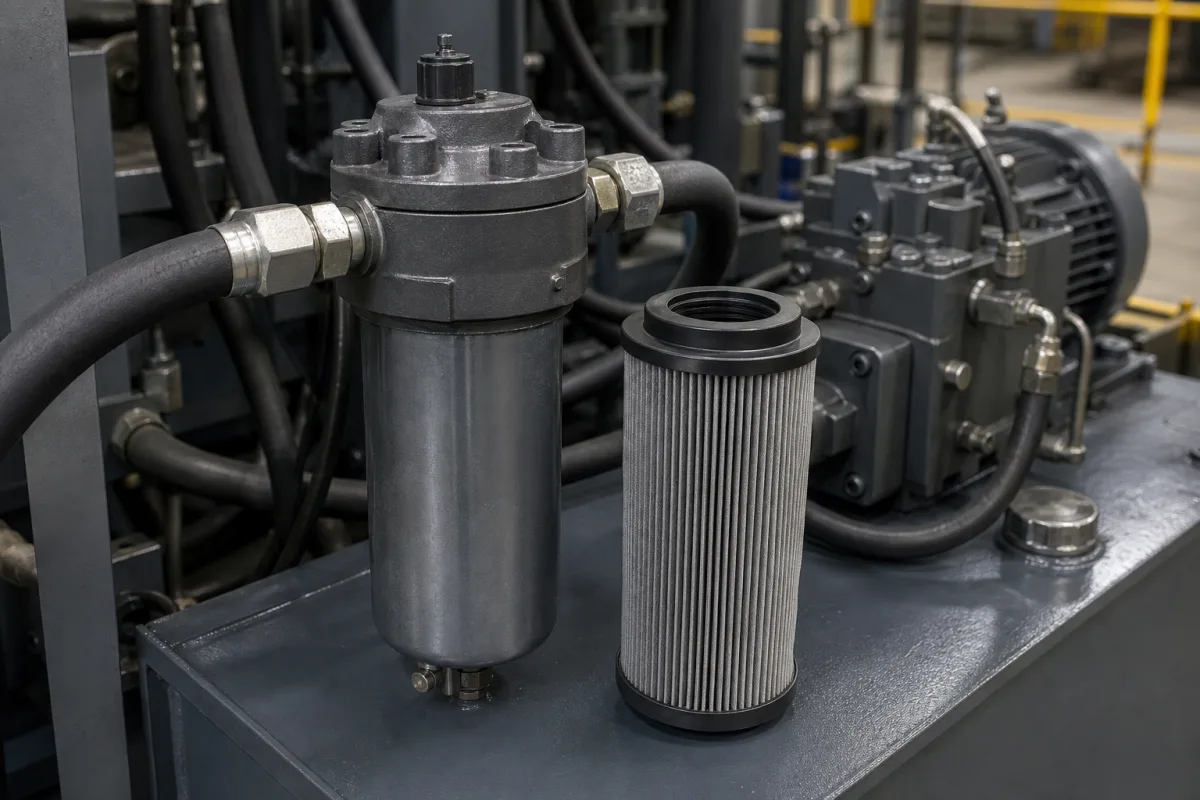
A canonical Filters is characterized by the integration of Filter Element and Filter Housing. In industrial production environments, manufacturers listed on CNFX commonly emphasize Stainless steel construction to support stable, high-cycle operation across diverse manufacturing scenarios.

Devices that remove contaminants from hydraulic fluid to protect system components.
Product Specifications

Technical details and manufacturing context for Filters

Definition
Filters are essential components within hydraulic power units that remove particulate contaminants, water, and other impurities from hydraulic fluid. They maintain fluid cleanliness, prevent component wear, extend system life, and ensure reliable operation by protecting sensitive components like pumps, valves, and actuators from damage caused by contamination.
Working Principle
Hydraulic fluid flows through a filter element (typically made of porous material like cellulose, glass fiber, or wire mesh). Contaminants larger than the filter's pore size are trapped on the surface or within the depth of the element, while clean fluid passes through. Filters may use mechanisms like depth filtration, surface filtration, or adsorption depending on the contaminant type.
Common Materials
Stainless steel, Carbon steel, Cellulose, Glass fiber, Wire mesh
Technical Parameters
  • Filtration rating (e.g., 10 μm absolute, 25 μm nominal) indicating the size of particles the filter can remove (μm) Per Request
Components / BOM
  • Filter Element
    Porous material that traps contaminants while allowing fluid to pass through
    Material: Cellulose/Glass fiber/Wire mesh
  • Filter Housing
    Protective casing that contains the filter element and directs fluid flow
    Material: Steel/Aluminum
  • Bypass Valve
    Safety mechanism that opens when pressure differential is too high, allowing unfiltered fluid to bypass the element
    Material: Steel/Brass
  • Indicator
    Visual or electrical device that signals when filter needs replacement
    Material: Plastic/Metal
Engineering Reasoning
0.5-25 bar differential pressure
35 bar differential pressure (rupture of filter element)
Design Rationale: Excessive pressure differential across filter media causes structural failure of pleated cellulose/polyester composite material via tensile stress exceeding 15 MPa yield strength
Risk Mitigation (FMEA)
Trigger Particulate loading exceeding 10 g/L concentration
Mode: Filter element bypass valve activation at 2.5 bar differential pressure
Strategy: Install 5 μm pre-filter with 2:1 surface area ratio to main filter
Trigger Water contamination reaching 1000 ppm saturation
Mode: Cellulose filter media hydrolysis and structural collapse
Strategy: Integrate vacuum dehydration unit maintaining <200 ppm water content

Industry Taxonomies & Aliases

Commonly used trade names and technical identifiers for Filters.

Applied To / Applications

This component is essential for the following industrial systems and equipment:

Industrial Ecosystem & Supply Chain DNA

Complementary Systems
Downstream Applications
Specialized Tooling

Application Fit & Sizing Matrix

Operational Limits
pressure: Up to 450 bar (6,500 psi)
flow rate: 1 to 1,000 L/min
temperature: -20°C to 120°C
slurry concentration: Up to 5% solids by weight
Media Compatibility
✓ Mineral-based hydraulic oils ✓ Synthetic esters ✓ Water-glycol fluids
Unsuitable: Highly corrosive acids or strong solvents
Sizing Data Required
  • System flow rate (L/min)
  • Required filtration rating (microns)
  • Maximum allowable pressure drop (bar)

Reliability & Engineering Risk Analysis

Failure Mode & Root Cause
Clogging
Cause: Accumulation of particulate matter, scale, or biological growth beyond design capacity, often due to inadequate pre-filtration, improper media selection, or extended service intervals.
Media degradation/breakthrough
Cause: Physical or chemical deterioration of filter media (e.g., tearing, channeling, chemical attack) from excessive pressure differential, incompatible fluids, or fatigue from cyclic loading, allowing contaminants to bypass.
Maintenance Indicators
  • Sustained high differential pressure (ΔP) exceeding manufacturer's recommended limit, often indicated by gauges or control system alarms.
  • Visible particulate in downstream fluid (post-filter) or audible flow restriction noises (e.g., whistling, gurgling) indicating bypass or media failure.
Engineering Tips
  • Implement condition-based monitoring using differential pressure transducers with trend analysis to schedule replacements at optimal intervals, avoiding both premature changes and failure due to clogging.
  • Select filter media and housing materials compatible with the fluid chemistry, temperature, and pressure profiles; validate with compatibility charts and consider pre-filtration for extreme contaminant loads to reduce core filter stress.

Compliance & Manufacturing Standards

Reference Standards
ISO 16889:2022 (Hydraulic fluid power - Filters - Multi-pass method for evaluating filtration performance) ANSI/ASHRAE 52.2-2017 (Method of Testing General Ventilation Air-Cleaning Devices for Removal Efficiency by Particle Size) DIN EN 1822-1:2019 (High efficiency air filters (EPA, HEPA and ULPA) - Part 1: Classification, performance testing, marking)
Manufacturing Precision
  • Filter media pore size: +/-5% of nominal rating
  • End cap flatness: 0.1mm across sealing surface
Quality Inspection
  • Bubble Point Test (integrity testing of filter media)
  • Particle Counting Efficiency Test (verification of filtration performance)

Factories Producing Filters

Verified manufacturers with capability to produce this product in China

✓ 96% Supplier Capability Match Found

T Technical Director from Australia Feb 03, 2026
★★★★★
"Found 16+ suppliers for Filters on CNFX, but this spec remains the most cost-effective."
Technical Specifications Verified
P Project Engineer from Singapore Jan 31, 2026
★★★★☆
"The technical documentation for this Filters is very thorough, especially regarding technical reliability. (Delivery took slightly longer than expected, but technical support was excellent.)"
Technical Specifications Verified
S Sourcing Manager from Germany Jan 28, 2026
★★★★★
"Reliable performance in harsh Machinery and Equipment Manufacturing environments. No issues with the Filters so far."
Technical Specifications Verified
Verification Protocol

“Feedback is collected from verified sourcing managers during RFQ (Request for Quote) and factory evaluation processes on CNFX. These reports represent historical performance data and technical audit summaries from our B2B manufacturing network.”

6 sourcing managers are analyzing this specification now. Last inquiry for Filters from Vietnam (47m ago).

Supply Chain Compatible Machinery & Devices

Automated Assembly Line System

Integrated production system for sequential component assembly operations

Explore Specs →
Automated Powder Coating System

Integrated industrial system for applying dry powder coatings to metal substrates.

Explore Specs →
Centrifugal Pump Impeller

Rotating component that transfers energy to fluid in centrifugal pumps.

Explore Specs →
High-Precision CNC Laser Cutting Machine

Computer-controlled industrial machine using focused laser beams to cut sheet metal with micron-level accuracy.

Explore Specs →

Frequently Asked Questions

What materials are best for hydraulic filters in heavy machinery applications?

For heavy machinery, stainless steel and carbon steel housings provide durability, while cellulose and glass fiber elements offer excellent contaminant removal. Wire mesh is ideal for coarse filtration in harsh environments.

How do bypass valves protect hydraulic filtration systems?

Bypass valves prevent system damage by allowing fluid to flow around clogged filter elements, maintaining hydraulic pressure while protecting pumps and other components from starvation or excessive pressure drops.

What indicators are available for monitoring filter condition in manufacturing equipment?

Common indicators include differential pressure gauges, visual inspection windows, and electronic sensors that alert operators when filter elements need replacement, ensuring optimal system performance and preventing downtime.

Can I contact factories directly on CNFX?

CNFX is an open directory, not a transaction platform. Each factory profile provides direct contact information and production details to help you initiate direct inquiries with Chinese suppliers.

Get Quote for Filters

Request technical pricing, lead times, or customized specifications for Filters directly from verified manufacturing units.

Your business information is encrypted and only shared with verified Filters suppliers.

Thank you! Your message has been sent. We'll respond within 1–3 business days.

Need to Manufacture Filters?

Connect with verified factories specializing in this product category

Add Your Factory Contact Us
Previous Product
Filter Vessel
Next Product
Filtration Unit